Best Sujihiki Knives: The Japanese Slicing Knife for Precision Cuts
Quick Takeaway
- Top pick: Takamura R2 Sujihiki 240mm takes the thinnest, sharpest edge of any sujihiki in this list, thanks to SG2 powdered steel at around 63 HRC.
- Best value: Tojiro DP Sujihiki 240mm delivers VG-10 performance in a 3-layer clad construction for a fraction of the premium price.
- For carbon lovers: Mazaki White #2 Sujihiki 270mm is a workhorse slicer that takes a screaming edge and develops character over time.
- Sujihiki vs yanagiba: A sujihiki is double bevel and works on everything from roasts to fish. A yanagiba is single bevel and built specifically for sashimi. If you only slice raw fish, consider a yanagiba. For everything else, the sujihiki wins.
What Is a Sujihiki?
The name says it all. Sujihiki (筋引) translates to “sinew puller,” and the knife was designed for exactly that: long, clean strokes through boneless proteins. Think slicing a beef tenderloin into medallions, portioning a side of salmon, or carving a holiday roast into even slices.
A sujihiki is essentially the Japanese answer to a Western carving knife, but with a few important differences. The blade is thinner, lighter, and ground to a more acute angle. Where a Western slicer relies on heft and a gentle curve, a sujihiki relies on geometry: a narrow profile, minimal drag, and an edge that can glide through protein in a single pull stroke without tearing fibers.
Most sujihikis fall between 240mm and 300mm in blade length. Longer is generally better here because the whole point is completing each slice in one smooth motion. Sawing back and forth defeats the purpose and damages the surface of whatever you’re cutting.
Sujihiki vs Yanagiba: Which Do You Need?
This is the question that comes up most in the knife community, and the answer depends on what you’re slicing.
A Sakai Takayuki Kasumi Yanagiba 270mm and similar yanagiba knives are single bevel: sharpened on one side only. That asymmetric grind creates an incredibly thin cutting edge that produces the cleanest possible sashimi cuts. The flat backside helps the knife release from the fish, keeping each slice pristine. But single bevel knives require specific technique, sharpening skill, and they’re designed for one job: slicing raw fish and seafood.
A sujihiki is double bevel: sharpened on both sides, like a gyuto or santoku. That makes it more versatile and more forgiving. You can use it for sashimi, sure, but also for roast beef, smoked salmon, charcuterie, turkey, brisket, and anything else that benefits from long, clean slices. It’s easier to sharpen, easier to use, and works for both left and right handed cooks.
Choose a yanagiba if: You regularly prepare sashimi and want the absolute cleanest cuts. You’re comfortable maintaining a single bevel edge. This is a specialist tool.
Choose a sujihiki if: You want one slicing knife that handles everything. You cook proteins regularly and want cleaner portions. You don’t want to learn single bevel sharpening. This is the versatile choice.
For most home cooks and even many professional cooks outside of dedicated sushi kitchens, the sujihiki is the more practical pick.
What Makes a Good Sujihiki
Not all sujihikis are created equal. Here’s what separates a great one from a mediocre one:
Thin, consistent grind. This matters more on a sujihiki than almost any other knife type. The blade needs to pass through protein with minimal resistance. A thick grind creates wedging, which tears rather than slices. The best sujihikis have a thin, even taper from spine to edge.
Steel that holds a keen edge. You’re making long, precise cuts, so edge retention matters. Harder steels (60+ HRC) hold that fine edge longer between sharpenings. SG2, VG-10, and carbon steels like Shirogami #2 are all common and effective choices. For a deeper dive into what these steels mean, see our steel types guide.
Length. Don’t go shorter than 240mm for a sujihiki. For larger proteins and fish, 270mm is the sweet spot. Professional cooks often reach for 300mm when working with whole loins or large roasts.
Weight and balance. A sujihiki should feel light in the hand. You’re guiding it, not pressing it. Heavy slicers cause fatigue and encourage the bad habit of pressing down instead of pulling through.
Our Top Picks
Top Pick: Takamura R2 Sujihiki 240mm
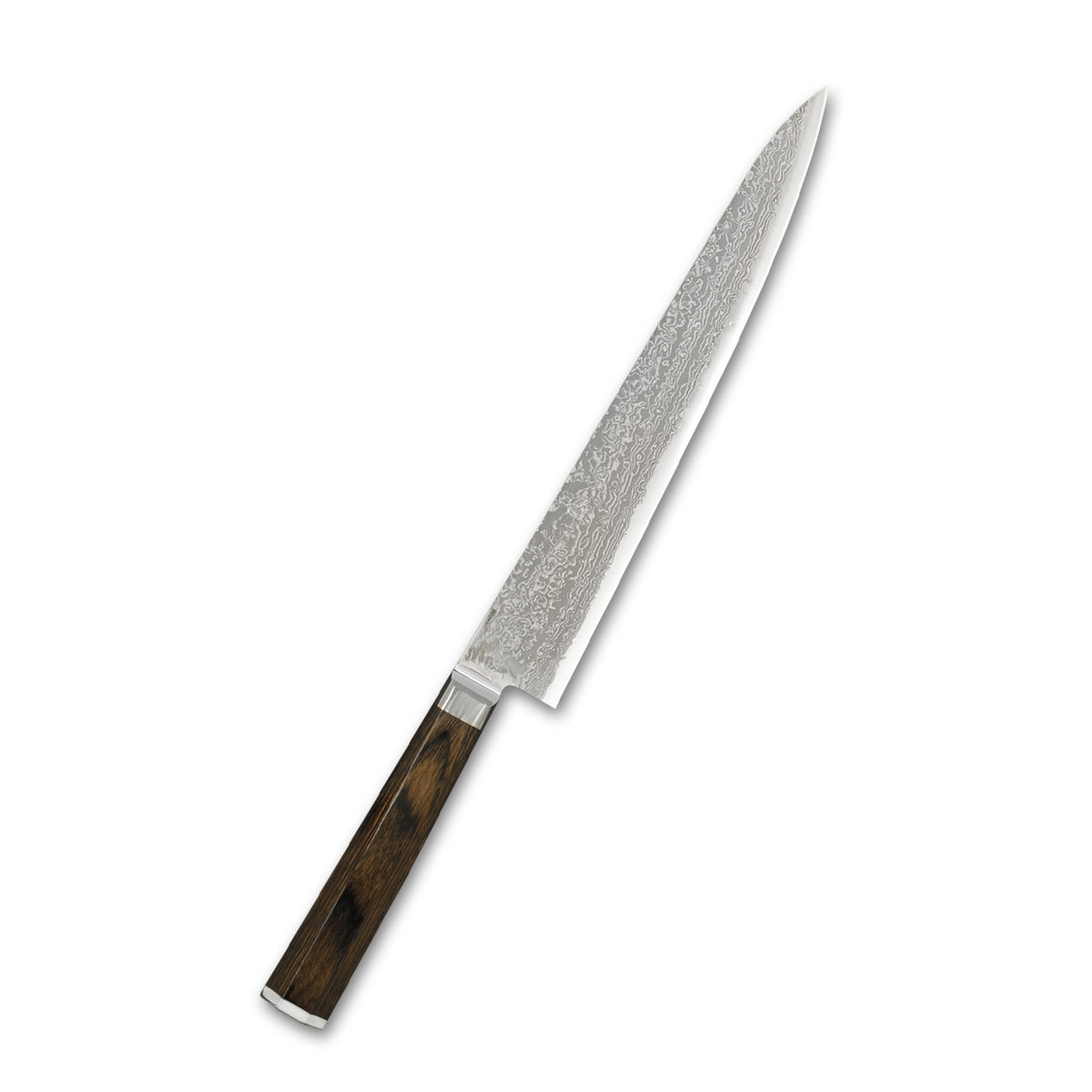
Takamura
Takamura R2 Sujihiki 240mm
The Takamura R2 Sujihiki 240mm is a laser. SG2 powdered steel at around 63 HRC means this blade takes an edge that borders on absurd and holds it through extended slicing sessions. The migaki (polished) finish reduces friction, so protein slides off the blade instead of sticking.
Steel: SG2 / R2 (Powdered Steel) Blade Length: 240mm Handle: Yo (Western) Finish: Migaki (polished) Made in: Echizen
Takamura has built their reputation on thin, laser-sharp knives, and the sujihiki is where that philosophy shines brightest. The grind is remarkably thin and even, which means almost zero wedging through dense proteins. It cuts roast beef into paper-thin slices with minimal effort.
The tradeoff: this blade is thin and hard, which means it can chip if you torque it sideways or hit bone. It’s a precision tool, not a workhorse. Treat it accordingly and it will reward you with the cleanest cuts you’ve ever made.
The yo (Western) handle works well for a pinch grip and keeps the knife accessible for cooks who aren’t ready for a wa handle.
Runner Up: Ashi Ginga Sujihiki 240mm
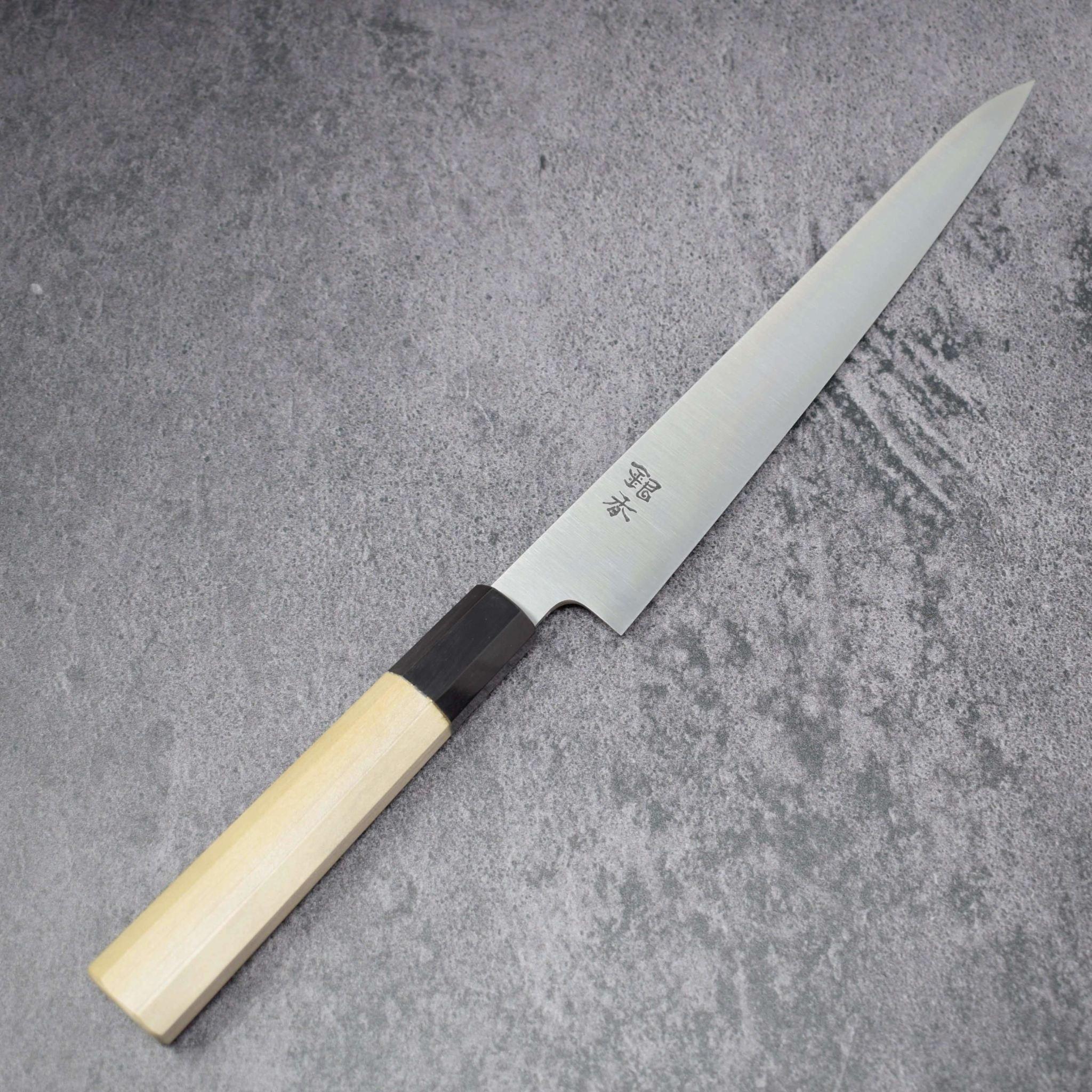
Ashi Ginga
Ashi Ginga Sujihiki 240mm
The Ashi Ginga Sujihiki 240mm is a legend in the knife community for good reason. Ashi Ginga (made by Ashi Hamono in Sakai) is known for producing some of the thinnest, most refined grinds in Japan.
The Ginga line is available in both Ginsan (Silver #3) stainless and Swedish stainless options. Ginsan is a popular choice: it’s a stainless steel produced by Proterial (formerly Hitachi Metals) that sharpens like carbon steel but resists corrosion. For a sujihiki that sees regular use with wet proteins, that combination of easy sharpening and rust resistance is hard to beat.
The grind on the Ginga is what separates it from the pack. It’s thin without being fragile, and it passes through protein with remarkable smoothness. The knife has a loyal following among professional cooks who need a reliable slicer for daily service.
Ashi Ginga sujihikis tend to sell out quickly at specialty retailers. If you see one in stock, it’s worth acting fast.
Budget Pick: Tojiro DP Sujihiki 240mm
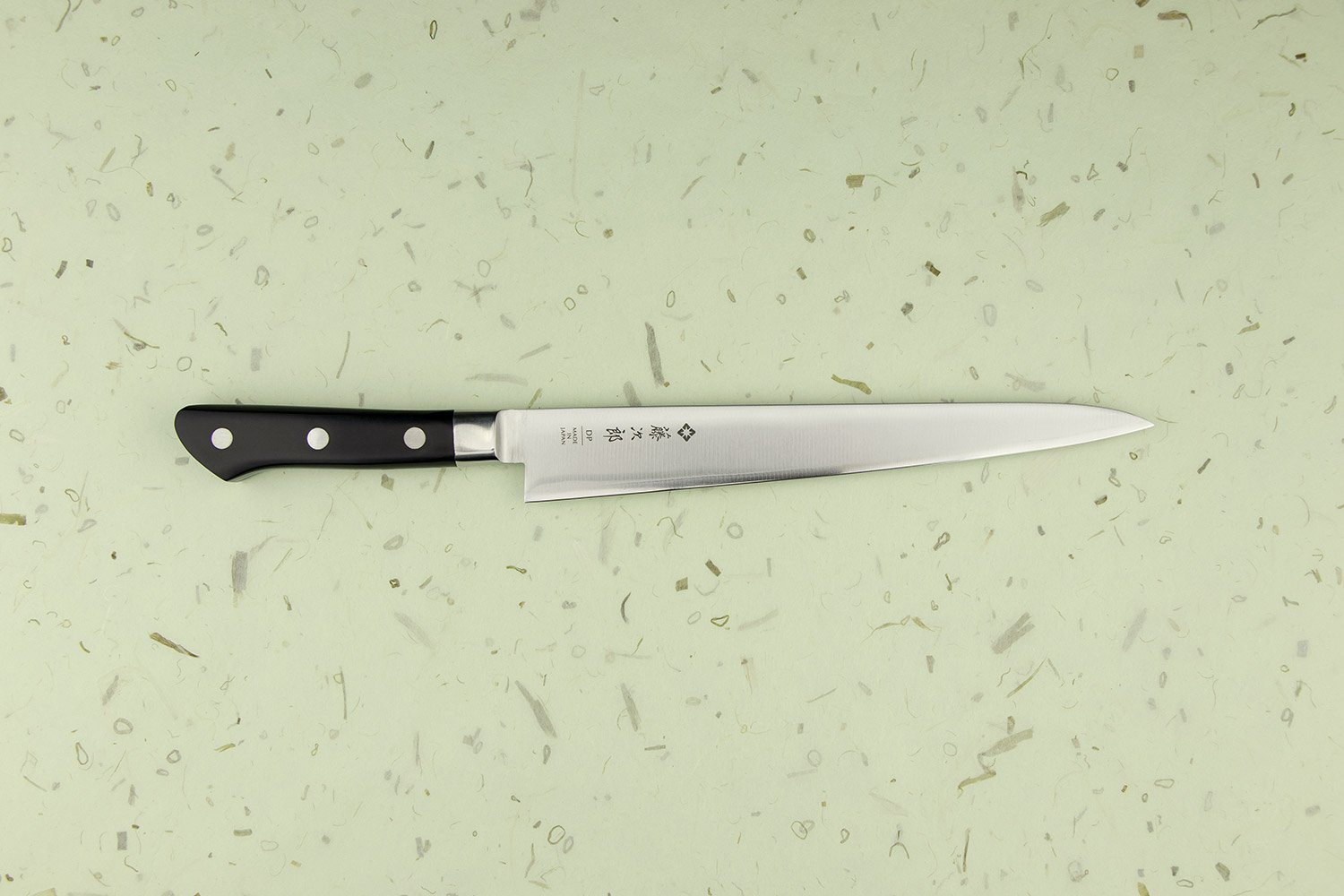
Tojiro
Tojiro DP Sujihiki 240mm
The Tojiro DP Sujihiki 240mm is the entry point that keeps surprising people. VG-10 core steel sandwiched between softer stainless cladding (3-layer construction), a comfortable yo handle, and a clean, functional grind.
Steel: VG-10 (3-layer clad) Hardness: ~60 HRC Blade Length: 240mm Handle: Yo (Western) Made in: Tsubame-Sanjo
Tojiro makes these in Tsubame-Sanjo, a metalworking region in Niigata Prefecture with deep roots in blade production. The DP series has been a gateway knife for thousands of cooks, and the sujihiki version carries that same value proposition: solid VG-10 performance without the premium price.
Out of the box, the edge is serviceable but benefits from a quick session on a 1000 grit whetstone to really wake it up. Once sharpened properly, this knife slices cleanly and holds its edge respectably for the price tier.
The handle is Eco-wood (reinforced laminated composite) with a full tang and triple riveted construction. Not fancy, but ergonomic and grippy when wet. For a first sujihiki or a backup slicer in a busy kitchen, it’s hard to find a better value.
Mid Range Pick: Sakai Takayuki Grand Chef Sujihiki 240mm

Sakai Takayuki
Sakai Takayuki Grand Chef Sujihiki 240mm
The Sakai Takayuki Grand Chef Sujihiki 240mm sits in the mid range tier and offers the craftsmanship that Sakai is known for. VG-10 steel, yo handle, and the refinement you’d expect from a production line backed by 600 years of knife making tradition in Sakai.
Steel: VG-10 Blade Length: 240mm Handle: Yo (Western) Finish: Migaki (polished) Made in: Sakai
Sakai Takayuki (the retail brand of Aoki Hamono) produces knives across a wide range of lines and price points. The Grand Chef series targets working professionals who need reliable, well-ground knives without the collector premium. The sujihiki benefits from Sakai’s traditional division of labor, where different artisans handle forging, sharpening, and handle fitting.
Compared to the Tojiro, you get a more refined grind and better fit and finish. Compared to the Takamura, you give up some edge retention (VG-10 at ~60 HRC vs SG2 at ~63 HRC) but gain a knife that’s easier to sharpen and less chippy on the edge.
Carbon Steel Pick: Mazaki White #2 Sujihiki 270mm
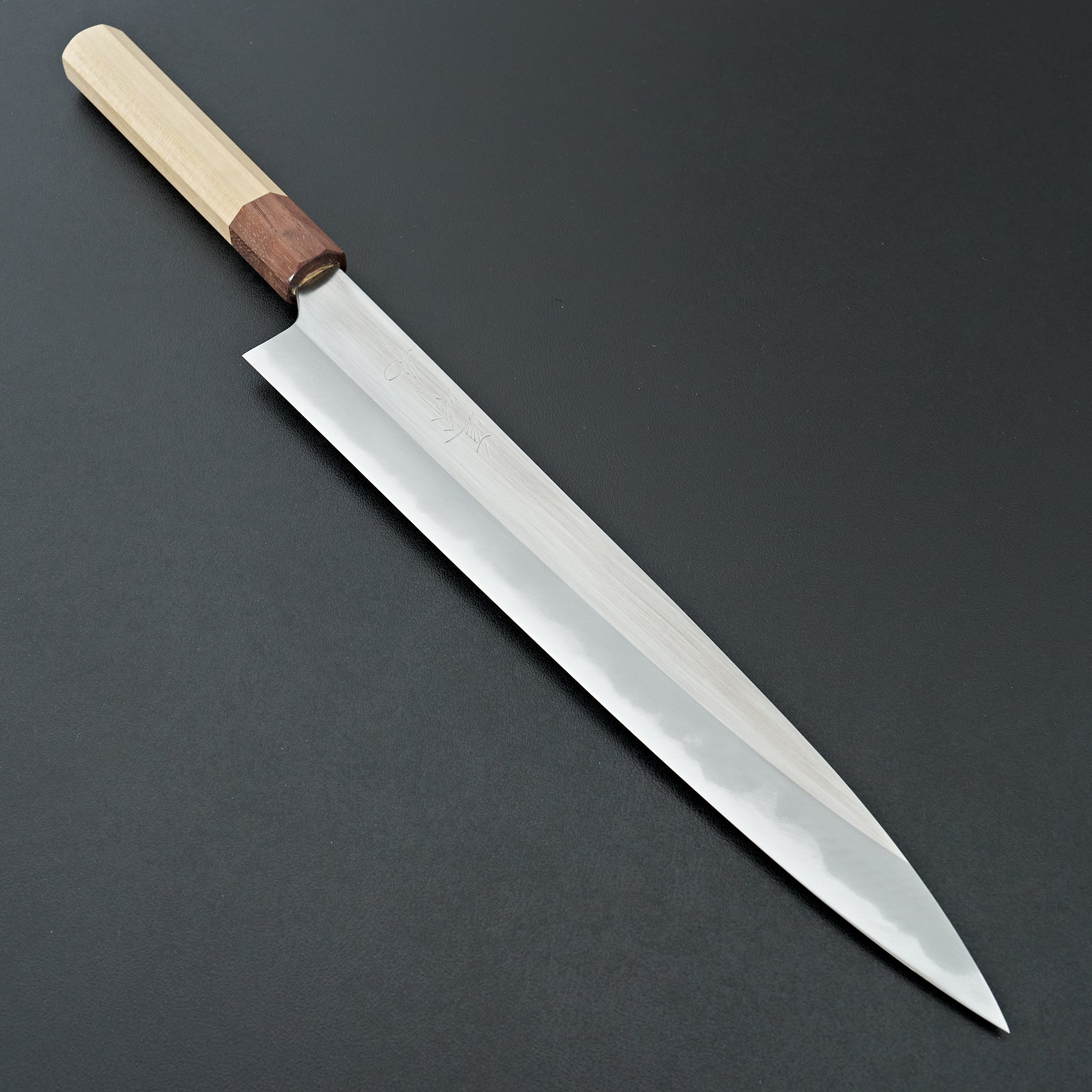
Mazaki
Mazaki White #2 Sujihiki 270mm
The Mazaki White #2 Sujihiki 270mm is for cooks who want the sharpest possible edge and don’t mind a little maintenance.
Shirogami #2 (White Steel #2) is pure carbon steel: no chromium, no fancy alloys. Just iron, carbon, and trace amounts of silicon and manganese. It takes a frighteningly sharp edge, is easy to sharpen, and gives excellent tactile feedback on the whetstone. The tradeoff is that it rusts if you leave it wet, and it will develop a patina (color change) from acidic foods. Many carbon steel fans consider the patina a feature, not a bug.
Mazaki knives come from Sanjo in Niigata Prefecture, the same metalworking region as Tojiro but with a very different character. These are thicker, sturdier knives with a kurouchi (forge scale) finish and wa (Japanese) handles. The 270mm length is ideal for a sujihiki because it gives you the reach to slice through larger proteins in a single stroke.
This is the knife that r/chefknives recommends when someone asks for a carbon steel sujihiki. It’s a workhorse that takes a beating, responds beautifully to sharpening, and delivers cuts that make you wonder why you ever used a Western carving knife.
Note: Carbon steel requires more care. Wipe the blade dry between cuts, especially with acidic foods. Dry immediately after washing. A thin coat of camellia oil for storage keeps rust at bay.
Honorable Mention: Yoshikane SKD Sujihiki 270mm
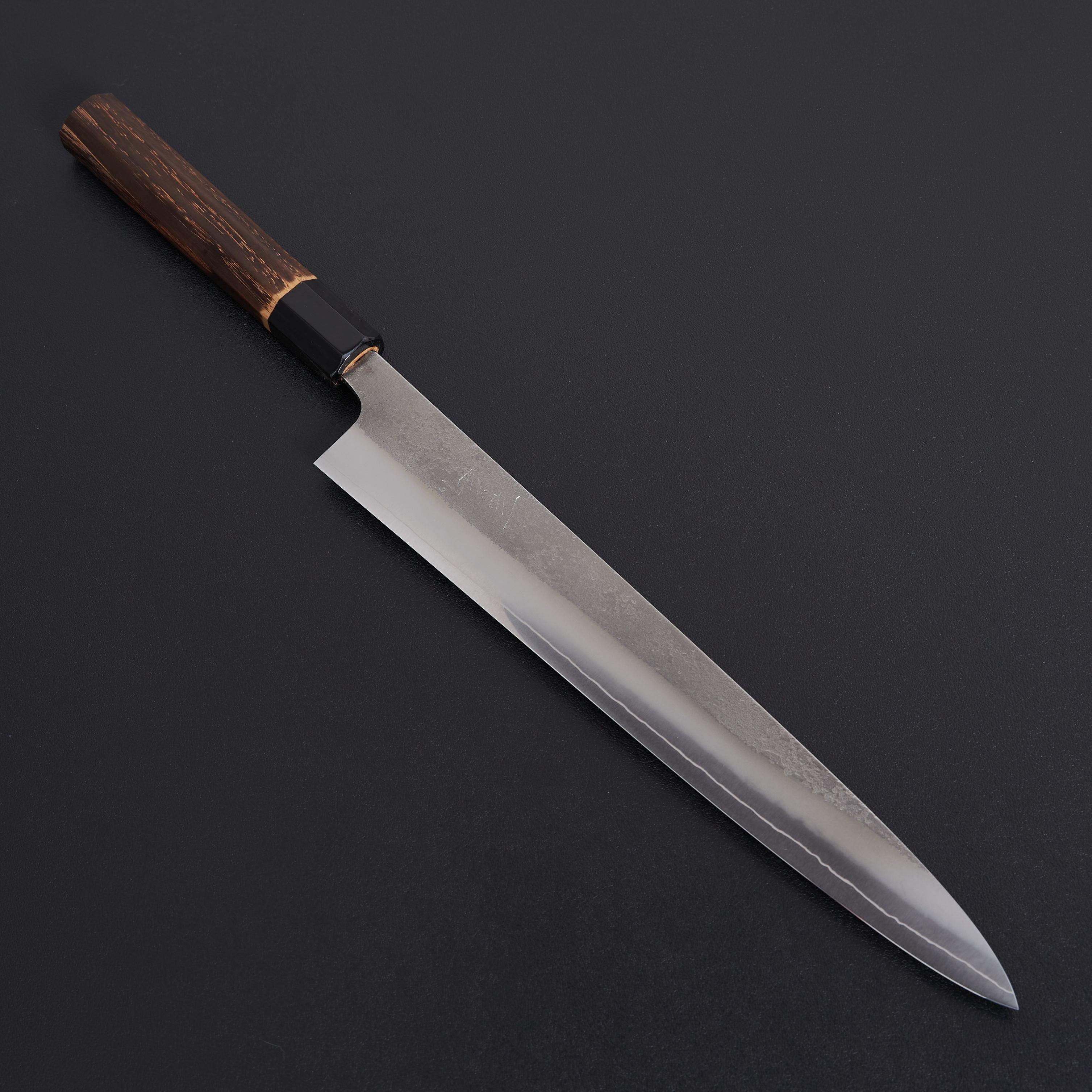
Yoshikane
Yoshikane SKD Nashiji Sujihiki 270mm
Yoshikane SKD Sujihiki 270mm offers a middle ground between carbon and stainless. SKD is a semi-stainless tool steel with enough chromium to resist casual corrosion but not enough to be called fully stainless. It takes a keen edge, holds it well, and develops a subtle patina over time.
Yoshikane operates in Sanjo, Niigata, and has a reputation for consistently excellent grinds and heat treatment. Their sujihikis come with wa handles and a nashiji (pear skin) or kurouchi finish, depending on the line. The 270mm length and thin grind make these excellent working slicers.
If you want the sharpening ease and edge quality of carbon steel but aren’t ready for the full maintenance commitment, SKD is a smart compromise.
What About Masamoto?
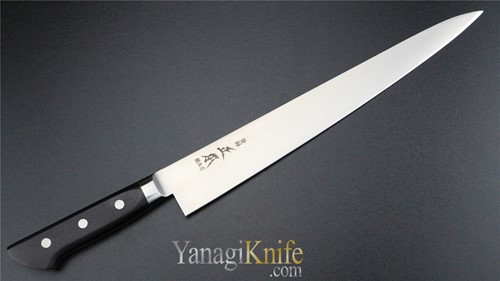
Masamoto
Masamoto AT Sujihiki 270mm
Masamoto AT Sujihiki 270mm deserves a mention. Masamoto is one of the oldest and most respected knife makers in Japan, and their AT series (stainless steel) sujihikis are solid professional tools. They’re widely used in high-end restaurants in Japan and abroad.
However, Masamoto knives can be difficult to find outside Japan at reasonable prices, and the brand carries a significant premium for the name. If you have access to a reputable retailer stocking Masamoto, the AT sujihiki at 270mm is a proven performer. But for most buyers, the picks above offer equal or better performance at more accessible price points.
Size Guide: 240mm vs 270mm vs 300mm
240mm works well for home cooks, smaller proteins, and kitchens with limited space. It handles salmon fillets, chicken breasts, and standard roasts comfortably.
270mm is the professional standard and the most versatile choice. It handles everything from fish to full beef tenderloins without running out of blade. If you’re buying one sujihiki, this is the length to consider.
300mm is for large-scale work: whole briskets, full salmon sides, prime rib roasts. Unless you regularly work with very large cuts, 270mm will serve you better.
How to Care for Your Sujihiki
A sujihiki is a thin, precise knife. It deserves a little respect:
Sharpening: Use a whetstone (1000 grit for regular maintenance, 3000+ for finishing). The thin blade responds well to stropping between sharpenings. Don’t use pull-through sharpeners or electric grinders.
Storage: A magnetic knife strip or blade guard protects the edge. Never toss a sujihiki in a drawer with other utensils.
Cutting surface: Use a wood or soft plastic cutting board. Glass, marble, and ceramic boards will dull the edge fast.
Washing: Hand wash and dry immediately. Never put a Japanese knife in the dishwasher.
For more detail, check our sharpening guide and complete care guide.
The Bottom Line
A good sujihiki transforms how you handle proteins in the kitchen. Clean slices mean better presentation, better texture, and less waste. The right knife depends on your budget, your comfort with maintenance, and what you’re slicing most often.
For most cooks, the Takamura R2 Sujihiki 240mm sets the standard for cutting performance. If you want to spend less, the Tojiro DP Sujihiki 240mm is the best entry point. And if you’re ready for carbon steel, the Mazaki White #2 Sujihiki 270mm will make you a believer.