Best Japanese Knife Brands Ranked: The Honest Tier List
Quick Takeaway
- Budget tier: Tojiro and Fujiwara FKM deliver real Japanese steel at entry level prices. The Tojiro DP Gyuto 210mm is the single most recommended starter knife in every community we checked.
- Mid tier: MAC, Yoshikane, and Sakai Takayuki punch well above their price. This is where serious cooks should start.
- Premium tier: Takamura, Misono, and Masakage represent the sweet spot of performance and craft. Worth every penny.
- Collector tier: Yu Kurosaki, Ashi Ginga, and small workshop makers like Mazaki produce knives that are both tools and art.
- Skip these: Dalstrong, XINZUO, Huusk, and imarku use Japanese sounding names but manufacture in China. They do not belong on a list of Japanese knife brands.
Every “best Japanese knife brands” article on the internet has the same problem. They rank Shun and Miyabi at the top because those brands have the biggest marketing budgets and the widest retail distribution. Then they pad the list with Chinese manufacturers who slap Japanese names on their boxes.
This is a different kind of ranking. We went through Reddit’s r/chefknives and r/TrueChefKnives communities, specialty retailer recommendations from Knifewear and Japanese Knife Imports, and our own database of Japanese made knives to build a tier list based on what people who use these knives every day think of them.
The criteria: every brand must manufacture in Japan. Every ranking reflects actual steel quality, craftsmanship, and community reputation, not marketing spend.
Tier 1: Budget (Entry Level Japanese Quality)
These brands prove you do not need to spend a lot to get a genuine Japanese knife. They cut better than most mid range Western knives and they are made in Japan with real Japanese steel.
Tojiro
Region: Tsubame-Sanjo, Niigata Steel: VG-10 (3-layer clad) Price tier: Budget
If there is one consensus pick across every knife forum, retailer recommendation page, and review roundup, it is Tojiro. The DP series uses a VG-10 core clad in softer stainless steel, produced in Tsubame-Sanjo, one of Japan’s premier metalworking regions.
The Tojiro DP Gyuto 210mm is the entry point that countless cooks used to discover Japanese knives. It is not flashy. The handle is basic, the fit and finish is workmanlike. But the blade geometry is excellent, the edge retention is remarkable for the price, and VG-10 at 60 HRC outperforms any German stainless at this level.
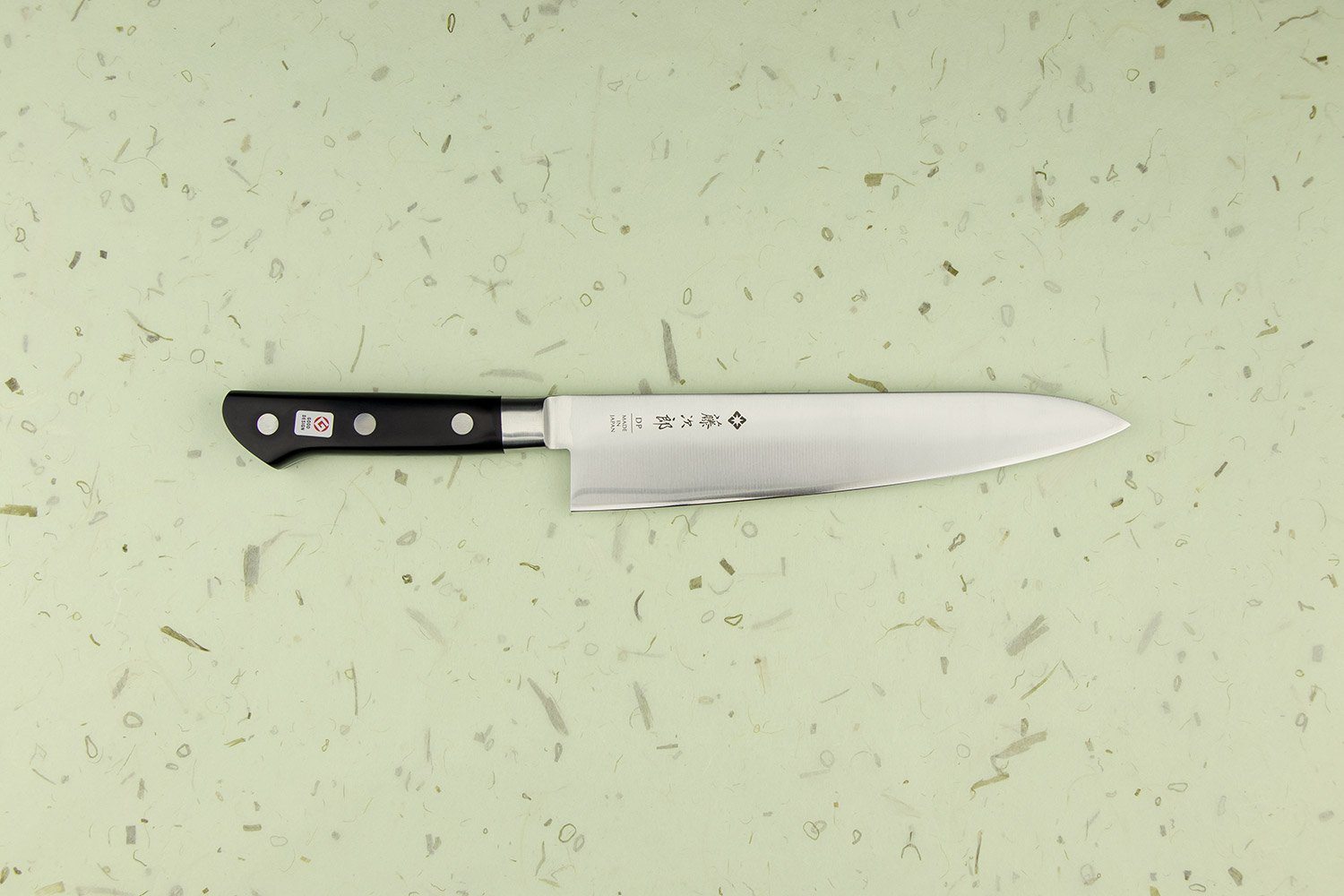
Tojiro
Tojiro DP Gyuto 210mm
Tradeoff: The yo handle is comfortable but unremarkable. The grind can vary slightly between units. Tojiro is a factory brand, not an artisan operation, and consistency is good but not perfect.
Fujiwara FKM
Region: Seki, Gifu Steel: AUS-8 Price tier: Budget
Fujiwara (now operating under the SOUMA name) produces simple, honest knives in Seki. The FKM line uses AUS-8 stainless steel, which is softer than VG-10 at around 58 HRC, but easier to sharpen and very forgiving.
The Fujiwara FKM Gyuto 210mm is the knife for someone who wants Japanese geometry without worrying about maintenance. AUS-8 will not hold an edge as long as VG-10, but it sharpens back in minutes on a whetstone and resists chipping well.
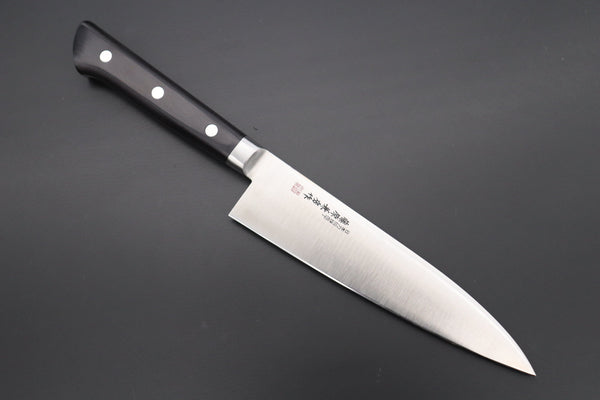
Fujiwara FKM
Fujiwara FKM Gyuto 210mm
Tradeoff: Needs sharpening more often. Less edge retention than VG-10 alternatives. But the ease of maintenance makes it ideal for learning to sharpen.
Seki Magoroku (KAI Group)
Region: Seki, Gifu Steel: Various (entry models unlisted, mid range uses VG-10, premium uses VG-MAX) Price tier: Budget to premium
KAI Group’s domestic Japanese line spans a huge range. The budget Moegi series (like the Seki Magoroku Moegi Santoku 165mm) is a solid first knife, while the 10000CL series (like the Seki Magoroku 10000CL Gyuto 210mm) uses VG-10 and competes directly with Tojiro. KAI also makes Shun (covered below), but the Seki Magoroku line offers similar quality at lower prices without the Damascus cladding and marketing markup.
Tier 2: Mid Range (Where the Value Is)
This is the tier where knives start to feel special. Better steel, more refined grinds, distinct character from each maker. Most serious home cooks will find their long term knife here.
MAC
Region: Seki, Gifu Steel: Proprietary high carbon stainless (molybdenum vanadium) Price tier: Mid
MAC has been making knives in Seki since 1964 and has built one of the strongest reputations in professional kitchens worldwide. The Professional series is thin, light, and takes a wicked edge. MAC does not publicize their exact steel composition, but it performs in the 57 to 61 HRC range across their lines, with the Professional series sitting at the upper end.
The MAC MTH-80 Professional Gyuto 200mm is a clinic in “less is more” knife design. No Damascus, no fancy handle materials, no marketing gimmicks. Just a razor sharp, lightweight blade that professional cooks reach for shift after shift.

MAC
MAC Professional MTH-80 Gyuto 200mm
Tradeoff: The aesthetic is purely functional. If you want a knife that looks as impressive as it cuts, MAC is not the brand for you. The handles are plain and the blade finish is utilitarian.
Yoshikane
Region: Sanjo, Niigata Steel: SKD (Semi-Stainless, ~7% chromium) Price tier: Mid
Yoshikane is a family forge in Sanjo that has been making knives for generations. They are a favorite in the r/chefknives community for their excellent grinds and their use of SKD semi-stainless steel. SKD sits between carbon and stainless: roughly 7% chromium gives it some corrosion resistance, but it will develop a patina over time.
The Yoshikane SKD Gyuto 210mm is widely regarded as one of the best values in Japanese cutlery. The grind is thin behind the edge, food release is good, and the SKD steel takes an extremely keen edge while being easier to maintain than full carbon.
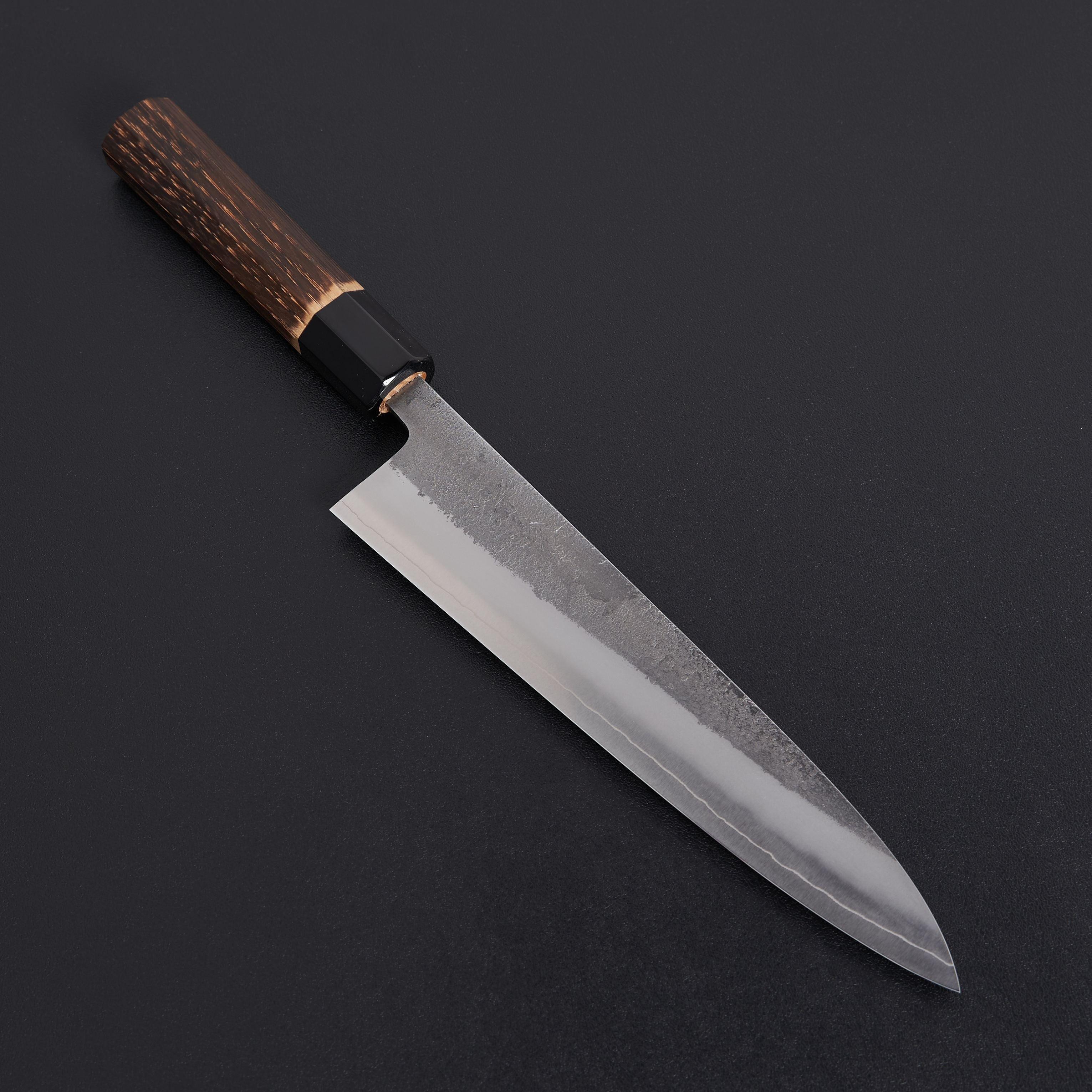
Yoshikane
Yoshikane SKD Gyuto 210mm
Tradeoff: Semi-stainless means it is not maintenance free. You still need to dry it after use and it will develop a patina. Availability can be inconsistent since it is a smaller operation.
Sakai Takayuki
Region: Sakai, Osaka Steel: Various (VG-10, Ginsan, Shirogami #2, Aogami Super) Price tier: Mid to premium
Sakai Takayuki (a brand of Aoki Hamono) represents 600 years of Sakai knifemaking tradition. They produce an enormous range, from budget friendly VG-10 damascus gyutos to premium single bevel traditional knives made by certified craftsmen using the division of labor system that Sakai is famous for: one person forges (kajishi), another sharpens (togishi), another handles (ezukeshi).
The Sakai Takayuki 45-Layer Damascus Gyuto 210mm is the accessible entry point: a VG-10 core wrapped in 45 layers of damascus cladding with a wa handle. It looks premium, performs well, and comes from one of Japan’s most historic knifemaking cities.

Sakai Takayuki
Sakai Takayuki 45-Layer Damascus Gyuto 210mm
Tradeoff: The range is so broad that quality varies across lines. Their high end traditional knives are exceptional, but the entry level models are solid without being remarkable.
Global
Region: Tsubame-Sanjo, Niigata (manufactured by Yoshikin) Steel: CROMOVA 18 Stainless Price tier: Mid
Global divides opinion. The one piece stainless steel construction (blade and handle forged from a single piece of CROMOVA 18 stainless) is unique. The dimpled handle is either brilliantly ergonomic or uncomfortably slippery, depending on who you ask.
The Global G-2 Gyuto 200mm, released over 35 years ago, remains one of the most recognizable Japanese knives in the world. At 56 to 58 HRC, it is on the softer end for a Japanese knife, but the thin grind and factory edge are excellent.

Global
Global G-2 Gyuto 200mm
Tradeoff: The CROMOVA 18 steel is softer than VG-10 or SG2, which means it does not hold an edge as long. The handle polarizes people. And the design has not changed significantly in decades, which is either timeless or stagnant depending on your perspective.
Shun (KAI Group)
Region: Seki, Gifu Steel: VG-MAX (proprietary, VG-10 family) Price tier: Mid to premium
Shun is probably the most recognized Japanese knife brand outside of Japan. Made by KAI Group (founded 1908) in Seki, the Classic line features VG-MAX steel cores clad in 68 layers of Damascus stainless. They look stunning in a knife block.
The Shun Classic Gyuto 200mm is the knife that introduced many Western cooks to Japanese knives. The Damascus pattern, the D-shaped pakkawood handle, and the strong edge retention make it a solid performer.
Where it gets complicated: Shun’s pricing reflects significant marketing and retail distribution costs. For the same money, you can often get a knife with better steel or a better grind from a brand like Takamura or Yoshikane. The knife community generally respects Shun as a genuine Japanese brand but considers it overpriced relative to its performance.
Miyabi (Zwilling)
Region: Seki, Gifu Steel: SG2 (Birchwood line), FC61 (Koh line) Price tier: Mid to premium
Miyabi is Zwilling’s Japanese line, manufactured in Seki. The Birchwood series uses SG2 steel hardened to 63 HRC with 101 layers of Damascus cladding and birch wood handles. They are, frankly, beautiful knives.
The Miyabi Birchwood SG2 Gyuto 200mm delivers legitimate SG2 performance in an eye catching package. The CRYODUR ice hardening process and hand honed edge (honbazuke) at 9.5 to 12 degrees are genuinely impressive specs.
Where it gets complicated: Like Shun, you are paying a premium for the brand name and the finish. The SG2 steel is excellent, but the same steel in a Takamura costs less and cuts better because Takamura puts more of the budget into the grind rather than the cladding.
Tier 3: Premium (The Serious Knives)
This is where you start getting knives that the enthusiast community genuinely gets excited about. Distinctive grinds, premium steels, and real craftsmanship from specific blacksmiths whose names carry weight.
Takamura
Region: Echizen, Fukui Steel: SG2 / R2 (Powdered Steel) Price tier: Mid to premium
Takamura is the brand that r/chefknives recommends more than almost any other in the mid to premium range. The R2 line uses SG2 powdered steel at approximately 63 HRC, ground extremely thin. The result is a knife that glides through food with almost no resistance.
The Takamura R2 Gyuto 210mm is a laser: thin, light, and devastatingly sharp. It is the knife that demonstrates what SG2 steel can do when paired with a skilled grind.
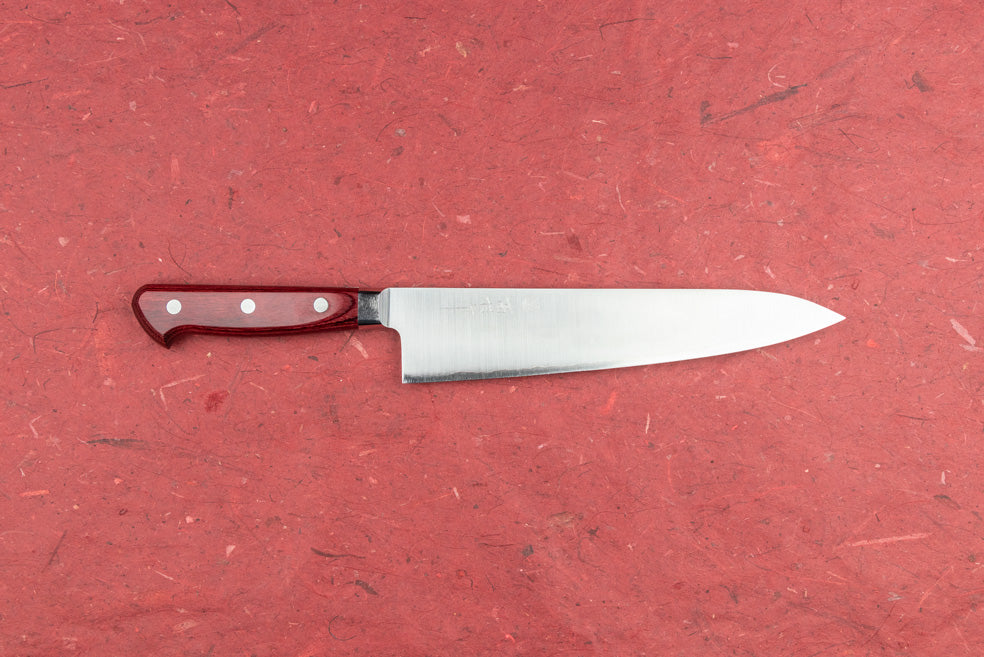
Takamura
Takamura R2 Gyuto 210mm
Tradeoff: The thin grind means it is not suitable for heavy tasks. No rocking through butternut squash or chicken bones. It is a precision instrument, not a workhorse. The yo handle is fine but nothing special. Everything here went into the blade.
Misono
Region: Seki, Gifu Steel: Swedish stainless (UX10 line), molybdenum stainless (Molybdenum line) Price tier: Premium
Misono is a professional’s brand. The UX10 line uses Swedish stainless steel and is the knife you will find in high end restaurant kitchens worldwide. Serious Eats has featured the Molybdenum line as a top pick. Misono does not chase trends or produce flashy Damascus cladding. They make reliable, precise tools.
The Misono UX10 Gyuto 210mm has a devoted following among professional chefs. The Swedish stainless takes a very fine edge, the balance is excellent, and the fit and finish is impeccable.
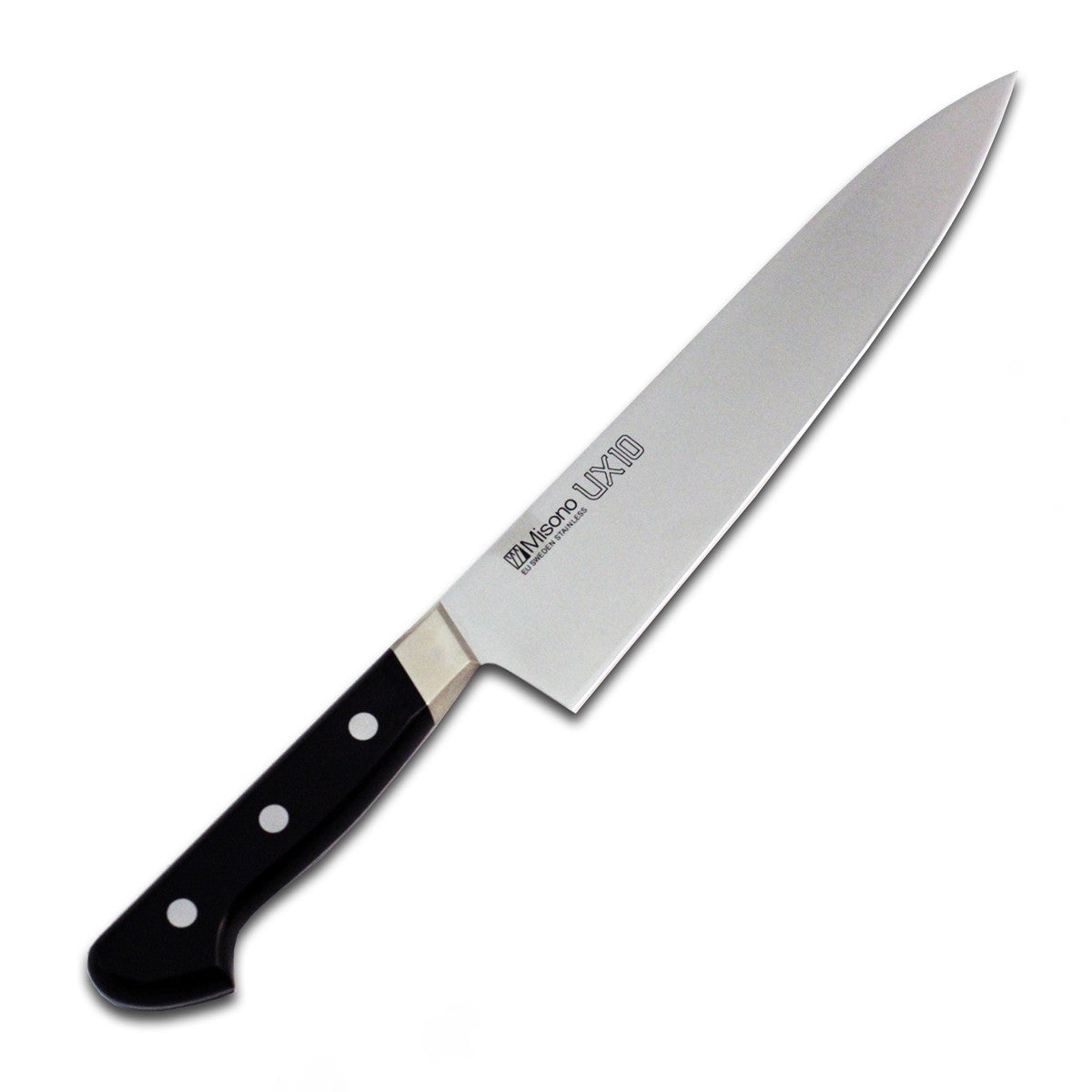
Misono
Misono UX10 Gyuto 210mm
Tradeoff: The aesthetic is conservative. These look like professional tools, not display pieces. Limited variety compared to brands that offer multiple steel types and handle options.
Masakage
Region: Echizen, Fukui (Takefu Knife Village) Steel: Shirogami #2 (Yuki line), Aogami Super (Koishi line) Price tier: Mid to premium
Masakage is a collaboration brand from Takefu Knife Village in Echizen. The Yuki line (forged by Yoshimi Kato) uses Shirogami #2 carbon steel with stainless cladding and a distinctive nashiji (pear skin) finish. The Koishi line uses Aogami Super with a kurouchi finish. Both are forged by named blacksmiths, which gives each line a distinct personality.
The Masakage Yuki Gyuto 210mm is a beautiful introduction to carbon steel. Shirogami #2 takes a razor edge and sharpens easily. The stainless cladding means only the cutting edge reacts, making it more manageable than a fully reactive blade. The name “Yuki” means snow, referencing the frosty nashiji finish.

Masakage
Masakage Yuki Gyuto 210mm
For those wanting even more edge retention, the Masakage Koishi Gyuto 210mm uses Aogami Super (Blue Super Steel), one of the hardest carbon steels available at up to 67 HRC.
Tradeoff: Carbon steel requires more care. Shirogami #2 will develop a patina and can rust if left wet. These are not low maintenance knives. Not recommended as a first Japanese knife for someone who has never used carbon steel.
Tier 4: Collector and Artisan (The Summit)
These are knives from individual blacksmiths or very small workshops. Limited production, distinct styles, and the kind of craftsmanship that turns a kitchen tool into something more.
Yu Kurosaki
Region: Echizen, Fukui (Takefu Knife Village) Steel: SG2 / R2 (Powdered Steel) Price tier: Premium to luxury
Yu Kurosaki is one of the most sought after blacksmiths working in Takefu Knife Village. His knives feature dramatic finishes (tsuchime, damascus, rainbow) and exceptional grinds. The Senko line uses SG2 at approximately 63 HRC with a hammered tsuchime finish and octagonal wa handles.
The Yu Kurosaki Senko SG2 Gyuto 210mm is both a high performance cutter and a visually striking piece. Kurosaki’s grinds are thin and precise, and his finish work sets his knives apart from production brands.
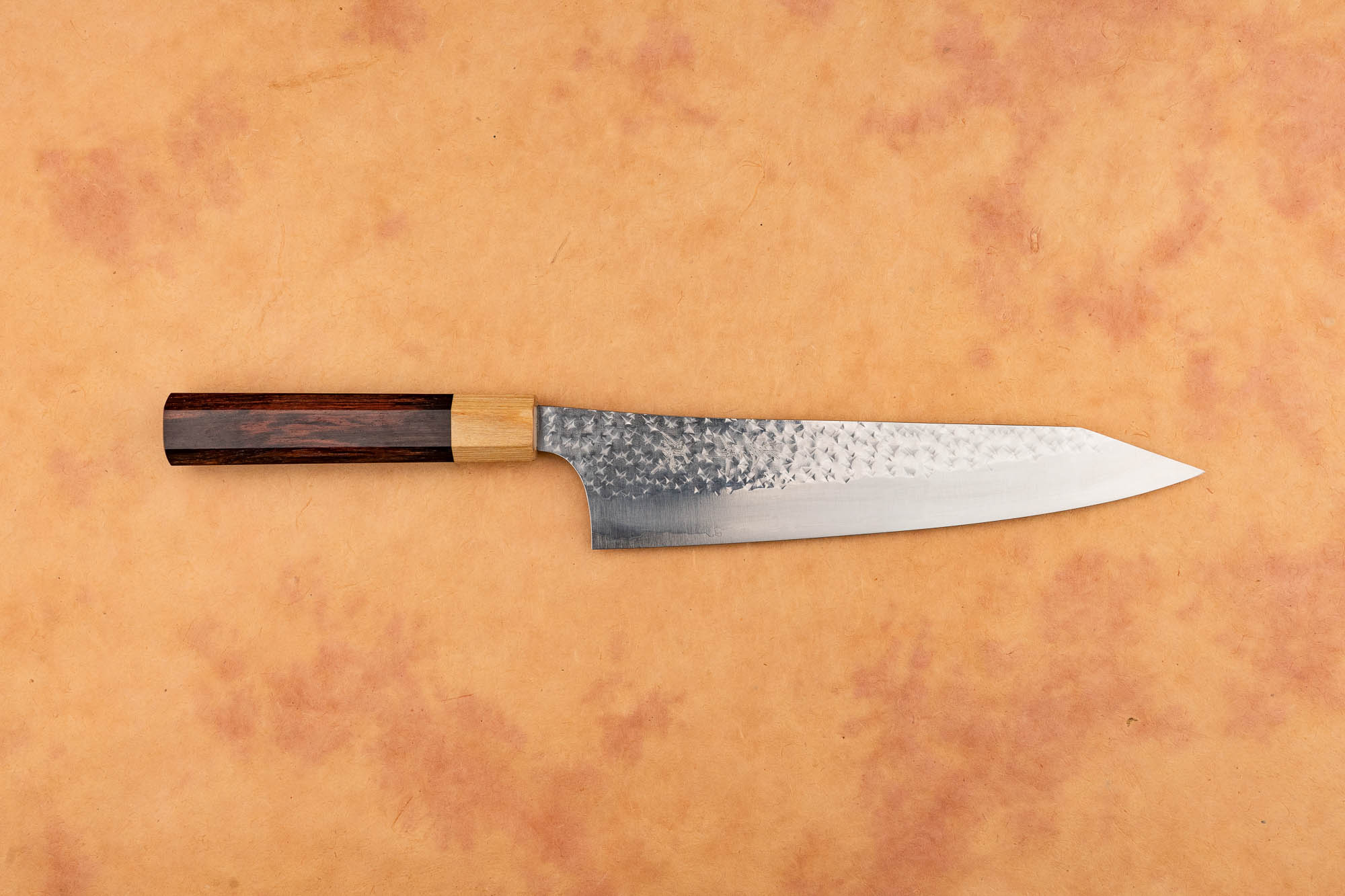
Yu Kurosaki
Yu Kurosaki Senko SG2 Gyuto 210mm
Ashi Ginga (Ashi Hamono)
Region: Sakai, Osaka Steel: Ginsan (Silver #3), Swedish stainless Price tier: Premium
Ashi Hamono in Sakai produces the Ginga line, which is legendary among knife enthusiasts for its incredibly thin grind. The Ginga gyuto is one of the thinnest production knives available, using Ginsan (Silver #3, made by Proterial/formerly Hitachi Metals) or Swedish stainless steel.
The Ashi Ginga Gyuto 210mm is the “laser” that other lasers are compared against. If cutting performance is your priority above all else, this is the benchmark.
Mazaki
Region: Sanjo, Niigata Steel: Shirogami #2 (White Steel #2) Price tier: Premium
Mazaki produces traditional carbon steel knives in Sanjo with a kasumi (mist) finish. The Mazaki Kasumi Gyuto 210mm uses Shirogami #2 and has a devoted following for its excellent grind geometry and food release. Mazaki knives are frequently recommended in the r/chefknives community as a step up from production brands.
Other Artisan Makers Worth Knowing
Several blacksmiths and small workshops deserve mention, even if they are harder to find:
- Sukenari (Echizen): Known for ZDP-189 steel at extraordinary hardness. The Sukenari ZDP-189 Gyuto 210mm is for experienced users who want maximum edge retention and do not mind a more demanding sharpening process.
- Munetoshi (Tosa, Kochi): Produces rustic kurouchi carbon steel knives. The Munetoshi Kurouchi Gyuto 210mm uses Aogami Super and represents the Tosa tradition of tough, no nonsense work knives.
- Kyohei Shindo (Tosa, Kochi): Another Tosa blacksmith, Shindo works with Aogami #2 steel. The Kyohei Shindo Aogami #2 Kurouchi Gyuto 210mm is a distinctive hand forged knife with real character.
- Shiro Kamo (Echizen): Produces SG2 Damascus knives with intricate patterns. Premium tier work from a respected Echizen blacksmith.
- Shigefusa (Sanjo, Niigata): The most coveted name in Japanese knives. Waiting lists stretch for years, production is limited to roughly 200 knives annually by the Iizuka family. If you can find one, you own a piece of Japanese knifemaking history.
- Takeda (Niigata): Known for extremely light, thin knives with tall blades. A polarizing style that people either love or find impractical.
- Kagekiyo / Takada no Hamono (Sakai): High end Sakai makers that appear frequently in “no budget, best of the best” discussions on r/chefknives.
The Brands to Avoid
These brands use Japanese sounding names, Japanese aesthetics, or vaguely reference “Japanese steel” in their marketing. They are not Japanese.
Dalstrong is a Canadian brand that manufactures in Yangjiang, China. XINZUO is based in Yangjiang, China. Huusk is a dropshipping operation with no connection to Japan. imarku claims a 1949 Japanese founding but manufactures in Yangjiang, China.
None of these brands belong in a conversation about Japanese knife brands. If you see them ranked alongside Tojiro or MAC on another website, that website either did not do its research or does not care about accuracy.
For more on how to spot fakes and verify authenticity, see our full authentication guide.
How We’d Spend the Money
First Japanese knife on a tight budget: Tojiro DP Gyuto 210mm or Fujiwara FKM Gyuto 210mm. Both are genuine Japanese knives that will outperform anything else at their price point.
One knife for a lifetime: Takamura R2 Gyuto 210mm. SG2 steel at this grind quality is hard to beat at any price. If you want stainless and prefer a wa handle, the Yoshikane SKD Gyuto 210mm offers a different but equally compelling experience with its semi-stainless SKD steel.
Ready for carbon steel: Masakage Yuki Gyuto 210mm. The stainless cladding makes it more forgiving than a fully reactive blade, and the Shirogami #2 core takes an absurdly keen edge.
Collector’s piece: Yu Kurosaki Senko SG2 Gyuto 210mm. Performance and artistry from one of Echizen’s most acclaimed blacksmiths.
The Full Tier List
| Tier | Brands | What to Expect |
|---|---|---|
| Budget | Tojiro, Fujiwara FKM, Seki Magoroku (entry) | Real Japanese steel, good geometry, basic handles and finish |
| Mid | MAC, Yoshikane, Sakai Takayuki, Global, Shun, Miyabi | Better steels, refined grinds, distinct brand character |
| Premium | Takamura, Misono, Masakage, Ashi Ginga, Mazaki | Exceptional grinds, named steels, enthusiast community favorites |
| Collector | Yu Kurosaki, Sukenari, Shiro Kamo, Shigefusa, Takeda | Individual blacksmiths, limited production, heirloom quality |
Related Reading
Want to go deeper? These guides cover specific aspects of choosing a Japanese knife:
- What Makes Japanese Knives Special: The fundamentals of Japanese steel and blade geometry.
- Japanese Knife Types Explained: Gyuto, santoku, nakiri, and more.
- Japanese Knife Steel Types: Aogami, Shirogami, VG-10, SG2, and what each one means for performance.
- Your First Japanese Knife: If you are narrowing down your first purchase.
- How to Tell if Your Japanese Knife Is Authentic: Spotting fakes and verifying real Japanese made knives.
- Carbon Steel vs Stainless Steel Knives: Helping you decide which maintenance level suits you.