Best Japanese Knives Under $100: Entry Level Picks That Deliver
Quick Takeaway
- Best all rounder: Tojiro DP Gyuto 180mm. VG-10 steel, proven track record.
- Full size on a budget: Fujiwara FKM Gyuto 210mm, though availability is spotty as the brand transitions.
- Santoku: MAC Superior Santoku 170mm. Vegetables: Tojiro DP Nakiri 165mm.
- Under $100 means stainless steel, western handle. That’s perfectly fine for most home cooks.
What $100 Gets You in a Japanese Knife
A hundred dollars is a real sweet spot for Japanese kitchen knives. You are past the territory of generic Amazon blades and into knives made by established Japanese manufacturers using legitimate high performance steel.
At this price, expect VG-10 or AUS-8 stainless steel, factory ground edges between 10 and 15 degrees per side, and western (yo) handles made from pakkawood or similar materials. You will not find hand forged carbon steel or traditional wa handles at this budget, but you will get a knife that is meaningfully sharper and harder than anything from a western knife brand at the same price.
The tradeoff: thinner blades and harder steel mean these knives need a bit more care than a Victorinox or Wusthof. No twisting, no frozen food, no dishwasher. Treat them right and they will outperform knives costing two or three times as much.
The Picks
Tojiro DP Gyuto 180mm

Tojiro
Tojiro DP Gyuto 180mm
The Tojiro DP line is the default recommendation in every knife community for a reason. VG-10 stainless steel core clad between two layers of softer stainless, a comfortable ECO wood handle, and a factory edge that comes genuinely sharp.
The 180mm (roughly 7 inch) version sits right at the $100 line on most retailers. If you have used western chef’s knives, the shorter length will feel familiar while being noticeably thinner and lighter. The blade profile is flat enough for push cutting but has enough belly for a gentle rock.
Steel: VG-10 (three layer clad) Blade length: 180mm Handle: Western (ECO wood) Weight: ~130g
The 210mm version of this knife has crept above $100 on Amazon in recent years, typically landing around $125 to $130. If you can stretch your budget slightly, the extra 30mm of blade makes a difference for anyone doing serious meal prep. But the 180mm is the one that stays under the line.
Who it is for: Home cooks who want one good knife that does everything. First time Japanese knife buyers who want something proven.
Fujiwara FKM Gyuto 210mm
Fujiwara FKM
Fujiwara FKM Gyuto 210mm
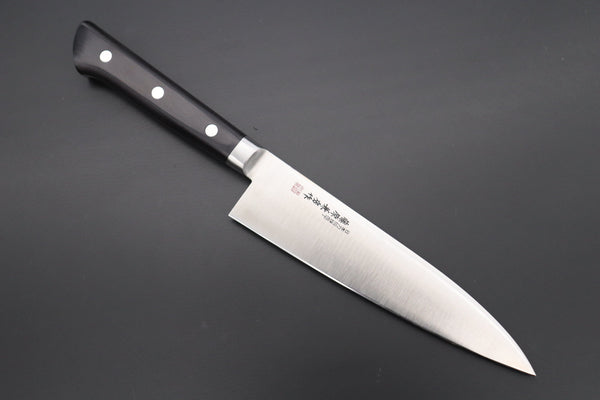
The Fujiwara FKM has been a staple recommendation on r/chefknives for years, and for good reason. It gives you a full 210mm blade, the standard length for a Japanese gyuto, at a price that typically lands between $55 and $65 from specialty retailers like JapaneseChefsKnife.com.
The steel is AUS-8 molybdenum vanadium stainless. Not as hard as VG-10 (expect roughly 58 HRC versus 60 HRC on the Tojiro), which means it will not hold an edge quite as long, but it is easier to sharpen. For a home cook who does not want to fuss with whetstones every week, this is a reasonable tradeoff.
Steel: AUS-8 molybdenum vanadium stainless Blade length: 210mm Handle: Western (pakkawood) Weight: ~150g
One thing to know: the Fujiwara Kanefusa brand is in the process of transitioning to a new name, SOUMA. The knife maker behind the FKM line retired, but the craftspeople who built the knives are continuing under the new brand with the same designs and materials. Availability can be inconsistent during this transition, so check specialty Japanese knife retailers rather than Amazon.
Who it is for: Cooks who want the full 210mm length without paying Tojiro DP prices. People comfortable buying from specialty knife shops.
MAC Superior Santoku 170mm

MAC
MAC Superior Santoku 170mm
If you prefer a santoku over a gyuto, the MAC Superior is the standout at this price. MAC has been making knives in Seki City, Japan since the 1960s, and their Superior line consistently shows up in professional kitchen drawers alongside knives costing three times as much.
The blade is a proprietary high carbon stainless steel (MAC does not publish the exact alloy) hardened to around 59 to 61 HRC. The edge geometry is thinner than most western santoku knives but a touch more robust than a typical Japanese one, which makes it forgiving for less experienced cooks.
At around $75, this is one of the best values on this list. Serious Eats has repeatedly named a MAC santoku as their top pick, though their recommendation is the Professional Hollow Edge model (MSK-65), which is a different, pricier knife from MAC’s Professional line. The Superior sits a tier below in price and uses a different steel treatment, but shares the same Seki City manufacturing and MAC’s reputation for edge geometry.
Steel: MAC proprietary high carbon stainless Blade length: 170mm Handle: Western (pakkawood) Weight: ~130g
Who it is for: Home cooks who prefer the shorter, wider santoku shape. Anyone who wants a knife from a brand with decades of professional kitchen credibility.
Tojiro DP Santoku 170mm
Tojiro
Tojiro DP Santoku 170mm
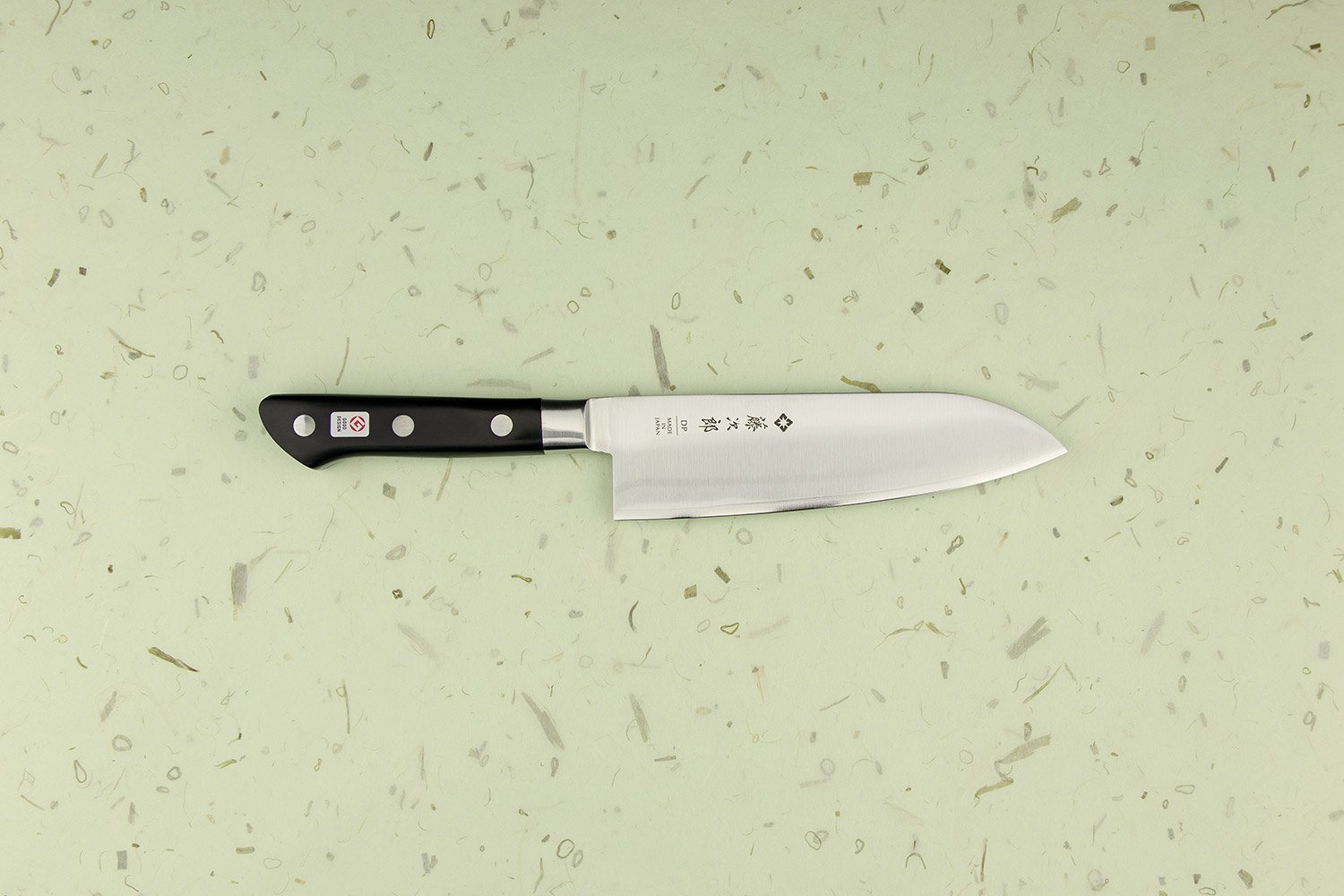
The Tojiro DP Santoku shares the same VG-10 three layer construction as the gyuto, just in a santoku profile. It typically sells between $90 and $110, sometimes dipping under $100 during sales.
Compared to the MAC Superior, the Tojiro has harder steel (VG-10 at ~60 HRC) and holds an edge slightly longer. The MAC has a more comfortable handle and better fit and finish out of the box. Both are excellent, and the choice often comes down to whichever is in stock and on sale.
Steel: VG-10 (three layer clad) Blade length: 170mm Handle: Western (ECO wood) Weight: ~115g
Who it is for: Tojiro fans who prefer the santoku shape. Cooks who prioritize edge retention over ease of sharpening.
Tojiro DP Nakiri 165mm

Tojiro
Tojiro DP Nakiri 165mm
A nakiri is a vegetable specific knife with a flat blade profile designed for straight up and down chopping. If you cook a lot of vegetables, stir fries, or plant based meals, a nakiri is a genuinely useful tool that earns its spot in a kitchen.
The Tojiro DP Nakiri uses the same VG-10 three layer construction as the rest of the DP line. The flat edge makes full contact with the cutting board on every stroke, which means cleaner cuts through things like scallions, herbs, and cabbage. No rocking motion needed.
Steel: VG-10 (three layer clad) Blade length: 165mm Handle: Western (ECO wood) Weight: ~145g
This is a specialist, not a replacement for a gyuto or santoku. If you already have a general purpose knife and want to add something for vegetable work, the Tojiro DP Nakiri is one of the cheapest ways to get a proper Japanese nakiri from a reputable maker.
Who it is for: Cooks who do a lot of vegetable prep. Second knife buyers looking to expand a small collection.
Seki Magoroku Moegi Santoku 165mm
Seki Magoroku
Seki Magoroku Moegi Santoku 165mm
The cheapest knife on this list, and the best option if you want to spend well under $100. Seki Magoroku is a brand from KAI, the same company behind Shun, making knives in Seki City.
The Moegi Santoku is a basic, no frills knife. The steel is not as hard as VG-10, the handle is simple, and the fit and finish is utilitarian. But it is a real Japanese made knife from a real manufacturer, it comes sharp, and it gets the job done.
Steel: High carbon stainless (KAI proprietary) Blade length: 165mm Handle: Western (resin)
Think of this as the minimum viable Japanese knife. If you are curious about Japanese knives but not ready to spend $75 to $100, the Moegi is a low risk way to see what the fuss is about.
Who it is for: Absolute beginners. Budget conscious cooks who want something Japanese made without the commitment.
What We Left Out (and Why)
Tojiro DP Gyuto 210mm: This used to be the undisputed king of the under $100 category. Prices have risen, and it now sits around $125 to $130 on most retailers. Still a fantastic knife. If your budget has a little flexibility, it is worth the stretch.
Global G-2 Gyuto 200mm: A good knife from a respected Japanese brand, but it typically costs $110 to $130 and the all steel handle is polarizing. Some people love the grip, others find it slippery.
Victorinox Fibrox Pro: Not Japanese. A great knife for the money, but a different category entirely. The steel is softer, the edge is thicker, and it does not compare to the cutting feel of any knife on this list.
What to Look for at This Price
Steel matters most. VG-10 and AUS-8 are the two steels you will see most often under $100. VG-10 is harder and holds an edge longer. AUS-8 is softer and easier to sharpen. Both are stainless and low maintenance. Read more about how these steels compare.
Ignore Damascus patterns. Any “Damascus” knife under $100 is using the pattern as marketing, not as a performance feature. The lamination pattern on a Tojiro DP (three layers, no visible pattern) serves the same structural purpose without the markup.
Check the manufacturer. Tojiro, Fujiwara FKM, MAC, and Seki Magoroku are established Japanese knife makers. If a brand name you have never heard of is selling a “Japanese style” knife for $40 on Amazon with 5,000 reviews, it is almost certainly made in China with Japanese sounding marketing. Nothing wrong with Chinese knives at that price, but know what you are buying. Our guide on how to tell if your Japanese knife is authentic covers what to look for.
Western handles are fine. Traditional Japanese (wa) handles are lighter and give you more blade feel, but they start appearing at higher price points. Every knife on this list has a western handle, and none of them are worse for it at this price range.
Taking Care of Your Knife
Japanese knives at any price need a few basic habits. Hand wash and dry immediately. Use a wooden or plastic cutting board, never glass or ceramic. Do not use the knife to scrape food off the board with the edge (flip it over and use the spine). And learn to sharpen on a whetstone or find a good local sharpening service. If you are new to Japanese knives entirely, our beginner’s buying guide walks through the basics.
These knives are thinner and harder than western knives, which means they chip if you abuse them but cut better when you treat them right. The learning curve is small, and the payoff is immediate.
The Bottom Line
The Tojiro DP Gyuto 180mm is the safest recommendation for most people. Proven steel, proven design, widely available, and right at the $100 mark. If you want more blade for less money and do not mind buying from a specialty shop, the Fujiwara FKM Gyuto 210mm is hard to beat on value. And if you lean toward the santoku shape, the MAC Superior Santoku 170mm is the one to get.
Any of these six knives will be a meaningful upgrade over whatever you are using now. Pick the shape you prefer, take care of it, and you will wonder why you waited so long.