Is Damascus Steel Better? What the Pattern Really Means
Quick Takeaway
- Damascus is cladding, not the cutting edge. Performance comes from the core steel, not the pattern.
- On carbon cores (Aogami, Shirogami), Damascus cladding provides real corrosion protection. On stainless cores (VG10, SG2), it’s cosmetic.
- Modern “Damascus” is pattern welded steel, no connection to historical Wootz Damascus beyond the name and wavy pattern.
- Plain knife with great steel beats Damascus with mediocre steel. Prioritize the core. Damascus adds cost, so know whether you’re paying for function or looks.
What Damascus Steel Is (and Isn’t)
When someone says “Damascus steel knife,” they almost always mean a knife with pattern welded cladding. Two or more types of steel are forge welded together, folded repeatedly, and manipulated to create a visible pattern. That layered steel wraps around a harder core steel that forms the cutting edge.
This is not the same material as historical Damascus steel. The original, known as Wootz steel, was a crucible steel produced in India and Sri Lanka. It got its patterns from carbide structures forming naturally during a specific cooling process, not from layering different metals. Production of true Wootz steel was largely lost by the mid-19th century.
Modern pattern welded Damascus borrows the name and the visual style. The manufacturing process is completely different. Neither is inherently “better” than the other since they are fundamentally different materials made in different ways for different reasons.
How a Damascus Knife Is Built
Most Damascus kitchen knives use a san mai (three layer) or multi layer construction:
San mai: A hard core steel is sandwiched between two layers of softer cladding steel. The cladding protects the core and makes the blade easier to thin and maintain. When those cladding layers are pattern welded from alternating steels, you get a Damascus pattern on the blade face.
Multi layer Damascus: Instead of three layers, you might see 33, 45, 67, or even higher layer counts. More layers means a finer, more intricate pattern. The core steel is still a separate, harder steel that forms the cutting edge.
In both cases, the Damascus is the jacket. The edge is something else entirely.
The Core Steel Is What Cuts
This is the most important thing to understand: the Damascus pattern has nothing to do with cutting performance.
Your edge retention, how sharp the knife gets, how easy it is to sharpen, and how it handles hard ingredients all depend on the core steel. Common cores in Damascus kitchen knives include:
- VG10: Stainless, widely used, takes a good edge and holds it reasonably well. Found in knives from Shun and Sakai Takayuki.
- SG2 (R2): A powdered stainless steel. Harder than VG10, finer grain structure, excellent edge retention. Used by Miyabi and makers like Yu Kurosaki.
- AUS10: Another stainless option, similar territory to VG10. Used by Dalstrong among others.
- Aogami Super (Blue Super Steel): A reactive carbon steel prized for its edge retention and ease of sharpening. Not stainless, so it will patina and can rust.
- Shirogami (White Steel): Reactive carbon, known for getting extremely sharp and being easy to sharpen. Also not stainless.
A Damascus knife with an SG2 core will outperform a Damascus knife with a mediocre core, regardless of how many layers the cladding has or how beautiful the pattern looks. If someone is selling you on “67 layer Damascus” without telling you what the core steel is, that is a red flag.
For a deeper look at these steels, see our guide to Japanese knife steel types.
When Damascus Cladding Has a Real Function
Here is where the “is it just cosmetic?” question gets nuanced. It depends on the core steel.
Carbon core + stainless Damascus cladding = functional benefit.
Knives with reactive cores (Aogami, Shirogami, or semi-stainless steels like SKD) are vulnerable to corrosion across the blade body. When you wrap that reactive core in stainless Damascus cladding, you protect most of the blade surface from moisture. Only the thin exposed edge (where the carbon core meets food) needs careful drying and maintenance.
This is a genuine, practical advantage. It gives you the cutting performance of a carbon steel edge with significantly less maintenance worry on the blade body. Many traditional Japanese makers use this approach for exactly this reason.
Stainless core + stainless Damascus cladding = cosmetic.
If the core is already stainless (VG10, SG2, AUS10), wrapping it in stainless Damascus layers adds visual appeal and nothing else. The core does not need corrosion protection because it handles moisture fine on its own.
This does not make these knives bad. It just means the Damascus is decoration, and you should price your expectations accordingly. A Shun Classic Gyuto 200mm with its VG10 core and Damascus cladding is a solid knife. But its cutting performance comes from the VG10, not the pattern.
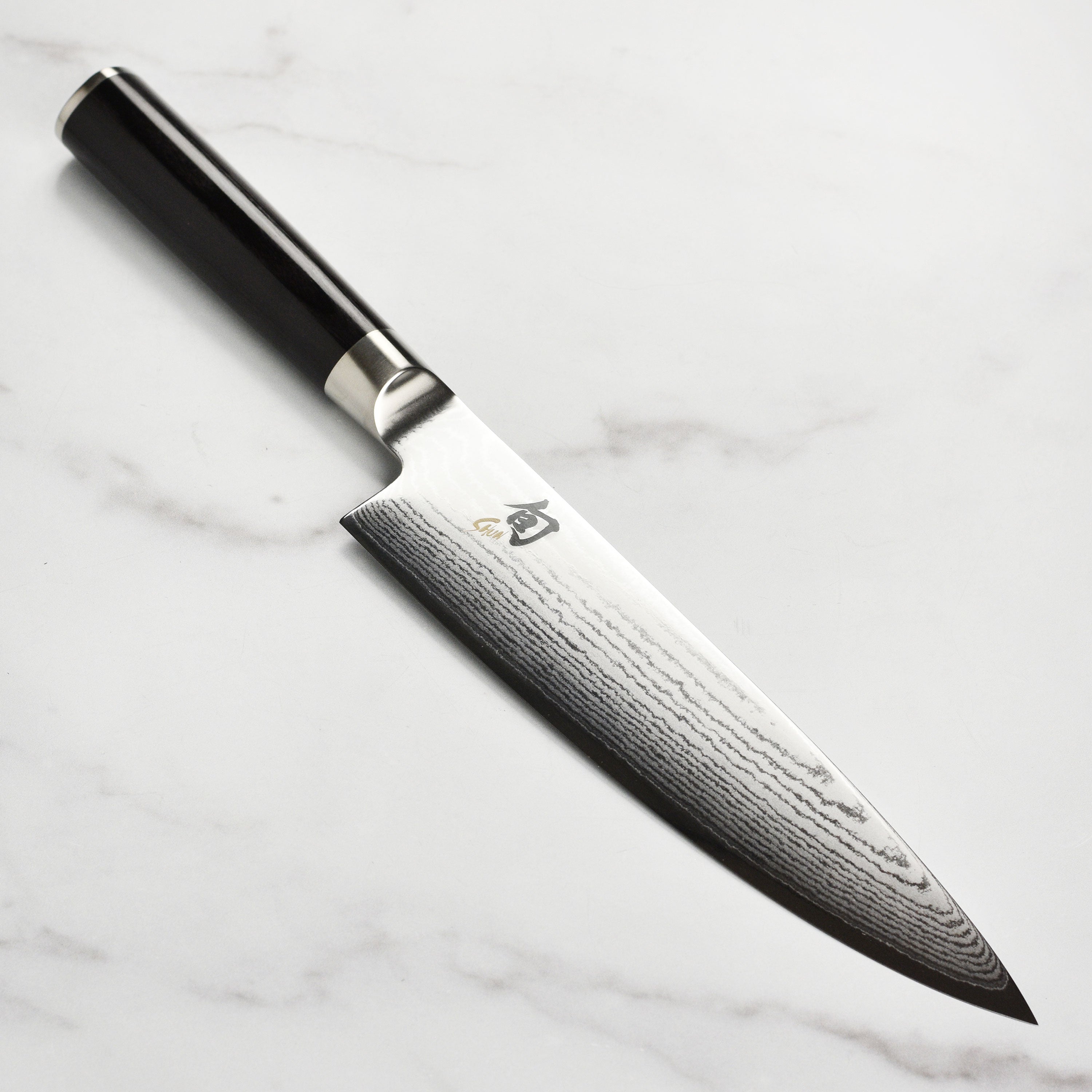
Shun
Shun Classic Gyuto 200mm
The Layer Count Myth
Marketing loves layer counts. “67 layers!” “101 layers!” “Damascus forged from 33 layers of premium steel!”
Higher layer counts create finer, more detailed patterns. That is the entire functional difference. A 67 layer knife does not cut better than a 33 layer knife. It does not hold an edge longer. It does not sharpen more easily.
Layer count is a visual specification, not a performance specification. Once you understand that Damascus is cladding, this becomes obvious: more layers in the jacket do not change the blade inside it.
Real Damascus vs. Fake: What to Watch For
The budget knife market is flooded with knives advertised as “Damascus” that use acid etched patterns on regular steel. These are not pattern welded. The “Damascus” pattern is essentially printed on.
Signs of fake Damascus:
- The pattern is perfectly uniform. Real pattern welded steel has organic variation. If every wave looks identical, it is likely etched.
- The pattern does not continue through the edge. On a real Damascus clad knife, you can often see where the cladding meets the core steel. On a fake, the pattern just sits on the surface.
- Suspiciously low price with no core steel listed. If a “Damascus” knife is suspiciously cheap and the listing does not mention the core steel, proceed with skepticism.
- The pattern disappears with sharpening. If you sharpen the blade and the pattern vanishes, it was acid etched on, not forged through.
This matters because fake Damascus commands a price premium for what is often very average steel underneath. You are paying for a laser engraving, not craftsmanship.
Damascus Knives Worth Considering
If you want Damascus and you want substance behind the pattern, here are examples from our catalog across different price points:
Budget: There Isn’t One (and That’s the Point)
Authentic Japanese Damascus knives don’t exist at budget prices. The cheapest real options start in the mid range. If you see a “Damascus” knife under $60, it’s almost certainly Chinese made with a cosmetic pattern welded cladding over mediocre steel. At that price, a Tojiro DP Gyuto 210mm with plain cladding and a VG10 core will outperform any budget Damascus knife on the market.
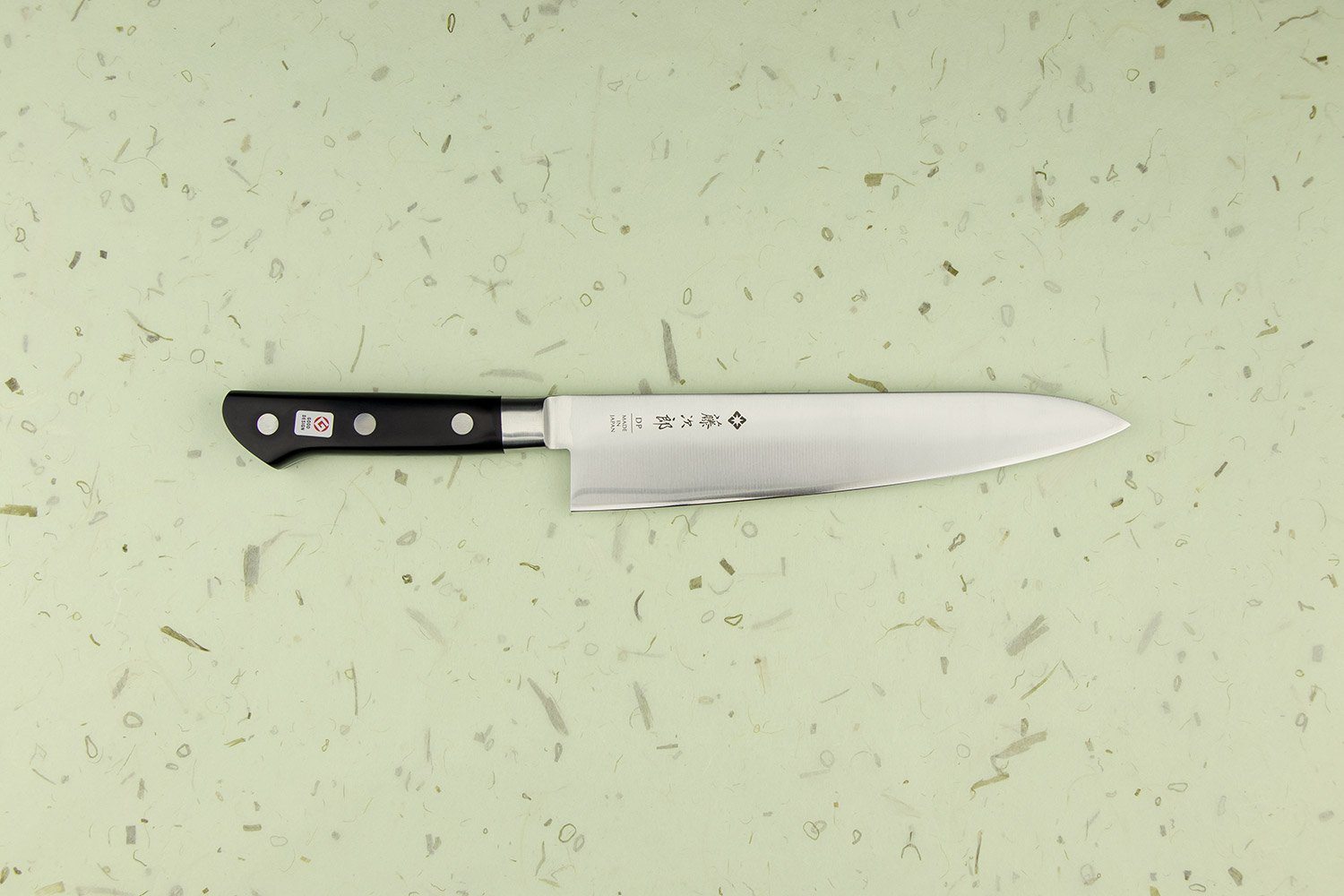
Tojiro
Tojiro DP Gyuto 210mm
Mid Range: Sakai Takayuki 45-Layer Damascus Gyuto 210mm

Sakai Takayuki
Sakai Takayuki 45-Layer Damascus Gyuto 210mm
VG10 core with 45 layer Damascus cladding. Sakai Takayuki is a respected name from Sakai, Japan’s historic knife production center. Solid performance, real craftsmanship.
Mid Range: Miyabi Birchwood SG2 Gyuto 200mm
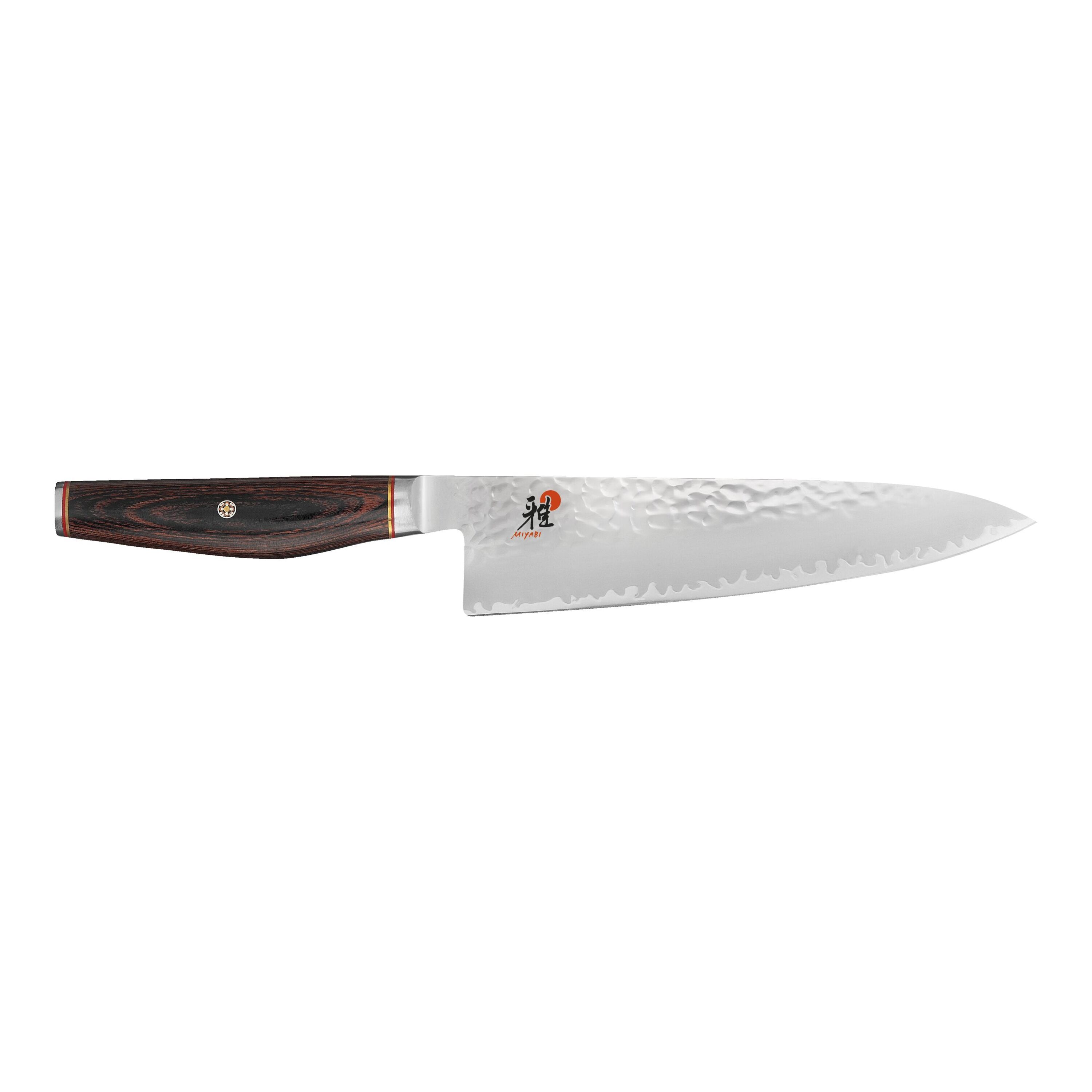
Miyabi
Miyabi Birchwood SG2 Gyuto 200mm
SG2 core wrapped in a flower patterned Damascus. Miyabi is the premium Japanese line from Zwilling. The SG2 core here is legitimately excellent steel, and the Birchwood handle is distinctive.
Luxury: Yu Kurosaki Fujin SG2 Gyuto 210mm
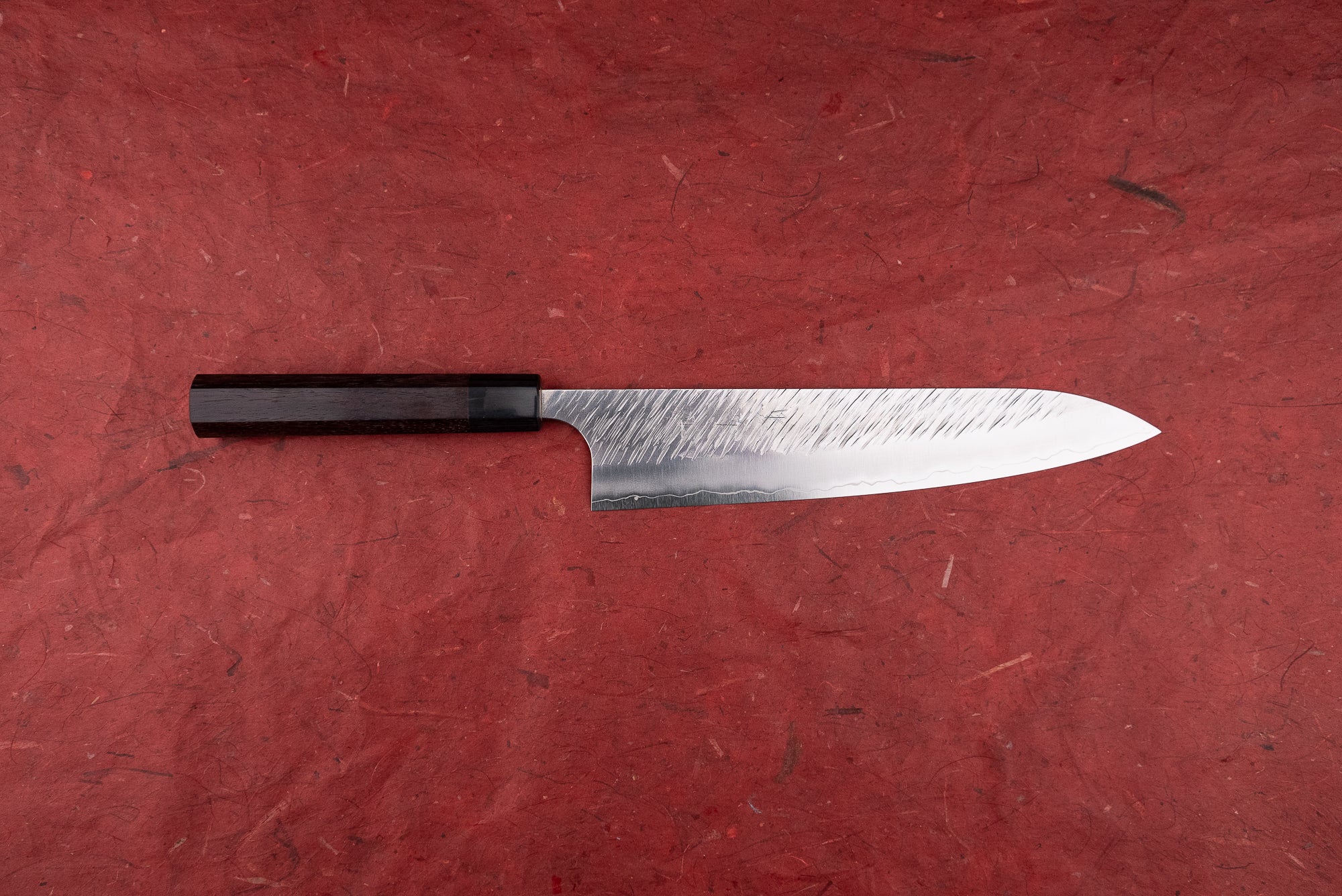
Yu Kurosaki
Yu Kurosaki Fujin SG2 Gyuto 210mm
Yu Kurosaki is one of the most celebrated blacksmiths in Takefu, Japan. The Fujin line features his signature wind patterned Damascus over an SG2 core. This is where Damascus craftsmanship reaches an art form level, and the steel performance backs it up.
What About Non Damascus Alternatives?
You can get outstanding knives without Damascus cladding. Other common Japanese knife finishes include:
- Migaki (polished): Clean, mirror like finish. Found on workhorses like the Tojiro DP Gyuto 210mm and the Takamura R2 Gyuto 210mm. No pattern, pure performance focus.
- Kurouchi (blacksmith’s finish): The dark, rough forged finish left from the heat treatment process. Rustic aesthetic, functional (the scale provides some corrosion resistance). Found on knives like the Masakage Yuki Gyuto 210mm.
- Nashiji (pear skin): A textured, matte finish that helps with food release. Understated and practical.
- Tsuchime (hammered): Visible hammer marks that create small air pockets between the blade and food, reducing sticking. Functional and attractive.
- Kasumi (mist): The traditional finish showing the contrast between the hard core and soft cladding in a non Damascus construction.
These finishes often cost less than Damascus for equivalent core steel quality. If you care about cutting performance above all else, a migaki finished knife with premium steel is often the best value.
For a broader look at what makes Japanese knives distinctive, see our overview of Japanese knife craftsmanship.
The Bottom Line
Damascus steel in modern kitchen knives is cladding. It is beautiful, it involves real skill to produce, and in one specific scenario (stainless cladding over a carbon steel core) it provides genuine corrosion protection.
But it does not make a knife cut better. It does not improve edge retention. It does not make sharpening easier.
If you love the way Damascus looks and you are choosing between two knives with the same core steel, go for the Damascus. There is nothing wrong with buying something because it is gorgeous. Just go in knowing that the pattern is the jacket, not the blade.
If you are on a budget, spend your money on better core steel and a simpler finish. A Takamura R2 Gyuto 210mm in plain migaki polish with its SG2 core will outcut most Damascus knives at twice the price. That is not a knock on Damascus. It is just how priorities work.
Know what the core steel is. Know whether the cladding serves a function or is purely decorative. Make your choice with your eyes open, and you will end up with a knife you are happy with either way.
For help choosing your first Japanese knife regardless of finish, check out our beginner’s buying guide.