Japanese Knife Starter Kit: Building Your First Set
Quick Takeaway
- Gyuto (210mm) + petty (120 to 150mm) handles 95% of kitchen tasks. Two great knives beat six mediocre ones.
- Budget: Tojiro DP Gyuto 210mm + Tojiro DP Petty 150mm. Mid range: MAC MTH-80 Gyuto 200mm + Takamura R2 Petty 130mm. Premium: Takamura R2 Gyuto 210mm + Yu Kurosaki Senko SG2 Petty 130mm.
- Add a bread knife if you cut loaves, and a whetstone when you’re ready to maintain edges.
The Essential Duo: Gyuto and Petty
If you cook at home with any regularity, two knives cover almost everything.
Gyuto (210mm): This is your main knife. The Japanese version of a chef’s knife, but typically lighter, thinner, and sharper out of the box. A 210mm blade handles everything from breaking down a chicken to mincing garlic to slicing vegetables. It’s long enough for large produce like cabbage and short enough to feel controlled during detail work. For a deeper look at what makes this knife different from Western chef’s knives, see our guide to what makes Japanese knives special.
Petty (120mm to 150mm): The utility knife of Japanese cutlery. “Petty” comes from the French “petit,” and it fills the gap between a full gyuto and a paring knife. A 130mm or 150mm petty handles peeling, trimming, coring, slicing small fruits, deveining shrimp, and any task where a 210mm blade feels too long. Some people use a paring knife for these jobs, but a petty gives you a longer cutting edge and more control on the board. Our knife types guide breaks down how these categories differ.
That’s it. Those two knives, kept sharp, will handle nearly every task in a home kitchen. If you want to understand the different shapes available and when each one makes sense, the types guide covers gyuto, santoku, nakiri, and more.
What About a Third Knife?
The most common addition is a bread knife. Serrated edges tear through crusty loaves without compressing the crumb, and they’re useful for tomatoes when your other knives are due for sharpening. Good news: bread knives don’t need to be expensive. A Tojiro Bread Slicer 235mm does the job well and costs less than most specialty knives.

Tojiro
Tojiro Bread Slicer 235mm
Beyond bread, the next useful addition depends on what you cook most:
- Nakiri (165mm): If you do a lot of vegetable prep, a flat profiled nakiri makes board work faster. The Tojiro DP Nakiri 165mm is a solid budget option.
- Santoku (165mm to 175mm): Some people prefer a santoku over a gyuto for everyday tasks. It’s shorter and wider, which can feel more natural for push cutting. Not a replacement for a gyuto, but a comfortable complement if the gyuto feels too long for quick jobs.
Don’t rush the third knife. Use your gyuto and petty for a few months first. You’ll learn what tasks feel awkward, and that tells you exactly what to add next.
Budget Starter Kit
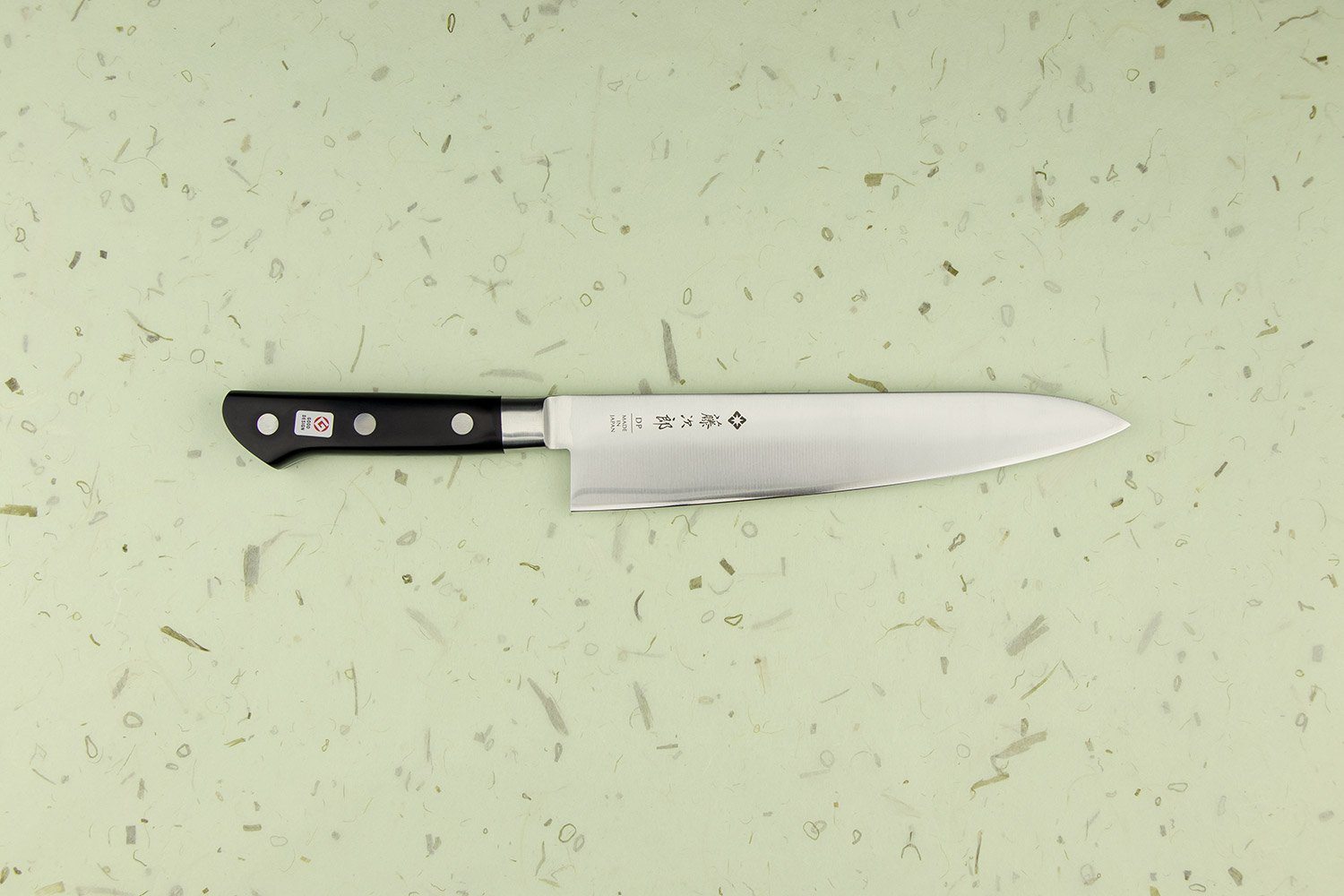
Tojiro DP Gyuto 210mm
Tojiro
Tojiro DP Gyuto 210mm
The Tojiro DP line is the most recommended entry point in the Japanese knife community, and for good reason. VG-10 stainless core with a three layer laminated construction. It arrives sharp, holds an edge respectably for the price, and the Western (yo) handle feels familiar if you’re coming from European knives. At 210mm, it’s the standard starting length for a gyuto.
The tradeoff: fit and finish at this price point is functional rather than refined. You might notice minor imperfections in the handle or grind. None of it affects cutting performance. If you want to understand VG-10 and how it compares to other Japanese steels, our steel types guide has the breakdown.
Tojiro DP Petty 150mm

Tojiro
Tojiro DP Petty 150mm
Same steel, same construction, same value proposition. The 150mm length gives you more cutting surface than a traditional paring knife, which makes it useful both in hand and on the board. A natural partner for the DP gyuto.
Alternative budget pair: The Fujiwara FKM Gyuto 210mm and Fujiwara FKM Petty 120mm use AUS-8 stainless steel and cost slightly less. The steel is softer (meaning more frequent sharpening) but also more forgiving if you’re still developing your technique. A legitimate choice if you’re on a tighter budget.
Mid Range Starter Kit
MAC MTH-80 Professional Gyuto 200mm

MAC
MAC Professional MTH-80 Gyuto 200mm
MAC knives don’t get the hype that flashier brands attract, but they have a dedicated following among professional cooks and home enthusiasts who care more about function than aesthetics. The MTH-80 is a 200mm gyuto with a thin grind, excellent edge retention, and one of the most comfortable yo handles in the category. It cuts above its price.
MAC’s factory edge is notably sharp, and the steel responds well to honing and touch up sharpening. If you want a knife that performs at a high level without demanding special maintenance habits, this is a strong pick.
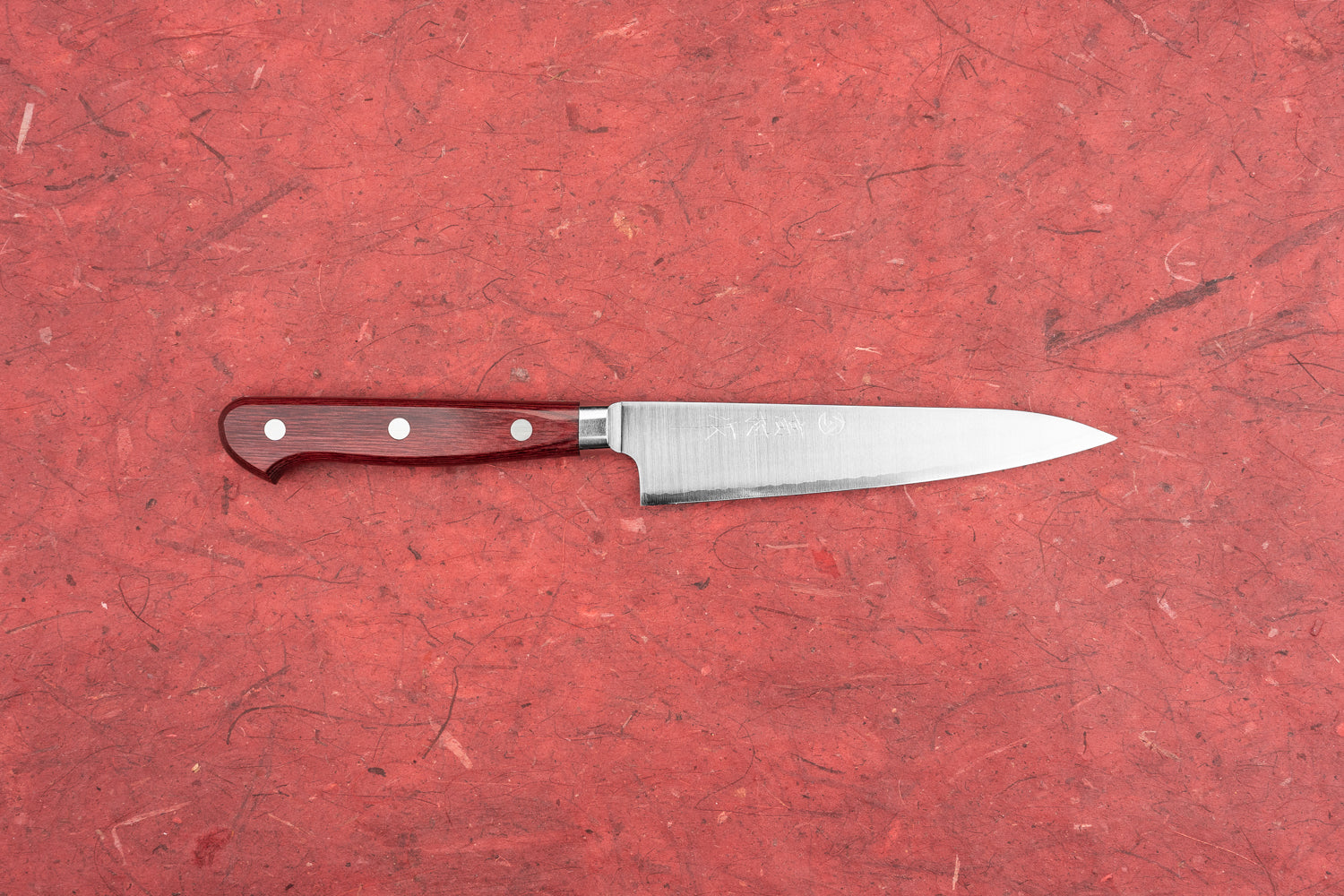
Takamura R2 Petty 130mm
Takamura
Takamura R2 Petty 130mm
Here’s where the mid range kit gets interesting. The Takamura R2 line uses SG2 (also called R2) powdered steel, which is a significant step up from VG-10. It gets extremely sharp, holds that edge for a long time, and the blade is ground thin enough that it glides through produce with very little resistance. At 130mm, the petty length is ideal for detail work.
The steel is harder than most budget options, so it’s slightly less forgiving on hard materials like frozen food or bones (don’t do that with any thin Japanese knife). But for the tasks a petty should handle, this one is exceptional. Our steel types guide explains why SG2 powdered steel has become popular across multiple price ranges.
Why mix brands? Unlike block sets that force you into one manufacturer’s lineup, building your own kit lets you pick the best tool for each role. The MAC gyuto and Takamura petty come from different makers, different steels, different design philosophies. That’s a feature, not a compromise.
Premium Starter Kit
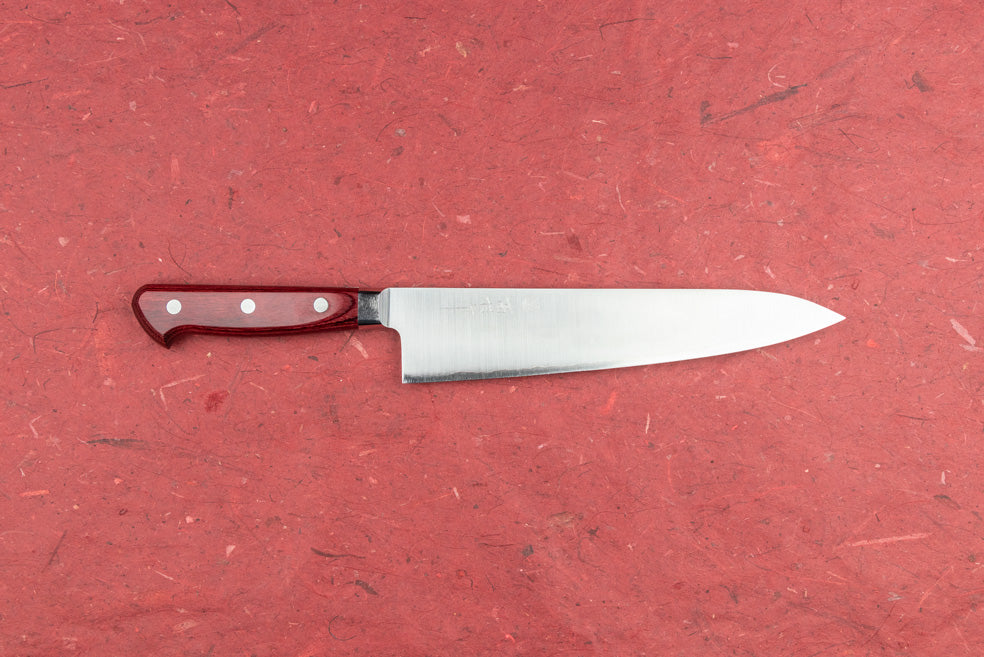
Takamura R2 Gyuto 210mm
Takamura
Takamura R2 Gyuto 210mm
The Takamura R2 gyuto is a laser: extremely thin, extremely sharp, and ground for performance above everything else. SG2 powdered steel at a hardness that most Western knives can’t touch. It slices through onions with almost no resistance. If you’ve only used thick European knives, the first cut with a Takamura is a genuine shift in what you thought a knife could do.
The thin profile means this isn’t the knife for splitting squash or smashing garlic cloves with the flat. It’s a precision cutter, and it excels at that job. The yo (Western) handle keeps it accessible for anyone familiar with standard knife grips.
Yu Kurosaki Senko SG2 Petty 130mm

Yu Kurosaki
Yu Kurosaki Senko SG2 Petty 130mm
Yu Kurosaki is a blacksmith from Echizen, one of Japan’s traditional knife making regions. The Senko line features his signature tsuchime (hammered) finish over SG2 powdered steel. It’s the same core steel family as the Takamura, paired with craftsmanship that you can see and feel.
At 130mm with a wa (Japanese) handle, this petty feels different from Western utility knives. The octagonal handle is lighter and positions the blade’s weight forward, giving you precise control during detail work. It’s a tool that performs at a professional level and looks the part while doing it.
Alternative premium pair: If you prefer carbon steel, the Masakage Yuki Gyuto 210mm and Masakage Yuki Petty 130mm from Masakage offer a matched set in Shirogami #2 (White Carbon Steel) with kurouchi finish. Carbon steel develops a patina over time, takes an incredibly keen edge, and is slightly easier to sharpen on whetstones. The tradeoff is that it requires more care: dry it after use, and don’t leave it wet. Some cooks love the ritual. Others prefer the lower maintenance of stainless.
After the Knives: Accessories That Matter
Two knives alone aren’t a complete kit. A few accessories will protect your investment and keep everything performing.
Cutting board. A good end grain wood board or a soft Japanese rubber board (like Asahi or Hasegawa) protects your edges and feels better to cut on than glass or hard plastic. Your knives will stay sharper longer on the right surface.
Whetstone. Japanese knives are designed to be sharpened, not just honed. A combination stone (around 1000/3000 or 1000/6000 grit) covers both edge repair and polishing. Our care and sharpening guide walks through the full process.
Magnetic knife strip or edge guards. Tossing sharp knives in a drawer dulls them and risks cutting you when you reach in. A wall mounted magnetic strip keeps them accessible and safe. If you don’t want to mount anything, blade guards work too.
What you can skip: Honing rods (steel honing rods can chip hard Japanese steel), electric sharpeners (they remove too much material and set imprecise angles), and any accessory that costs more than the knives themselves.
Why You Don’t Need a Knife Block Set
Walk into any kitchen store and the block sets are front and center. Eight pieces, twelve pieces, sometimes twenty. They look impressive on the counter. But open one up and count what you’re getting: a chef’s knife, a santoku, a bread knife, a utility knife, a couple of paring knives, kitchen shears, a honing rod, and the block itself. Half of those overlap. The utility knife does a worse version of what the petty does. The paring knife is redundant if your petty is the right size. The santoku and chef’s knife fight over the same jobs.
Sets exist because they’re easy to sell, not because they’re the best way to equip a kitchen.
The real issue is quality distribution. A mid range block set spreads its budget across eight items plus packaging. Each knife gets a fraction of the total cost in terms of attention. For the same money, you could buy two knives that are each dramatically better than anything in that box.
Professional cooks figured this out a long time ago. Most working kitchens run on two or three knives that get used constantly and sharpened regularly. The rest of the kit is specialty tools that come out for specific tasks. Home kitchens are no different. You’ll reach for the same two knives 95% of the time. Make those two count.
How to Choose Between the Three Kits
Pick the budget kit if: You’re new to Japanese knives and want to test the waters without a big commitment. The Tojiro DP pair does everything you need while you figure out your preferences. You can always upgrade individual pieces later. If budget is your top concern, our best budget knives guide has more options.
Pick the mid range kit if: You cook regularly and want tools that feel noticeably better than mass market knives. The MAC plus Takamura combination gives you two knives that many cooks never feel the need to replace.
Pick the premium kit if: You’re serious about cooking, you’ve handled Japanese knives before (or you’re ready to commit), and you want the best cutting performance available in a two knife setup. These are knives you’ll use for a decade or more with proper care.
The beauty of building your own kit is that these categories aren’t fixed. You might start with a Tojiro DP gyuto and add a Takamura petty six months later when you’re ready to spend more on the smaller knife. No block set gives you that flexibility.
Where to Buy
Buying from reputable retailers matters more with Japanese knives than with mass market brands. You want shops that source directly from Japanese makers, handle knives properly during shipping, and can answer questions about specific products. Our guide to buying Japanese knives online covers trusted retailers and what to look for.
For tips on verifying that what you’re getting is genuinely made in Japan, check our authentication guide.
Start With Two, Build From There
The best knife starter kit isn’t the one with the most knives. It’s the one where every knife gets used. A gyuto and a petty, chosen thoughtfully, will outperform any block set at twice the price.
Pick a pair that fits your budget. Learn to use them. Learn to sharpen them. Then, when you know exactly what’s missing from your kitchen, add the next knife on purpose. That’s how good collections are built: one intentional piece at a time.