Best Bunka Knives: Is the K-Tip Hype Worth It?
Quick Takeaway
- Best overall: Shibata Koutetsu SG2 Bunka 180mm is the bunka that converted skeptics. Ultra thin grind, stainless SG2 steel, and a 180mm blade that handles everything from delicate herbs to butternut squash.
- Best carbon steel: Masakage Yuki Bunka 170mm brings Shirogami #2 sharpness with a nashiji finish and stainless cladding, keeping maintenance manageable.
- Best workhorse: Yoshikane SKD Bunka 170mm from Sanjo uses semi-stainless SKD steel that shrugs off rust better than carbon but cuts just as well.
- Best on a budget: Tojiro DP Bunka 165mm gives you VG-10 steel and a proper k-tip for less than most santokus.
- The hype verdict: Bunkas are worth it if you want more tip precision than a santoku offers. They are not worth it as your only knife or your first Japanese knife.
What Is a Bunka Knife?
Bunka (文化包丁) translates roughly to “culture knife” or “modern knife.” The name dates to the early postwar period when Western ingredients and cooking techniques were becoming part of everyday Japanese home cooking. The bunka was designed as an all purpose knife for this new reality: a blade that could handle vegetables, fish, and meat in a compact package.
The defining feature is the k-tip, sometimes called a reverse tanto. Where a santoku’s spine curves gently down to meet the edge, a bunka’s spine angles sharply forward, creating a pointed tip. This geometry gives you two things a santoku cannot: precise tip work for scoring, detail cuts, and piercing, plus a flatter belly profile for clean push cuts across the full length of the blade.
Most bunkas run 165mm to 180mm, with a taller blade height than a petty but shorter than a gyuto. Think of it as a santoku that traded its rounded nose for a scalpel tip.
Bunka vs Santoku: When the K-Tip Matters
If you already own a santoku, the bunka comparison is inevitable. Both are compact, Japanese, multipurpose knives in the 165mm to 180mm range. The differences are subtle but real.
The santoku’s rounded tip is forgiving. You can rock it slightly, use it for rough chopping, and hand it to someone who has never held a Japanese knife without worrying about tip damage. It is the safer, more approachable design.
The bunka’s k-tip excels at tasks the santoku handles awkwardly: separating silverskin from meat, scoring the skin on fish fillets, cutting around bones, and making precise incisions in dense vegetables. The flatter profile also means straighter cuts when you push through an onion or a pepper.
The tradeoff is fragility. K-tips are thinner at the point and more prone to chipping if you twist the blade or hit the cutting board at a bad angle. This is not a knife you use carelessly or lend to someone unfamiliar with thin Japanese steel.
Choose a santoku if you want a forgiving daily driver that covers 90% of kitchen tasks without fuss.
Choose a bunka if you value precision tip work, you already know how to handle thin Japanese steel, and you want something more engaging than a santoku for detailed prep.
The Best Bunka Knives
Best Overall: Shibata Koutetsu SG2 Bunka 180mm
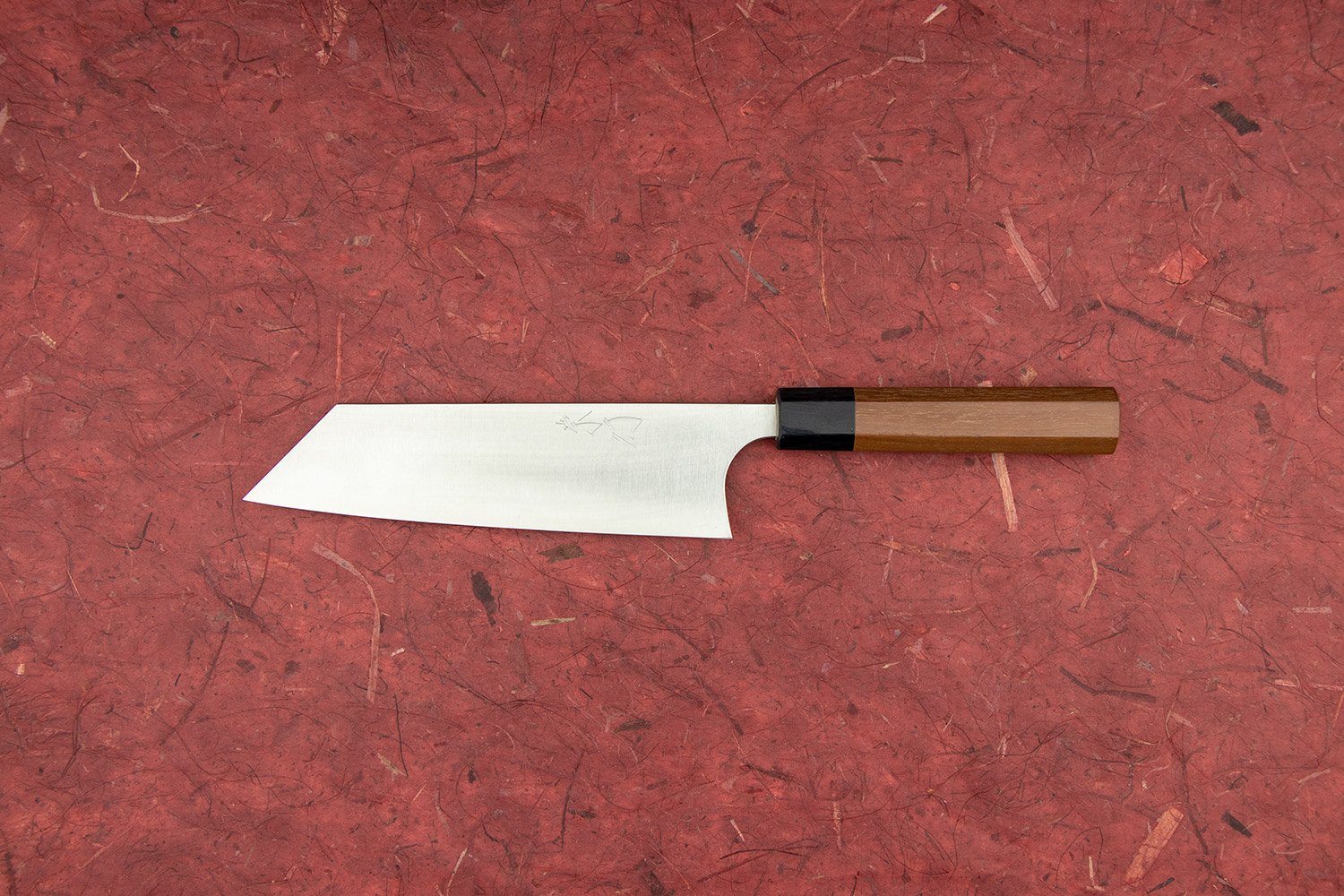
Shibata Koutetsu
Shibata Koutetsu R2/SG2 Migaki Bunka 180mm
Shibata Koutetsu SG2 Bunka 180mm
Takayuki Shibata is a blacksmith based in Hiroshima, and the Koutetsu line has become the benchmark for bunka performance on Reddit and knife forums worldwide. This is the bunka that gets recommended more than any other in r/chefknives and r/TrueChefKnives.
The reason is the grind. Shibata grinds the Koutetsu line impossibly thin, creating what the knife community calls a “laser.” It drops through vegetables with almost no resistance. The 180mm blade is taller than most bunkas (around 52mm at the heel), giving excellent knuckle clearance and board contact.
Steel: SG2 (R2) powdered stainless steel Hardness: ~63 HRC Blade Length: 180mm Handle: Pakkawood yo handle Finish: Migaki (polished)
SG2 means you get high hardness and long edge retention without the rust anxiety of carbon steel. The migaki finish releases food cleanly. The yo handle keeps things familiar for cooks coming from Western knives.
The downside: availability. Shibata Koutetsu bunkas sell out quickly at retailers like Knifewear, Carbon Knife Co, and ChefKnivesToGo. You may need to wait for restocks. The thin grind also means this is not a knife for hard squash or frozen food. Treat it like the precision instrument it is.
Who it’s for: Experienced cooks who want the best cutting performance in a bunka and can handle a thin, delicate edge.
Best Carbon Steel: Masakage Yuki Bunka 170mm
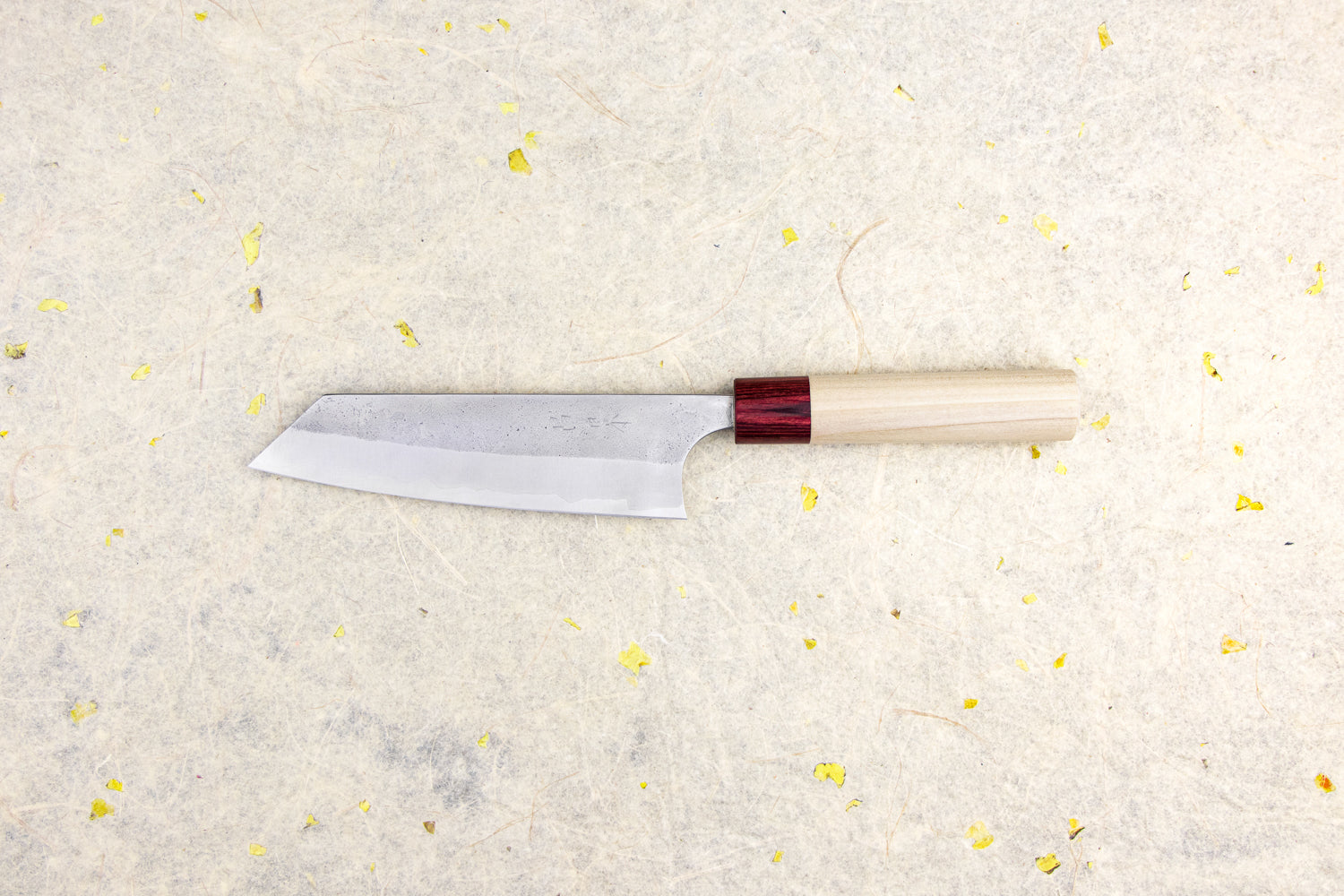
Masakage
Masakage Yuki Bunka 170mm
Masakage Yuki Bunka 170mm
The Masakage Yuki line is forged by Yoshimi Kato in Takefu Knife Village (Echizen), and the bunka version is one of the most popular entry points into carbon steel bunkas. Yuki (雪, “snow”) refers to the frosty nashiji (pear skin) finish on the blade, which reduces food sticking and gives the knife a distinctive look.
Steel: Shirogami #2 (White Steel #2) core, stainless cladding Hardness: ~62-63 HRC Blade Length: 170mm Handle: Ho wood (magnolia) wa handle with red pakkawood collar Finish: Nashiji
Shirogami #2 is the easiest Japanese carbon steel to sharpen. It takes a screaming edge with minimal effort and responds beautifully to whetstones. The stainless cladding means only the thin edge itself is reactive, so maintenance is much less demanding than a fully reactive blade.
The wa handle shifts the balance forward compared to yo-handled bunkas, which some cooks prefer for the added control during push cuts. At 170mm, it is a nimble size that works well in smaller kitchens or for cooks with smaller hands.
Carbon steel caveat: The edge will develop a patina and can rust if left wet. Wipe it dry after use, and it will reward you with the keenest edge in this roundup. If you have never owned a carbon steel knife, read our care guide first.
Who it’s for: Cooks who want to experience carbon steel sharpness and enjoy the ritual of maintaining a reactive blade.
Best Workhorse: Yoshikane SKD Bunka 170mm
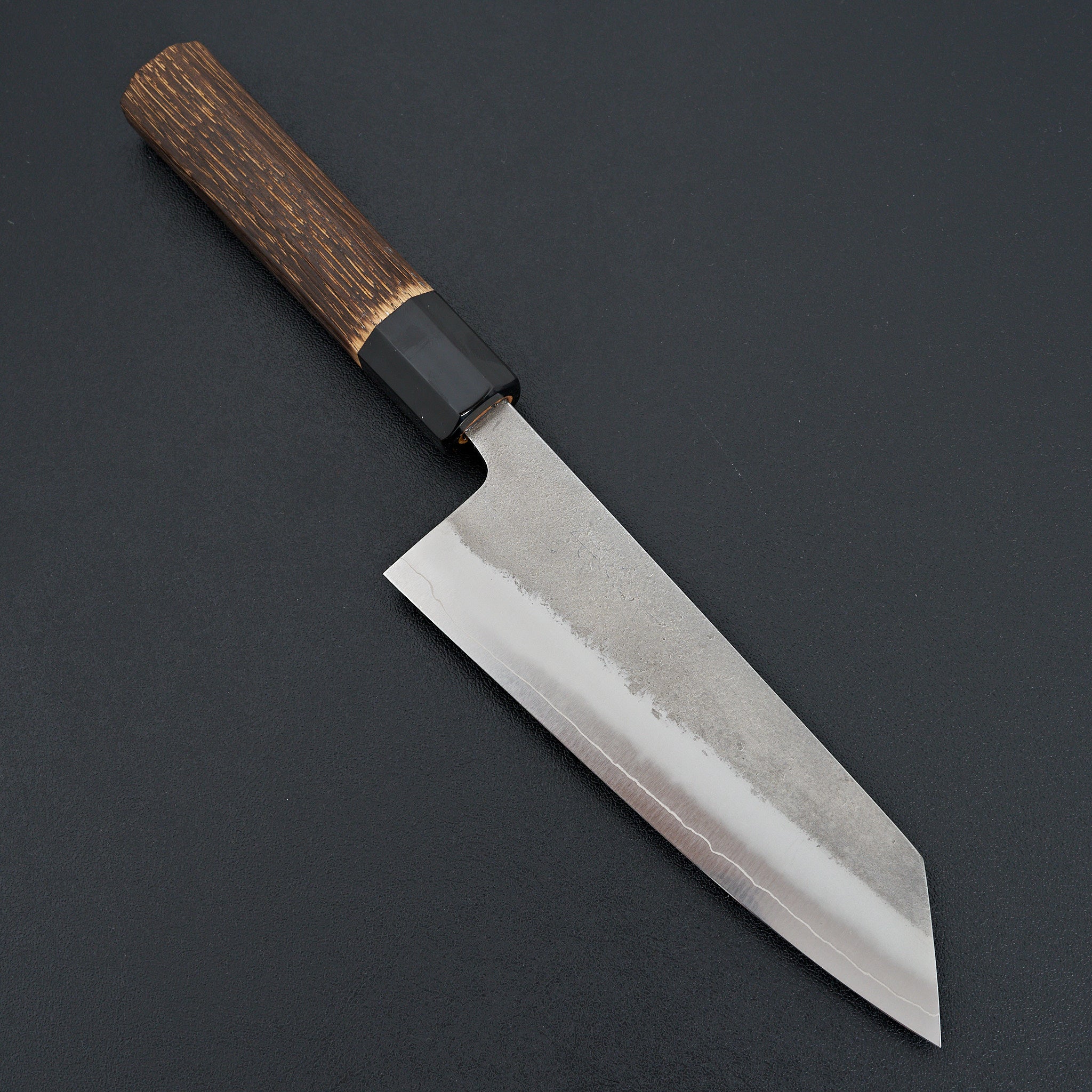
Yoshikane
Yoshikane SKD Nashiji Bunka 165mm
Yoshikane SKD Bunka 170mm
Yoshikane is a family forge in Sanjo, Niigata, and their SKD line has become a favorite among professional cooks for one reason: the steel. SKD is a semi-stainless tool steel with roughly 7% chromium, sitting in the gap between fully reactive carbon and stainless. It holds an edge like carbon steel, sharpens easily, and resists rust far better than shirogami or aogami.
Steel: SKD (semi-stainless tool steel) Hardness: ~63 HRC Blade Length: 170mm Handle: Wa handle (magnolia with buffalo horn ferrule) Finish: Tsuchime (hammered) or nashiji, depending on retailer
The grind sits in a sweet spot the knife community calls “middleweight”: thinner than a typical workhorse, thicker than a laser. It cuts remarkably well through vegetables and proteins while being robust enough for daily professional use without babying.
Multiple Reddit threads single out the Yoshikane SKD bunka as the one they would keep if they could only own one bunka. The fit and finish from this Sanjo forge is consistently excellent, and the hammered tsuchime finish adds both aesthetic appeal and functional food release.
Who it’s for: Professional cooks or enthusiasts who want a bunka they can push hard without worrying about chipping or rusting.
Best Premium Artisan: Yu Kurosaki Senko SG2 Bunka 165mm
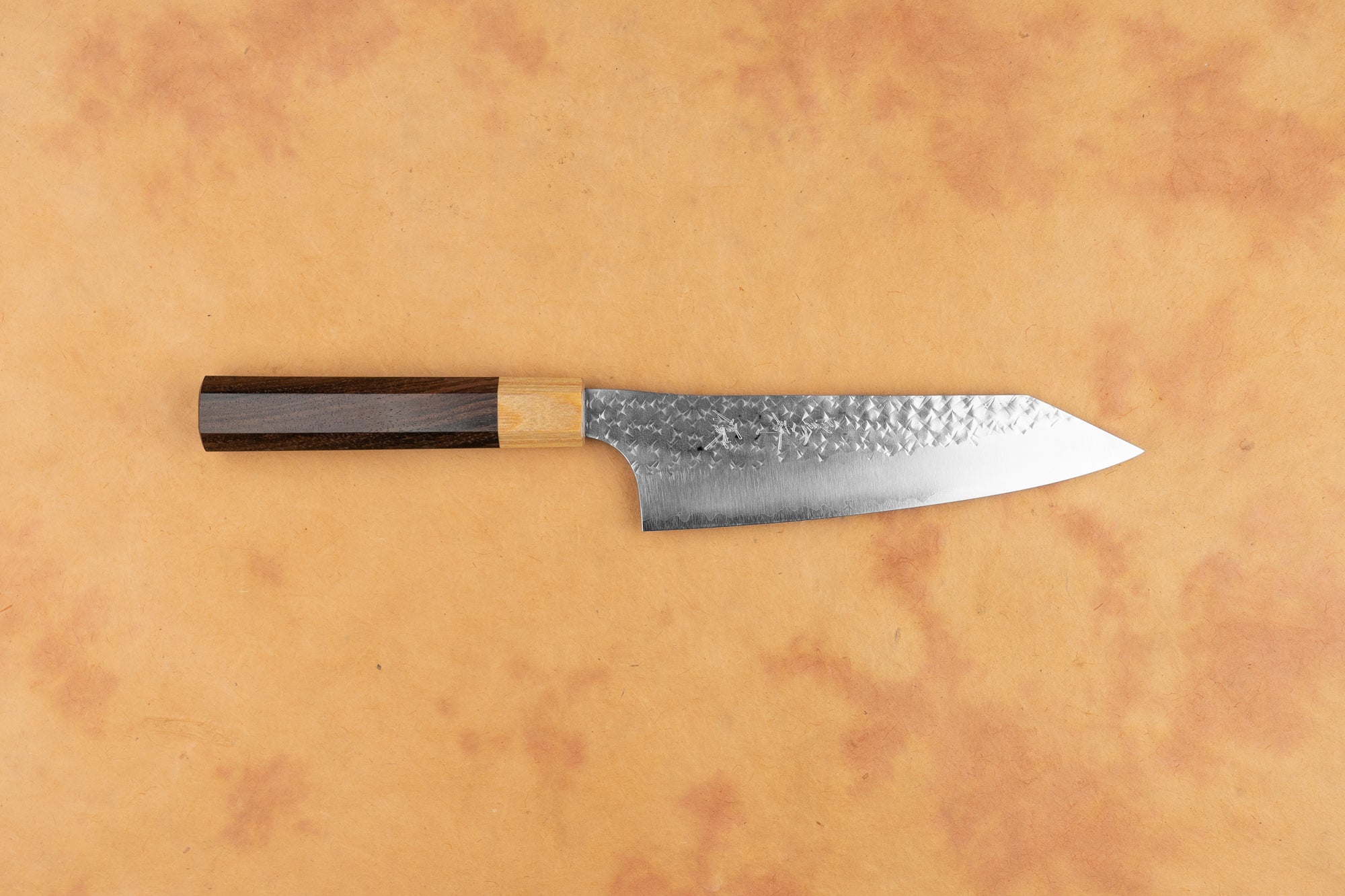
Yu Kurosaki
Yu Kurosaki Senko SG2 Bunka 165mm
Yu Kurosaki is one of the most sought after blacksmiths in Japan, working out of Takefu (Echizen). The Senko line features his signature tsuchime (hammered) finish over an SG2 core, creating a knife that performs as well as it looks.
Steel: SG2 / R2 (Powdered Steel) Hardness: ~63 HRC Blade Length: 165mm Handle: Octagonal wa handle Finish: Tsuchime (hammered)
At 165mm, this is the most compact main pick in the roundup. The shorter blade makes it agile for board work but less suited if you regularly break down large vegetables or proteins. The octagonal wa handle is comfortable in a pinch grip and provides excellent control.
Kurosaki’s knives are popular for a reason: the grinds are thin, the heat treatment is consistent, and the aesthetic is unmistakable. The tsuchime texture helps with food release during rapid cutting. Availability can be spotty since production is limited, but retailers like JapaneseChefsKnife.com and Carbon Knife Co carry the Senko line regularly.
Who it’s for: Anyone who wants an artisan bunka from one of Japan’s premier blacksmiths, with stainless convenience and a shorter blade profile.
Best Budget: Tojiro DP Bunka 165mm

Tojiro
Tojiro DP Cobalt Alloy Bunka 165mm
Tojiro DP Bunka 165mm
The Tojiro DP line has earned its reputation as the best value in Japanese knives, and the bunka version continues that tradition. Made in Tsubame-Sanjo, the DP bunka uses VG-10 core steel in a three layer clad construction, the same setup that makes the DP gyuto a universal budget recommendation.
Steel: VG-10 (three-layer clad) Hardness: ~60-61 HRC Blade Length: 165mm Handle: Yo handle (Eco-wood) Finish: Migaki (polished)
VG-10 at 60-61 HRC gives you a stainless blade that holds a working edge for a reasonable amount of time and is forgiving to sharpen. The grind is thicker than the Shibata or Yoshikane, so food release is not as clean, but the tradeoff is durability. You can use this bunka with less caution.
The yo handle makes it immediately comfortable for anyone transitioning from Western knives. The DP series is widely available at retailers worldwide, so you will not face the stock hunting that plagues premium bunkas.
Who it’s for: Budget-conscious cooks or anyone wanting to try the bunka shape without committing to a premium knife. Also a solid choice as a second knife in a rotation.
Worth Knowing About
Shun Classic Bunka 165mm

Shun
Shun Classic Master Utility (Bunka) 165mm
Shun Classic Bunka 165mm
The Shun Classic uses VG-MAX steel (KAI’s proprietary formulation based on VG-10) with a 68-layer damascus clad and a pakkawood D-shaped handle. Made in Seki by the KAI Group, it is one of the most widely available bunkas at mainstream retailers. The grind is middleweight, the steel is reliable, and the damascus pattern makes it a popular gift knife. It lacks the thin, precise geometry of the Shibata or Yoshikane, but it is a competent all rounder that is easy to find and easy to maintain.
Miyabi Birchwood SG2 Bunka 160mm
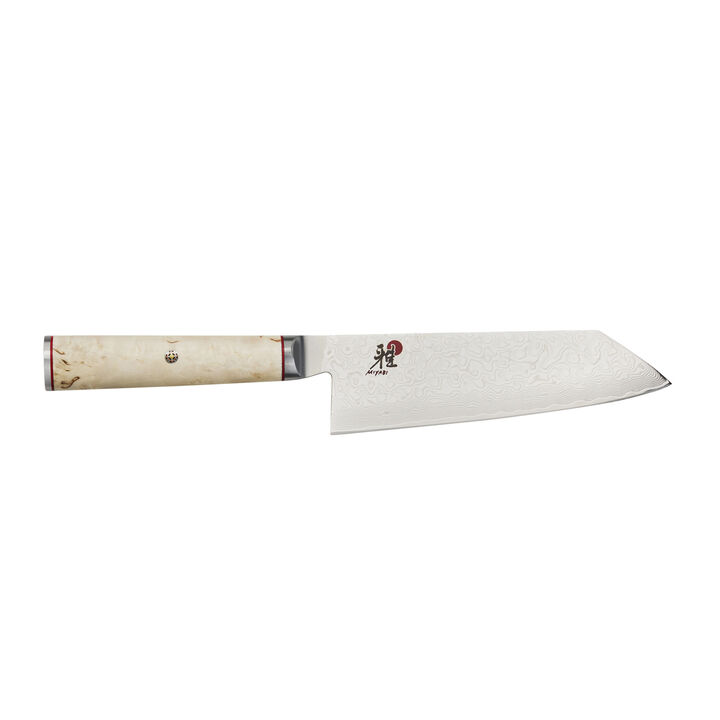
Miyabi
Miyabi Birchwood SG2 Bunka 160mm
Miyabi Birchwood SG2 Bunka 160mm
Miyabi is Zwilling’s premium Japanese line, made in Seki. The Birchwood series bunka features a 101-layer damascus pattern over an SG2 core, a birchwood handle, and typical Zwilling build quality. However, Miyabi bunkas retail well into the premium range, and at that price you can get a Shibata Koutetsu or Yu Kurosaki with better grinds and more interesting provenance. Worth considering if you find it on sale.
How to Use a Bunka
The bunka rewards push cutting technique, the same motion that makes Japanese knives in general so effective. Place the tip where you want to start, push forward and down through the ingredient, then lift and reset. The flat belly means the entire edge makes contact with the board, giving you clean, complete cuts.
For the precision work that justifies the k-tip: hold the blade in a pinch grip, choke up near the heel, and use the pointed tip for scoring, trimming, and detail cuts. The reverse tanto geometry lets you pierce and drag with control that a rounded santoku tip simply cannot match.
What to avoid: Do not rock chop with a bunka. The flat profile and pointed tip are designed for push cutting and tap chopping, not the rocking motion used with curved German knives. Rocking puts lateral stress on the k-tip, which is the thinnest and most fragile part of the blade.
Before You Buy
Is a bunka your first Japanese knife? Go with a gyuto or santoku instead. Our beginner’s buying guide covers the best starting points. Bunkas are best appreciated as a second or third knife, once you understand how thin Japanese steel behaves and you have a feel for push cutting technique.
Carbon or stainless? If you already maintain carbon steel knives, the Masakage Yuki Bunka 170mm or Yoshikane SKD Bunka 170mm will give you the best cutting experience for the money. If you want zero maintenance, the Shibata Koutetsu SG2 Bunka 180mm or Yu Kurosaki Senko SG2 Bunka 165mm in SG2 are the way to go. Read our carbon vs stainless comparison for more.
165mm or 170mm or 180mm? For most cooks, 170mm is the sweet spot. The 180mm Shibata is worth the extra length if you do heavy prep, but it pushes the bunka toward gyuto territory. The 165mm options (Tojiro, Kurosaki) work best for lighter tasks and smaller hands.
Do you need a whetstone? Yes. Every Japanese knife benefits from proper whetstone maintenance. A 1000/6000 combination stone is all you need to keep any of these bunkas performing at their best.
The Bottom Line
The bunka complements a gyuto or santoku rather than replacing either. The k-tip gives you precision that no rounded-tip knife can match, and the compact size makes it ideal for detailed prep work. If you have already built your core knife set and want something that makes prep more engaging, a bunka is a genuinely useful addition.
For most cooks, the Yoshikane SKD Bunka 170mm hits the best balance of performance, durability, and value. If budget allows and you can find one in stock, the Shibata Koutetsu SG2 Bunka 180mm is the knife that will make you understand what all the fuss is about.