Santoku vs Gyuto: Which Japanese Knife Should You Choose?
Quick Takeaway
- Santoku: shorter (165 to 180mm), flatter edge, sheepsfoot tip. Best for up and down chopping, heavy vegetable prep, compact kitchens.
- Gyuto: longer (210 to 240mm), more belly curve, pointed tip. Best for push cutting, slicing proteins, and all around versatility.
- Japanese home kitchens default to santoku. Professional kitchens default to gyuto.
- One knife only? Gyuto if you want maximum range. Santoku if you mostly cook vegetables and prefer a lighter, shorter blade.
Two Knives, Two Histories
The santoku (三徳包丁, “three virtues knife”) was created in Japan in the 1940s. The name refers to its ability to handle three categories of ingredients: meat, fish, and vegetables. Some interpret “three virtues” differently, as chopping, dicing, and slicing. Either way, the point is the same: one knife that does the work of three specialized knives (deba for fish, gyuto for meat, nakiri for vegetables) in everyday home cooking.
The gyuto (牛刀, “beef knife”) is older, dating to the Meiji era in the late 1800s. When Japan opened to Western influence and ended its cultural taboo on eating meat, Japanese bladesmiths adapted European chef’s knife shapes using their own steelmaking traditions. The gyuto is a Japanese answer to the French chef’s knife, sharing the general silhouette but reworked with thinner geometry, harder steel, and different balance.
Both knives evolved to be generalists. The difference is how they get there.
For a detailed breakdown of every Japanese knife type and its role, see Japanese Knife Types Explained.
Shape and Size: The Core Difference
This is where the two knives diverge most, and it affects everything else.
| Feature | Santoku | Gyuto |
|---|---|---|
| Typical length | 165 to 180mm | 210 to 240mm |
| Blade profile | Flat edge, sheepsfoot tip curves down | Curved belly, pointed tip |
| Blade height | Tall relative to length | Moderate |
| Weight | Lighter (typically 130 to 170g) | Heavier (typically 150 to 200g) |
| Tip shape | Rounded, drops toward cutting board | Pointed, curves up from edge |
| Edge geometry | Very flat, minimal curve | Gradual curve through the belly |
The santoku’s flat edge means more of the blade contacts the cutting board at once. When you chop straight down through an onion, the entire edge lands at nearly the same time. There is no rocking, no pivoting. You lift, reposition, and cut again. This makes the santoku naturally efficient at repetitive chopping, dicing, and mincing, particularly vegetables.
The gyuto’s curved belly creates a rocking point. You can push the blade forward through food (the push cut), or pivot on the tip to rock through herbs. The longer blade also gives you more surface for slicing in a single stroke, which matters when you are breaking down proteins or cutting sashimi style.
A santoku’s shorter length makes it maneuverable in tight spaces. If your cutting board is small, your kitchen is compact, or you prefer a knife that feels nimble in your hand, the santoku fits. A gyuto’s 210mm blade needs room to work, but that reach pays off when you are slicing through a butternut squash or portioning a pork loin.
Cutting Technique: The Real Decision
More than size or steel, the way you move a knife determines which one you should own.
Santoku technique: the tap chop. You lift the blade and bring it straight down, using the flat edge to make full contact with the board. The motion is vertical, controlled, and deliberate. For fine dicing, the left hand guides the food while the right hand repeats the up and down stroke. It’s efficient for high volume vegetable prep, and it’s the dominant cutting motion in Japanese home cooking.
Gyuto technique: the push cut. You angle the blade forward and push through food in a single motion, letting the curved belly do the work. For mincing herbs, you can rock the blade on its curve, keeping the tip in contact with the board. The push cut produces cleaner slices through proteins because you are using the length of the blade rather than pressing straight down.
Neither technique is objectively better. They are optimized for different tasks.
If you watch a Japanese home cook preparing dinner, you will see rapid, precise tap chopping with a santoku. If you watch a professional sushi chef or a French trained line cook, you will see long, fluid push cuts with a gyuto or chef’s knife. Your existing habits and cooking style should guide the choice.
For a comparison of the gyuto against Western chef’s knives specifically, see Gyuto vs Chef’s Knife: What’s the Difference?.
Steel and Construction: More Similar Than Different
Unlike the gyuto vs. Western chef’s knife comparison, where steel hardness and edge angles differ dramatically, santoku and gyuto are built from the same materials. A budget santoku and a budget gyuto from the same maker will use the same steel, the same heat treatment, and the same handle construction.
| Property | Santoku | Gyuto |
|---|---|---|
| Common steels | VG-10, AUS-8, SG2, Aogami Super | VG-10, AUS-8, SG2, Aogami Super |
| Typical hardness (HRC) | 58 to 64 | 58 to 64 |
| Edge angle (per side) | 10 to 15 degrees | 10 to 15 degrees |
| Handle options | Wa (Japanese) or yo (Western) | Wa (Japanese) or yo (Western) |
The difference is not in what they are made of, but in how the shape affects performance. A santoku’s shorter, taller blade puts more weight directly above the cutting edge, which helps with the downward chopping motion. A gyuto’s longer, slimmer profile distributes weight along the length, supporting slicing strokes.
For a deep dive into what each steel type means for your knife’s performance, see Japanese Knife Steel Types Explained.
When to Choose a Santoku
A santoku is the better choice if:
- You cook mostly vegetables. The flat edge and tall blade are purpose built for dicing onions, mincing garlic, chopping herbs, and slicing greens. The height of the blade also works as a scoop to transfer food from board to pan.
- You have smaller hands. The 165 to 170mm length feels proportional and controllable for hands that find a 210mm gyuto unwieldy.
- Your kitchen space is compact. A shorter knife needs less clearance and a smaller cutting board.
- You already tap chop. If your natural cutting motion is up and down rather than forward and back, a santoku matches your instinct.
- You want a second knife. Many cooks own a gyuto as their primary and a santoku as a dedicated vegetable prep knife. The two complement each other well.
Santoku Picks
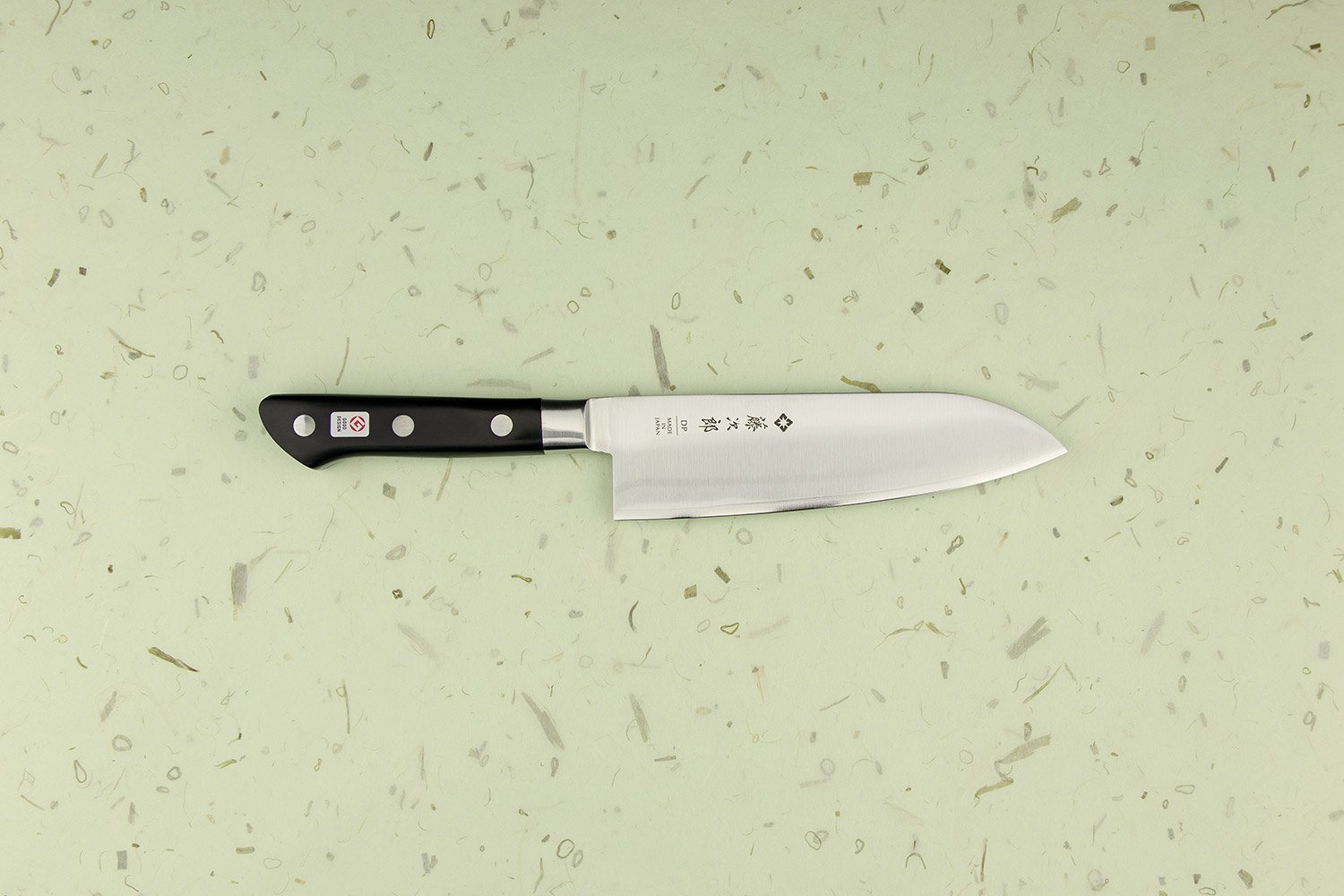

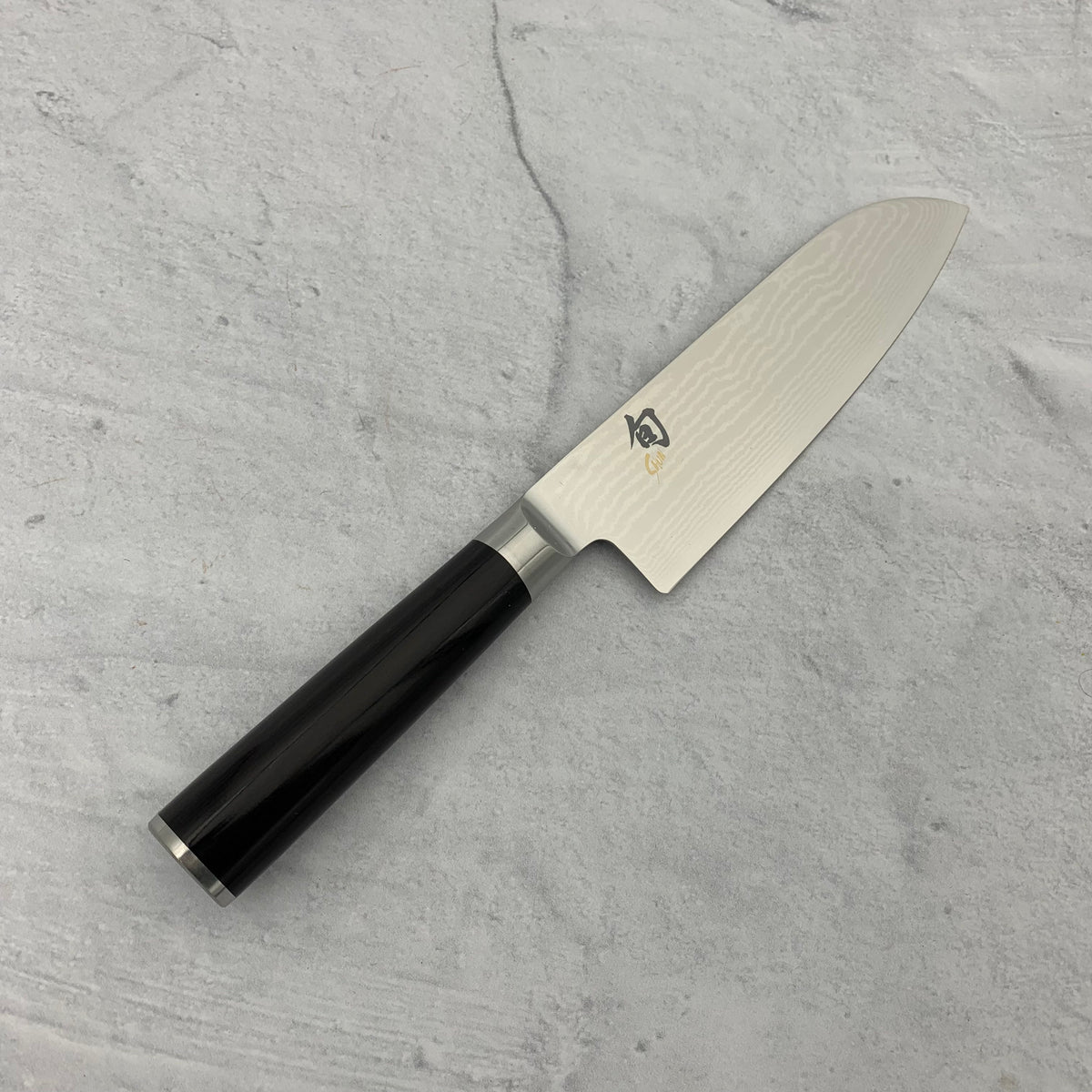
The Tojiro DP Santoku 170mm is the entry point: VG-10 steel, reliable construction, budget friendly. The MAC Superior Santoku 170mm offers a thinner grind and slightly better fit and finish in the mid range tier. For a step up with a Damascus clad blade, the Shun Classic Santoku 175mm delivers VG-10 performance with the fit and finish to match.
If you want a slightly larger santoku with more cutting board coverage, the Global G-48 Santoku 180mm at 180mm bridges the gap between santoku and gyuto territory.
When to Choose a Gyuto
A gyuto is the better choice if:
- You cook a variety of proteins and vegetables. The longer blade handles everything from dicing onions to breaking down a whole chicken. You can slice, push cut, and rock chop with the same knife.
- You want one knife that does it all. If you are buying a single Japanese knife for your kitchen, the gyuto is the more versatile pick. Most professional cooks and knife enthusiasts reach this conclusion eventually.
- You push cut or rock chop. The curved belly supports both motions naturally.
- You value reach. A 210mm blade covers more cutting board in a single stroke, which matters for long vegetables, proteins, and anything that needs a clean, uninterrupted slice.
- You plan to build a collection. The gyuto is the foundation knife in most Japanese knife kits. Everything else (petty, nakiri, sujihiki) is specialized.
Gyuto Picks by Budget
Budget tier:
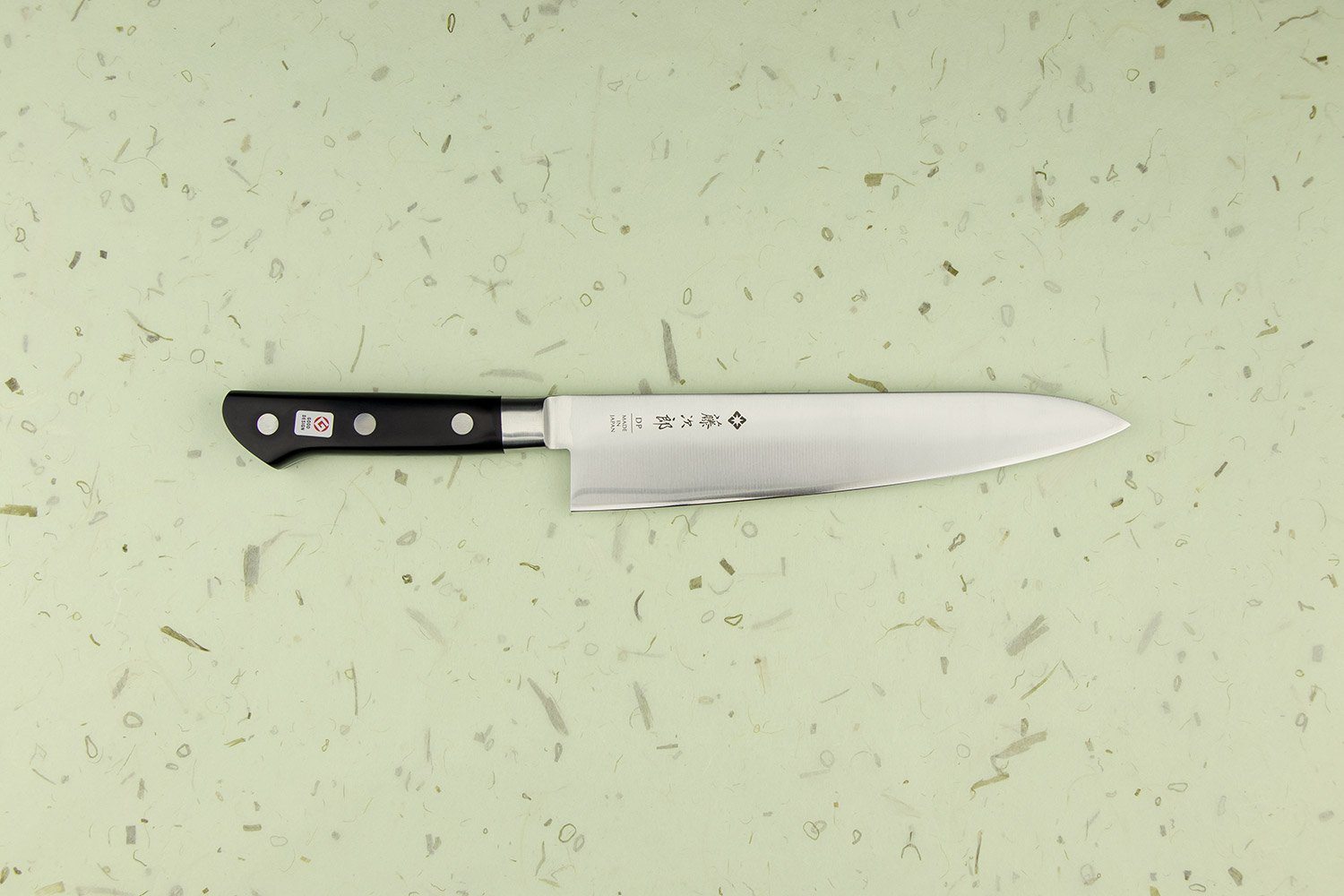
Tojiro
Tojiro DP Gyuto 210mm
The Tojiro DP Gyuto 210mm is the most recommended entry level Japanese knife. VG-10 steel, three layer clad construction, and a price that leaves room for a decent whetstone. The Fujiwara FKM Gyuto 210mm is even cheaper and uses AUS-8 steel, a slightly softer option that sharpens easily.
Mid tier:
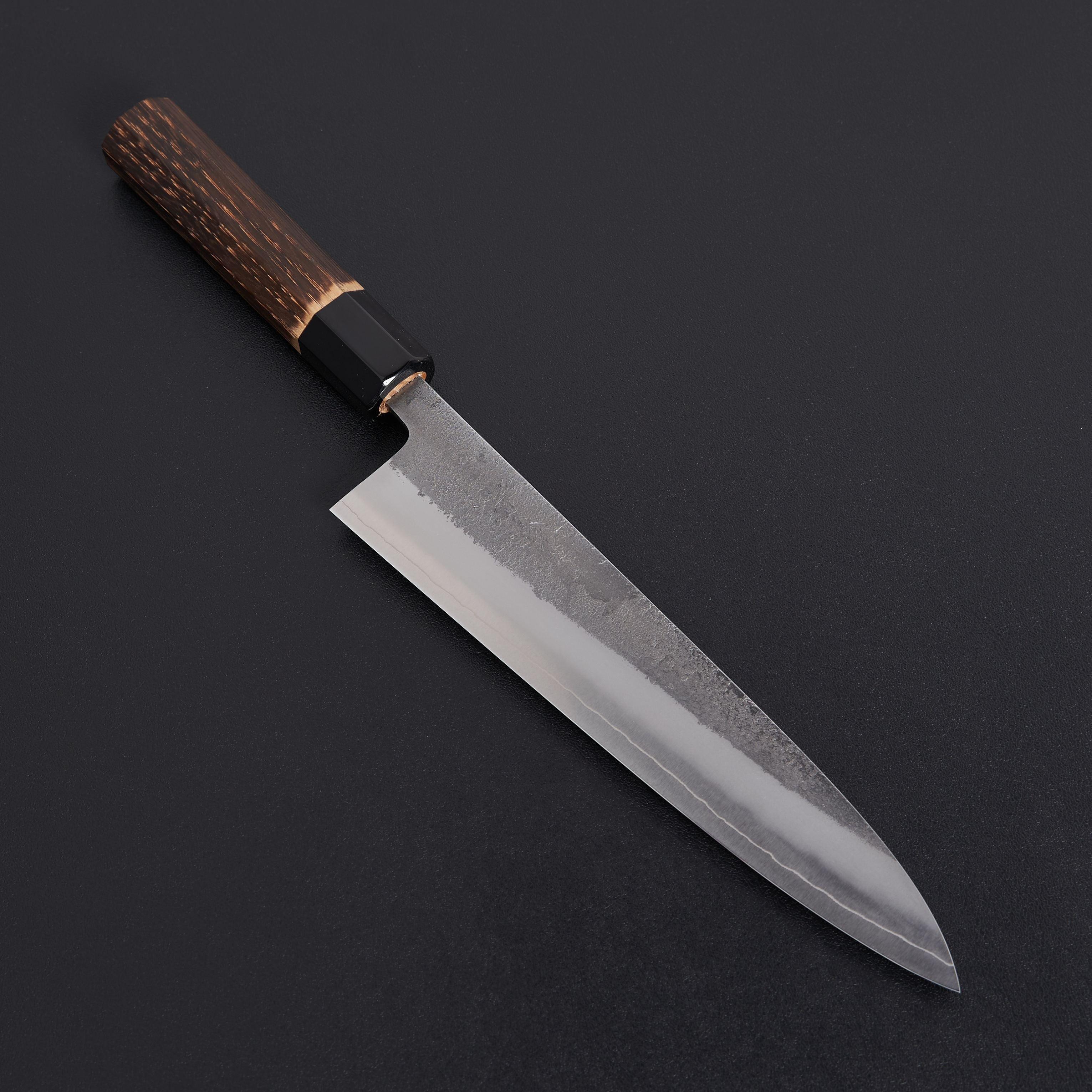

The Yoshikane SKD Gyuto 210mm is the practical choice: SKD semi-stainless steel sharpens easily, holds a working edge well, and resists rust without the maintenance demands of carbon. The MAC MTH-80 Professional Gyuto 200mm is a longtime favorite that quietly outperforms knives at twice the price.
Premium tier:
Takamura
Takamura R2 Gyuto 210mm
Masakage
Masakage Koishi Gyuto 210mm
Mazaki
Mazaki Kasumi Gyuto 210mm
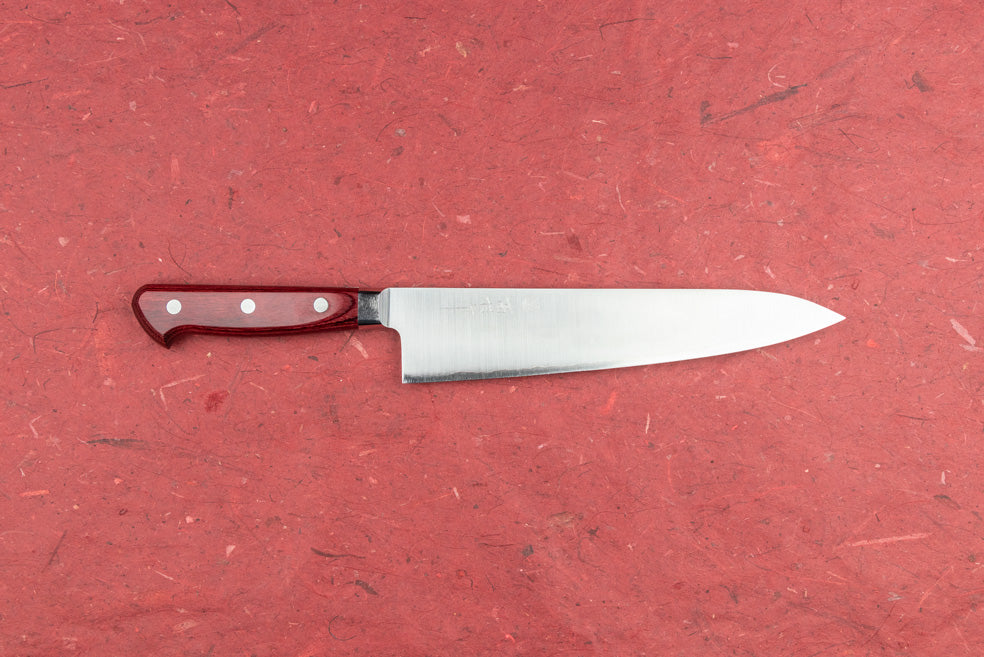
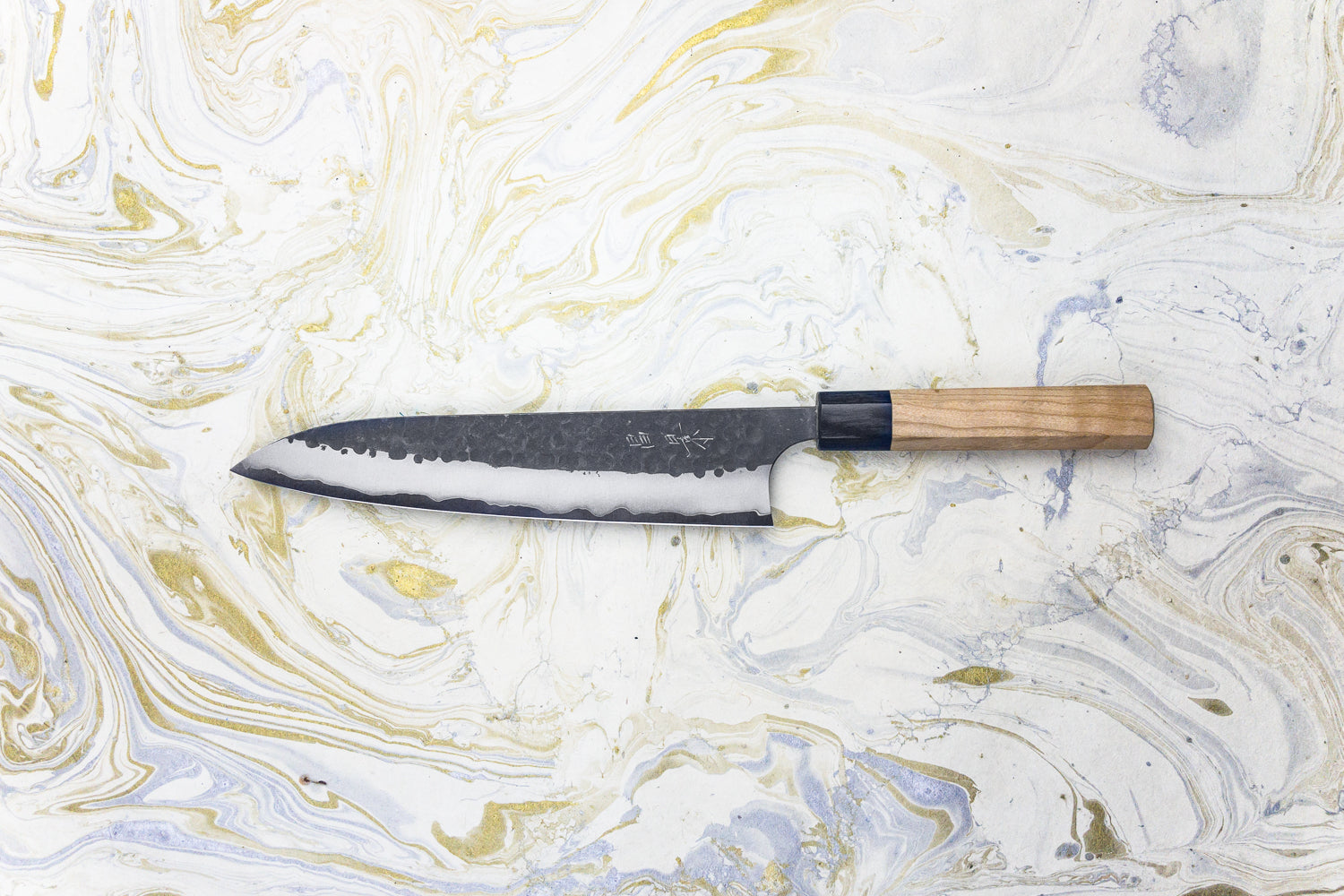
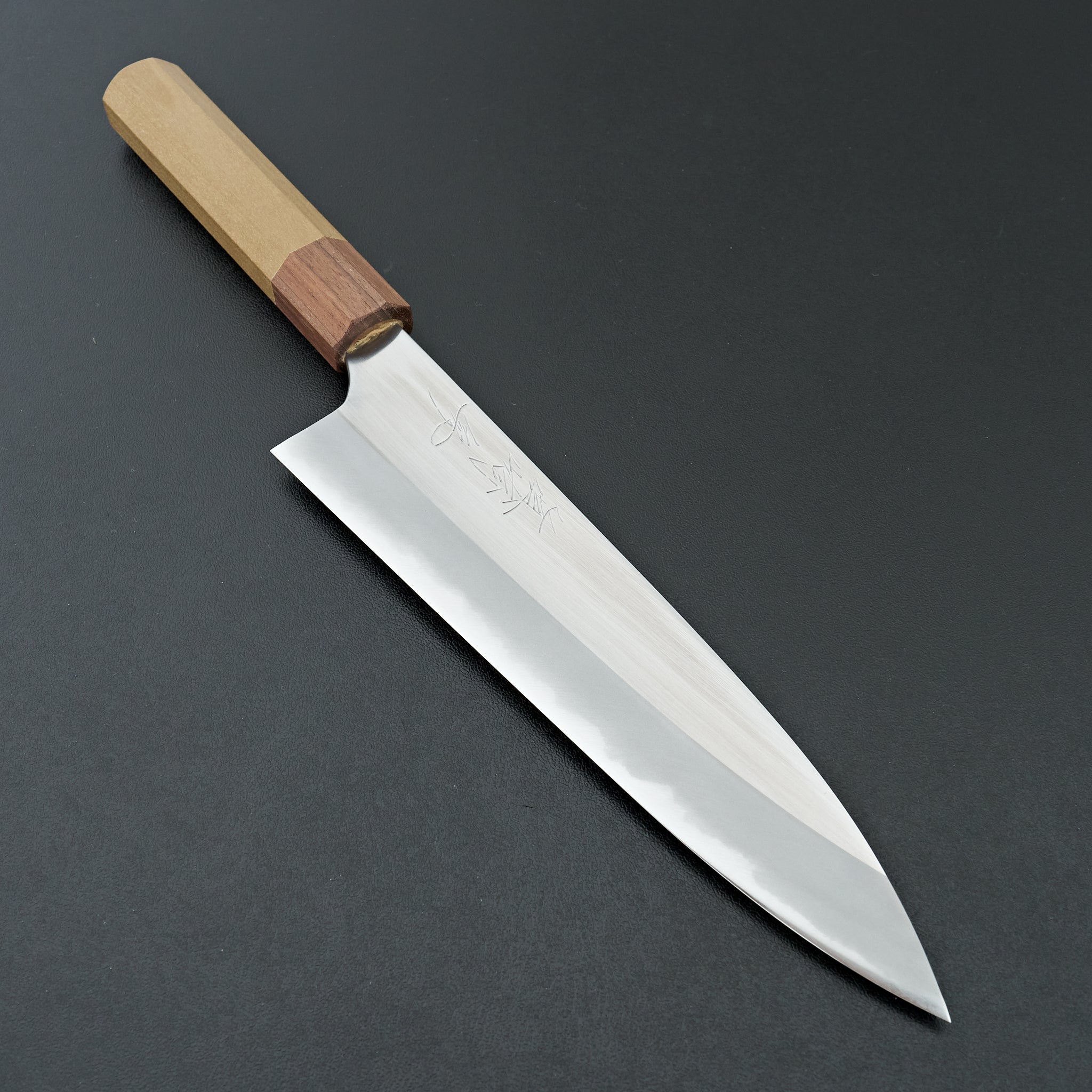
The Takamura R2 Gyuto 210mm is the laser: SG2 powdered steel ground impossibly thin. It rewards precise technique with cutting performance that makes everything else feel dull. The Masakage Koishi Gyuto 210mm brings Aogami Super carbon steel with a kurouchi finish for cooks who want a reactive blade with character. The Mazaki Kasumi Gyuto 210mm in Shirogami #2 is the geometry pick, praised for its thin grind and food release.
For a complete buyer’s guide with more options at every price point, see Your First Japanese Knife: The Beginner’s Buying Guide.
The Comparison Table
| Santoku | Gyuto | |
|---|---|---|
| Best for | Vegetables, dicing, mincing | All purpose, proteins, slicing |
| Blade length | 165 to 180mm | 210 to 240mm |
| Blade profile | Flat, sheepsfoot tip | Curved belly, pointed tip |
| Cutting motion | Tap chop (up and down) | Push cut, rock chop |
| Weight | Lighter | Heavier |
| Maneuverability | High (shorter blade) | Moderate |
| Slicing reach | Limited | Extended |
| Tip work | Limited (rounded tip) | Precise (pointed tip) |
| Home kitchen default (Japan) | Yes | No (though gaining ground) |
| Professional kitchen default | Rare | Yes |
| Learning curve | Low | Low to moderate |
Can You Own Both?
Yes, and many serious home cooks do. The santoku and gyuto overlap in capability but differ enough in execution that having both covers more ground than having two of the same type.
A practical two knife setup: a 210mm gyuto as the daily driver for proteins and general prep, and a 165 to 170mm santoku as a dedicated vegetable knife. The gyuto handles the slicing, the santoku handles the chopping. You switch based on the task, not the ingredient.
If you are building a full Japanese knife kit, see Japanese Knife Starter Kit: Building Your First Set for the recommended progression.
The Bottom Line
If you cook mostly vegetables, prefer a compact knife, or like the natural feel of straight up and down chopping, start with a santoku.
If you want one knife that handles everything, value slicing reach, or plan to invest in technique, start with a gyuto.
Neither choice is wrong. Both are refined tools built for the same goal: making your time at the cutting board more efficient and more enjoyable. The best knife is the one that fits the way you cook.