Best Gyuto Knives: Top Picks at Every Price
Quick Takeaway
- Best overall: Takamura R2 Gyuto 210mm for its razor thin grind, SG2 steel at ~63 HRC, and effortless cutting performance that punches well above its weight.
- Best carbon steel: Mazaki Kasumi Gyuto 210mm is a Shirogami #2 workhorse from Sanjo with a grind that food release enthusiasts love.
- Best laser: Ashi Ginga Gyuto 210mm from Sakai delivers Ginsan stainless steel in one of the thinnest, lightest grinds you can buy.
- Best budget: Tojiro DP Gyuto 210mm remains the entry point that serious knife enthusiasts recommend without hesitation. VG-10 core, three layer clad, from Tsubame-Sanjo.
- Best hidden gem: Yoshikane SKD Gyuto 210mm offers semi-stainless convenience with carbon steel cutting feel. The knife community’s quiet favorite.
The gyuto is the Japanese chef’s knife. If you own one good knife, this is the one. Every pick below is Japanese made, verified by steel type, maker, and production region. No marketing fluff, no Chinese knockoffs wearing Japanese names.
What Makes a Great Gyuto
A gyuto needs to do everything: slice proteins, dice onions, mince herbs, break down vegetables. The best ones disappear in your hand and let the blade geometry do the work.
What separates a good gyuto from a great one:
Blade geometry matters more than steel. A well ground VG-10 blade will outperform a poorly ground SG2. Thin behind the edge, good distal taper, and a convex or flat grind that releases food cleanly.
Steel determines maintenance, not quality. Carbon steels (Shirogami, Aogami) take the keenest edges and are easiest to sharpen, but they rust and stain. Stainless options (VG-10, SG2, Ginsan) are more forgiving. Semi-stainless steels like SKD split the difference. None of these is objectively “better.” They serve different people. Our carbon vs stainless comparison covers this tradeoff in depth.
Handle preference is personal. Wa handles (Japanese style, octagonal or D-shape, usually magnolia wood) are lighter and shift the balance forward. Yo handles (Western style, riveted) feel familiar to most home cooks. Both work. Neither is wrong.
For deeper dives on these topics: our gyuto vs chef’s knife comparison covers geometry, our steel types guide explains every steel mentioned here, and our handle guide breaks down the wa vs yo decision.
Budget Tier: Where It All Starts
You don’t need to spend a fortune to get a knife that outperforms anything in a big box store. These three are the knives that the r/chefknives community recommends more than any others at entry level. For a broader look at this price range, see our budget Japanese knives roundup.
Tojiro DP Gyuto 210mm: The Default Recommendation
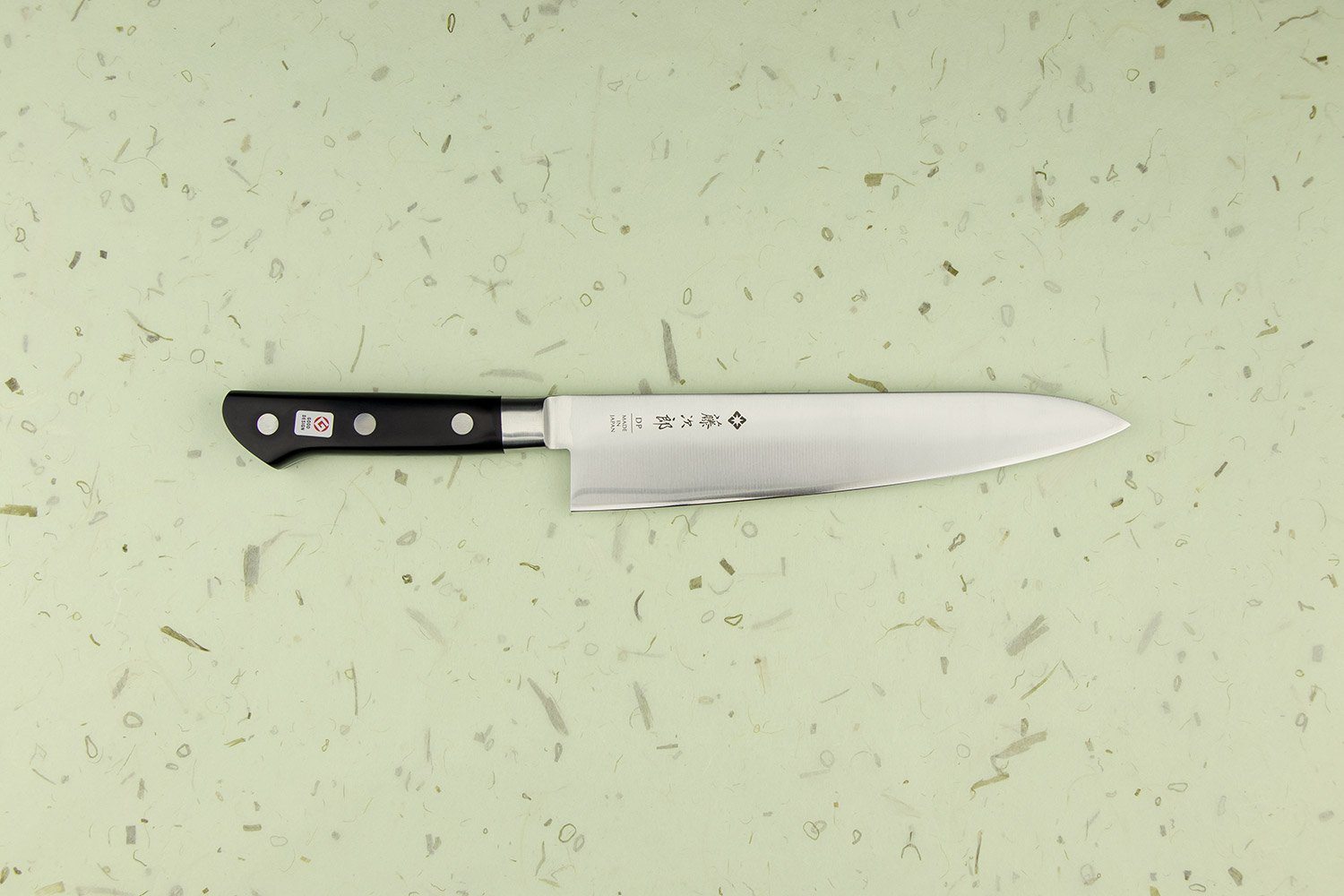
Tojiro
Tojiro DP Gyuto 210mm
Steel: VG-10 (three layer clad) Hardness: ~60 HRC Handle: Yo (pakkawood) Region: Tsubame-Sanjo
There’s a reason every “first Japanese knife” thread ends with someone recommending the Tojiro DP. It uses VG-10 steel clad between softer stainless layers, giving you a hard cutting edge with corrosion resistance on the sides. The grind is thicker than the mid range picks on this list, which makes it more forgiving for beginners. You can rock chop without worrying about chipping.
The handle is nothing special and the fit and finish won’t win beauty contests. That’s not the point. The point is a reliably sharp, well balanced knife from one of Japan’s most established factories in Tsubame-Sanjo, at a price that makes zero excuses.
Fujiwara FKM Gyuto 210mm: The Quiet Workhorse
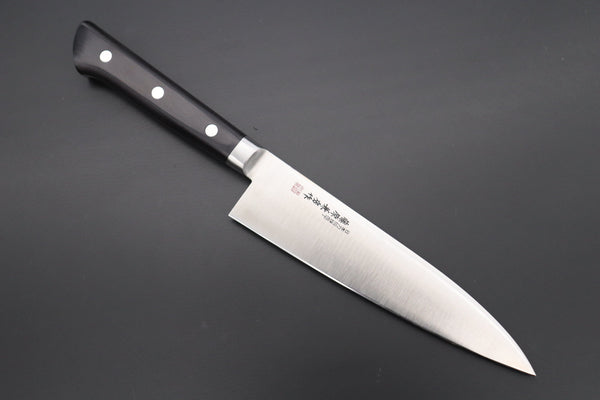
Fujiwara FKM
Fujiwara FKM Gyuto 210mm
Steel: AUS-8 Hardness: ~58 HRC Handle: Yo (pakkawood) Region: Seki
The Fujiwara FKM Gyuto 210mm (now branded under SOUMA after the Fujiwara family rebranded) uses AUS-8 molybdenum vanadium stainless steel. It’s softer than VG-10, which means it won’t hold an edge quite as long, but it’s significantly easier to sharpen. For someone learning to use a whetstone, that’s a meaningful advantage.
The blade is lightweight and nimble. The profile has a gentle curve that accommodates both push cutting and a mild rocking motion. Among budget gyutos, the FKM stands out for its balance: enough performance to feel the difference from Western knives, enough forgiveness that you won’t chip it on a butternut squash.
MAC MTH-80 Professional Gyuto 200mm: The Industry Standard

MAC
MAC Professional MTH-80 Gyuto 200mm
Steel: Molybdenum high carbon stainless Hardness: ~59 to 61 HRC Handle: Yo (pakkawood) Region: Seki
MAC MTH-80 Professional Gyuto 200mm has been a professional kitchen staple since MAC started producing knives in Seki in 1965. The blade is thin and light for its class, with dimples (granton edge) along the flat that help with food release.
MAC doesn’t publish their exact steel composition, but it performs in the range you’d expect from a mid-HRC stainless: good edge retention, easy maintenance, and enough toughness to handle busy kitchen abuse. The 200mm length is slightly shorter than the standard 210mm, which some cooks prefer for tighter workspaces.
Mid Range: Where Quality Jumps
This tier is where things get interesting. Better steel, thinner grinds, more attention to heat treatment and geometry. These knives reward good technique.
Yoshikane SKD Gyuto 210mm: The Community Favorite
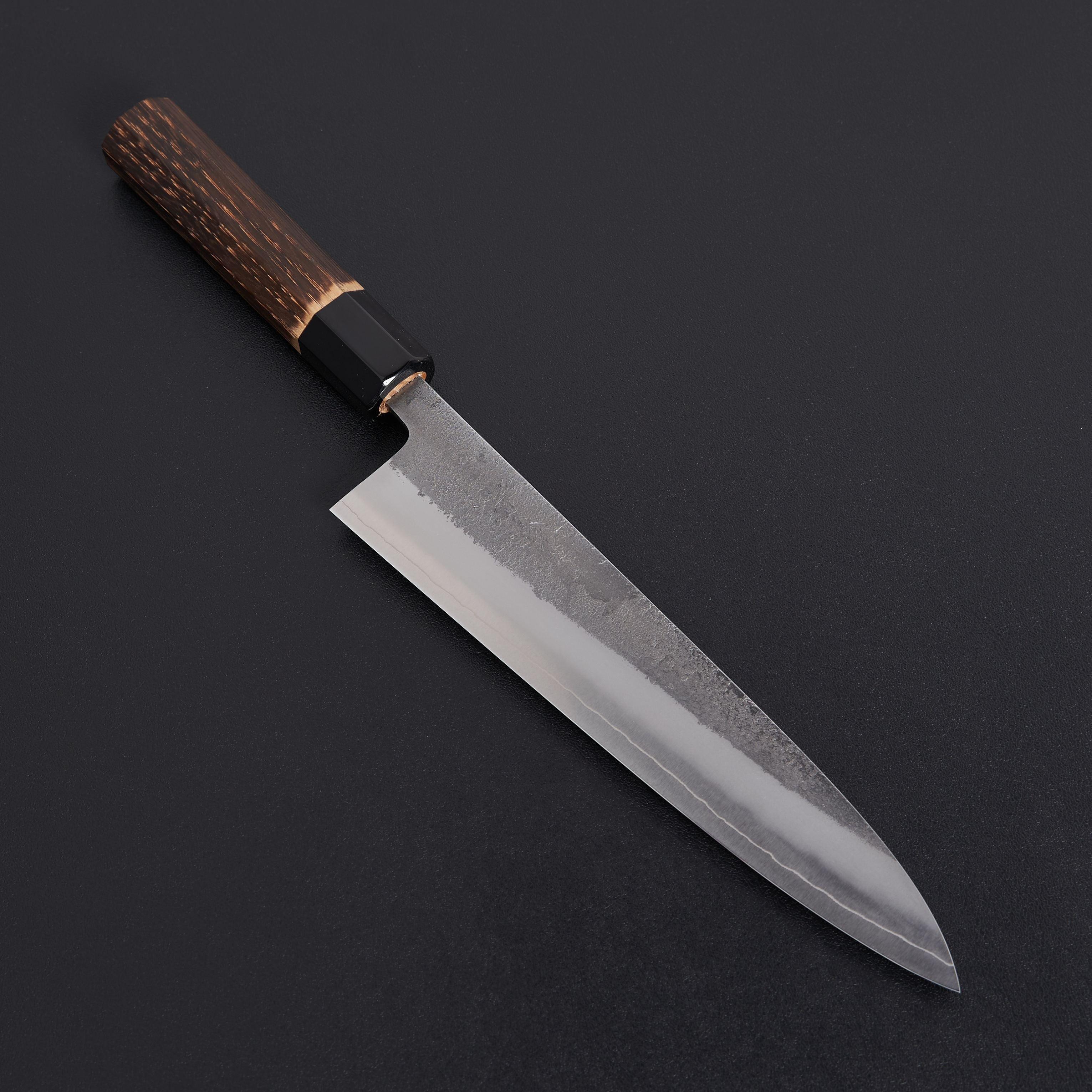
Yoshikane
Yoshikane SKD Gyuto 210mm
Steel: SKD (semi-stainless tool steel) Hardness: ~62 to 63 HRC Handle: Wa (octagonal) Finish: Nashiji Region: Echizen (Sanjo production, Echizen distribution)
Yoshikane SKD Gyuto 210mm is the gyuto that knife enthusiasts keep quietly recommending to each other. SKD is a semi-stainless tool steel with roughly 7% chromium: not enough to be truly stainless, but enough that it resists corrosion far better than carbon steel. You get the cutting feel and edge taking ability of carbon with much less maintenance drama.
Yoshikane’s grind is consistently excellent. Thin behind the edge with a gentle convex face that releases food well. The nashiji (pear skin) finish adds texture that reduces sticking. Combined with a lightweight wa handle, this is a knife that feels fast and precise without being delicate.
Tanaka Ginsan Gyuto 210mm: Stainless That Sharpens Like Carbon
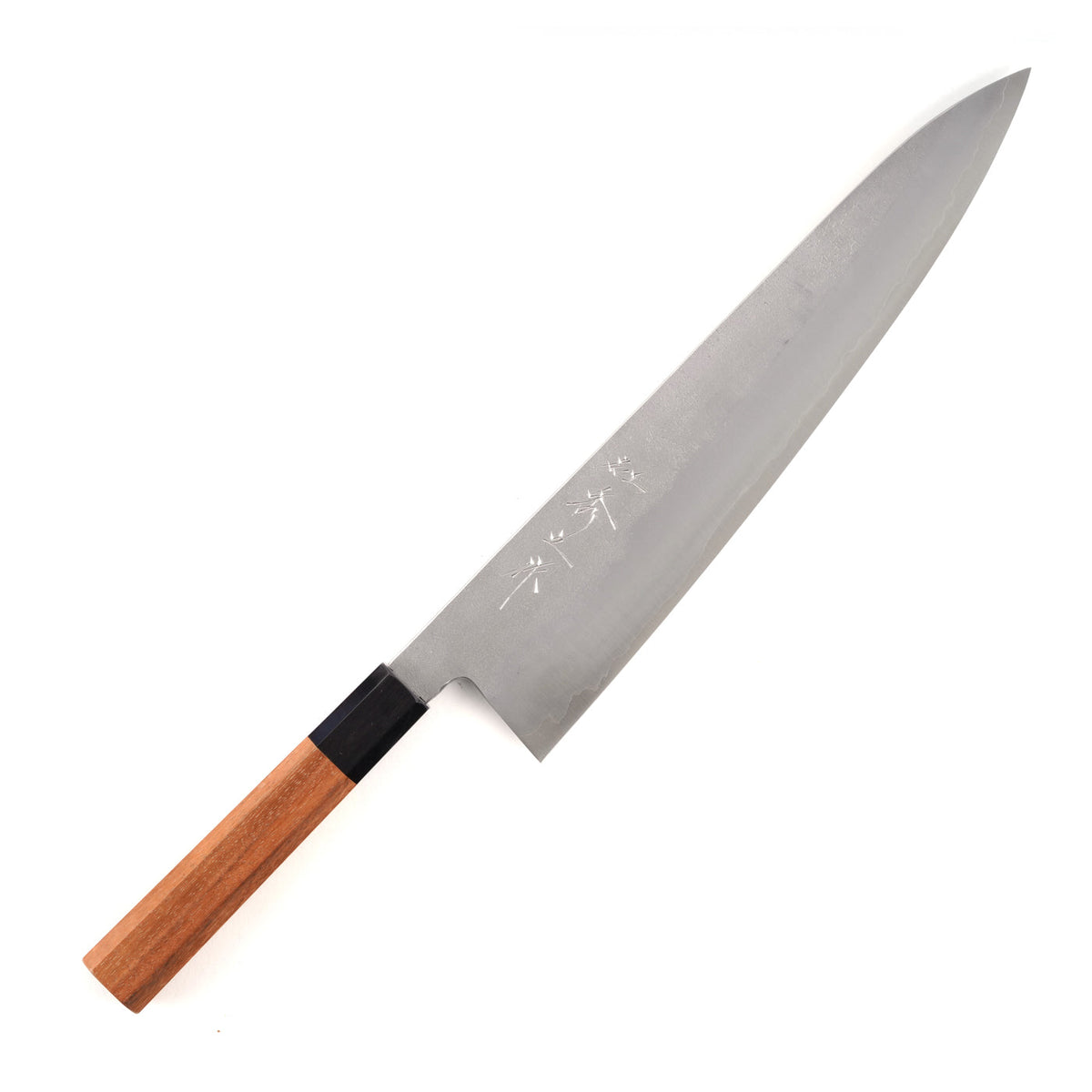
Sakai Takayuki
Tanaka Ginsan Gyuto 210mm
Steel: Ginsan (Silver #3) Hardness: ~62 HRC Handle: Wa (octagonal) Finish: Nashiji Region: Echizen
Ginsan (Silver #3) is made by Proterial (formerly Hitachi Metals) in Shimane Prefecture, the same factory that produces Shirogami and Aogami steels. It’s often described as “Shirogami that doesn’t rust,” which is an oversimplification but captures the feel: Tanaka Ginsan Gyuto 210mm takes a keen, toothy edge and sharpens with minimal effort on a whetstone.
The nashiji finish and wa handle keep the weight down. The blade profile has enough belly for light rocking work while still excelling at the push cuts that Japanese knife design prioritizes. An excellent mid tier pick for cooks who want wa handle aesthetics and low maintenance stainless performance.
Sakai Takayuki 45-Layer Damascus Gyuto 210mm

Sakai Takayuki
Sakai Takayuki 45-Layer Damascus Gyuto 210mm
Steel: VG-10 core (45 layer damascus cladding) Handle: Wa Region: Sakai
Sakai Takayuki 45-Layer Damascus Gyuto 210mm comes from Sakai Takayuki (the retail brand of Aoki Hamono in Sakai), one of the oldest knife production regions in Japan. The 45 layer damascus pattern is visually striking, but the cutting core is VG-10, same as the Tojiro DP at a fraction of the price. The difference is in the grind: thinner, with more refinement in the geometry. The wa handle shifts balance toward the blade, making it feel lighter and more nimble than its actual weight.
If you want a Sakai made gyuto with traditional aesthetics and reliable stainless performance, this delivers. Just understand that you’re paying a premium for the damascus cladding and origin story, not necessarily for a sharper cutting edge than the Yoshikane or Tanaka. Our damascus steel explainer covers what the pattern means for performance.
Premium Tier: Where Obsession Pays Off
These knives represent serious craftsmanship from makers who have built reputations in the knife community through performance, not marketing.
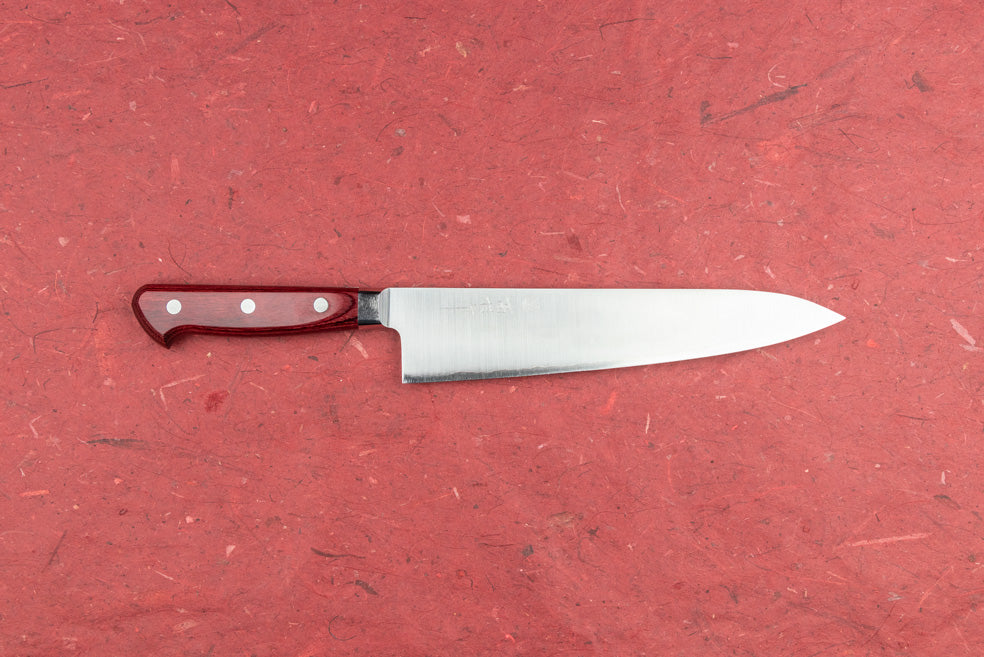
Takamura R2 Gyuto 210mm: The Best All Rounder
Takamura
Takamura R2 Gyuto 210mm
Steel: SG2 / R2 (powdered stainless steel) Hardness: ~63 HRC Handle: Yo (pakkawood) Finish: Migaki (polished) Region: Echizen
The Takamura R2 Gyuto 210mm is the gyuto that keeps ending up at the top of recommendation lists for a reason. SG2 (also called R2) is a powdered steel made by Takefu Special Steel in Echizen, Fukui Prefecture. At ~63 HRC, it holds an edge longer than VG-10 while remaining stainless. The grind is remarkably thin for a production knife: laser territory with a polished migaki finish.
Takamura makes these in their workshop in Echizen. The yo handle with pakkawood scales feels familiar to Western cooks, which matters because this knife requires some adjustment in cutting technique. It’s thin enough that it can chip if you torque the blade laterally through hard produce. Use a push cut or pull cut, keep it off the bone, and this knife rewards you with a cutting sensation that makes everything else feel clumsy.
The 210mm is the standard recommendation. Takamura also makes a Takamura R2 Gyuto 240mm for cooks who want more blade length.
Ashi Ginga Gyuto 210mm: The Laser

Ashi Ginga
Ashi Ginga Gyuto 210mm
Steel: Ginsan (Silver #3) Hardness: ~60 to 62 HRC Handle: Wa (octagonal) Finish: Migaki (polished) Region: Sakai
The Ashi Ginga Gyuto 210mm is what happens when Ashi Ginga (Ashi Hamono in Sakai) applies the thinnest possible grind to Ginsan stainless steel. The Ginga (“galaxy”) line is legendarily thin: it glides through food with almost no resistance. If you’ve ever felt a thick knife “wedge” through a potato, the Ginga is the antidote.
This is a specialist tool. The extreme thinness means less durability than a Takamura or Mazaki. It can flex and even chip if mishandled. But for pure cutting performance on vegetables, proteins, and fine knife work, few production gyutos can match the Ginga. The lightweight wa handle and Sakai craftsmanship make it feel almost weightless.
Mazaki Kasumi Gyuto 210mm: The Carbon Workhorse
Mazaki
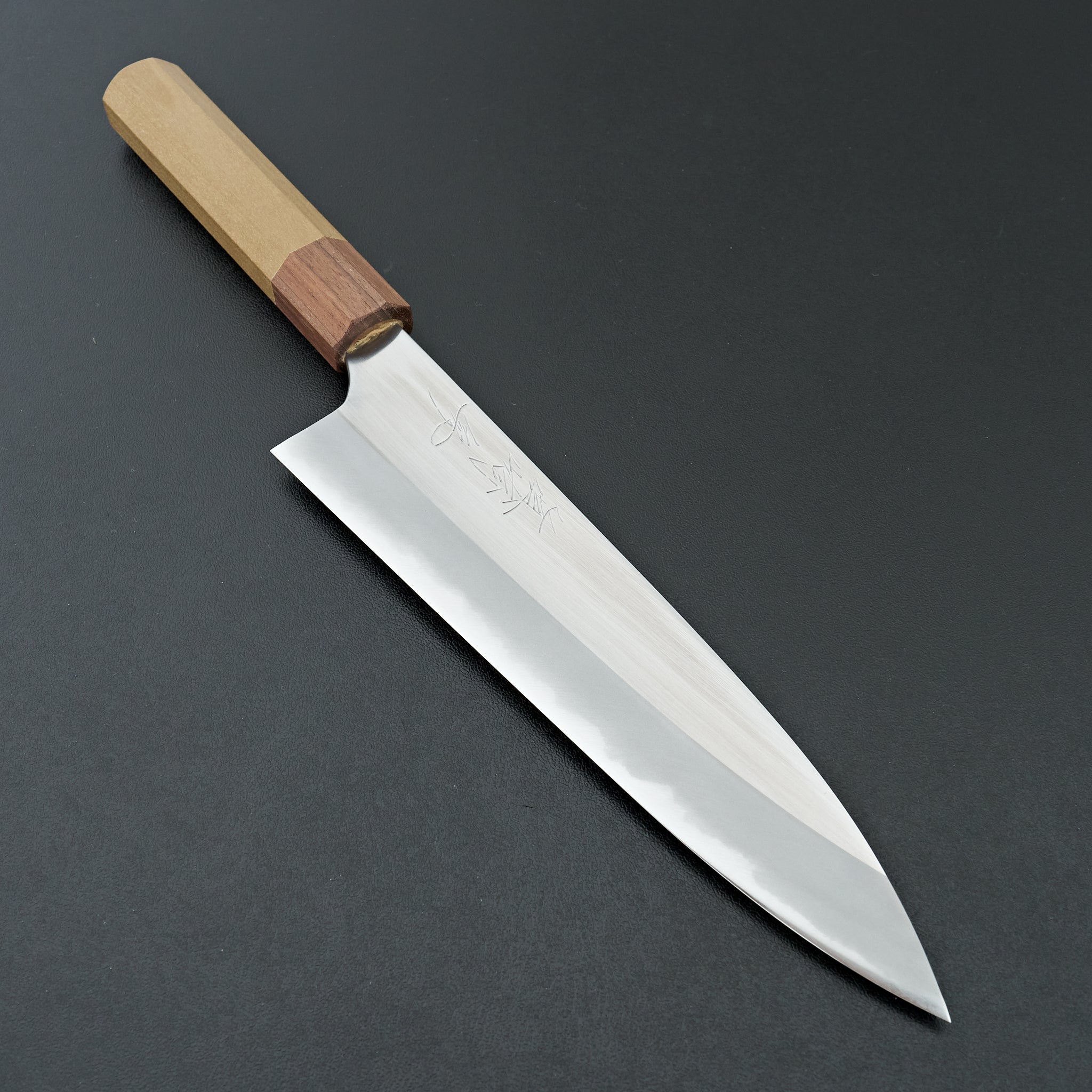
Mazaki Kasumi Gyuto 210mm
Steel: Shirogami #2 (White Carbon Steel #2) Hardness: ~62 to 64 HRC Handle: Wa (octagonal) Finish: Migaki (polished) Region: Echizen (Sanjo)
Mazaki Kasumi Gyuto 210mm has become a darling of the r/chefknives and r/TrueChefKnives communities for good reason. Mazaki works in Sanjo (one of Japan’s great knife making centers alongside Sakai, Seki, and Echizen) and forges with Shirogami #2, a simple, pure carbon steel that takes an extremely keen edge and is a joy to sharpen.
The “kasumi” in the name refers to the misty appearance of the soft iron cladding around the hard core. The grind is what sets Mazaki apart: not a laser like the Ashi Ginga, but thin enough to cut brilliantly with enough spine thickness to feel solid and durable. It’s the carbon steel gyuto that professional cooks trust for daily service.
The tradeoff: Shirogami #2 is reactive. It will rust if left wet, stain from acidic ingredients, and develop a patina over time. You need to wipe the blade during use and dry it after every session. If that sounds like too much work, look at the Takamura or Yoshikane instead.
Masakage Koishi Gyuto 210mm: Aogami Super Power
Masakage
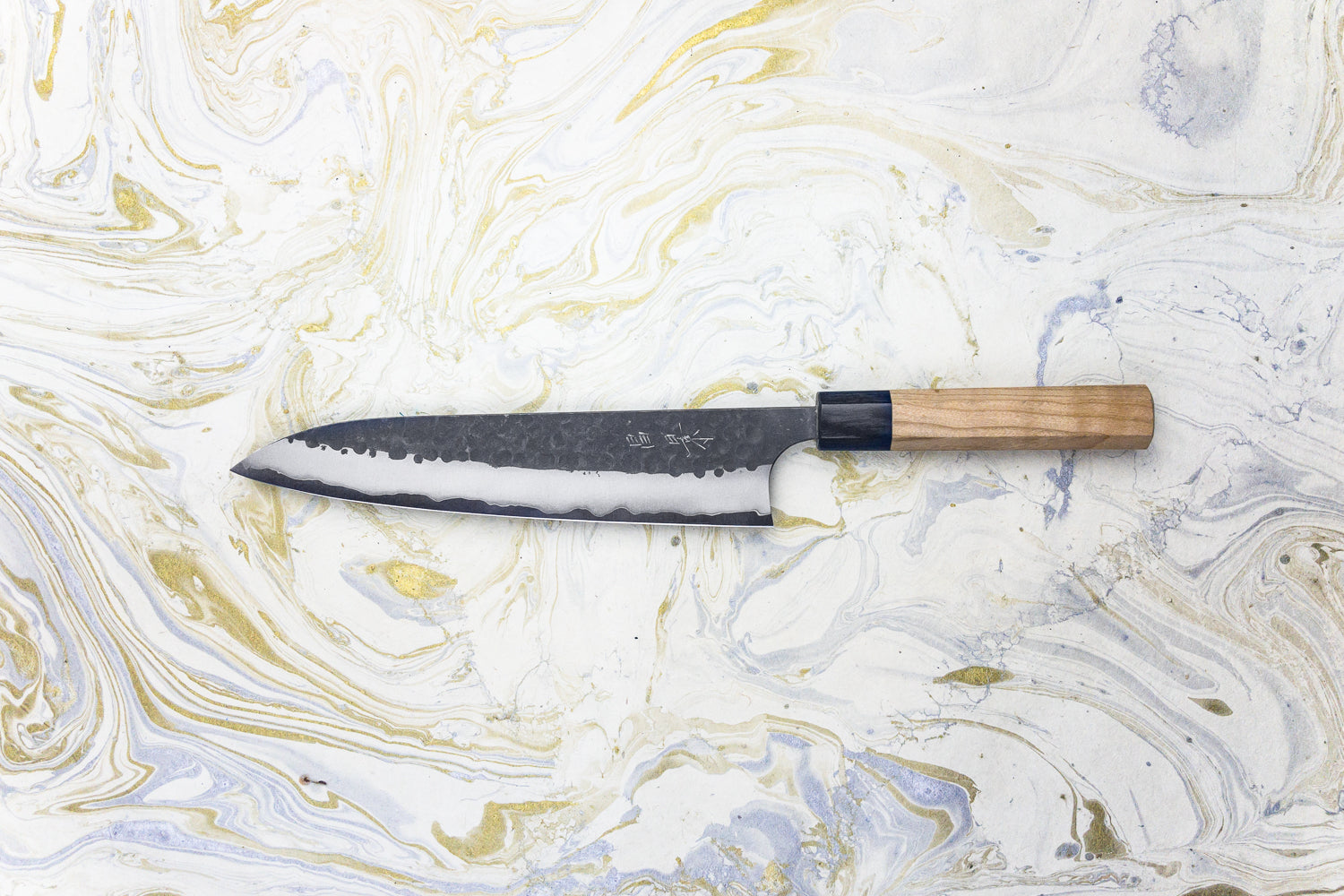
Masakage Koishi Gyuto 210mm
Steel: Aogami Super (Blue Super Steel) Hardness: ~63 to 64 HRC Handle: Wa (octagonal) Finish: Kurouchi (forge scale) Region: Echizen
Masakage Koishi Gyuto 210mm uses Aogami Super, the highest performing carbon steel in common production. Aogami Super adds tungsten, chromium, and vanadium to the base carbon steel formula, resulting in exceptional edge retention: this knife holds its edge longer than Shirogami or standard Aogami #2.
The kurouchi finish (retained forge scale on the blade face) is both traditional and functional, providing a rough surface that helps with food release. Masakage is a collaboration brand from Echizen, with the Koishi line representing their premium carbon steel offering. The wa handle and relatively light weight make it feel agile.
Like all carbon steel, Aogami Super is reactive. It will rust without care. And at this hardness, chipping is possible if you hit bones or frozen food. This is a knife for experienced cooks who know how to care for reactive steel and want the best edge retention carbon can offer.
Honorable Mentions
These gyutos didn’t make our main picks but deserve attention for specific use cases.
Misono
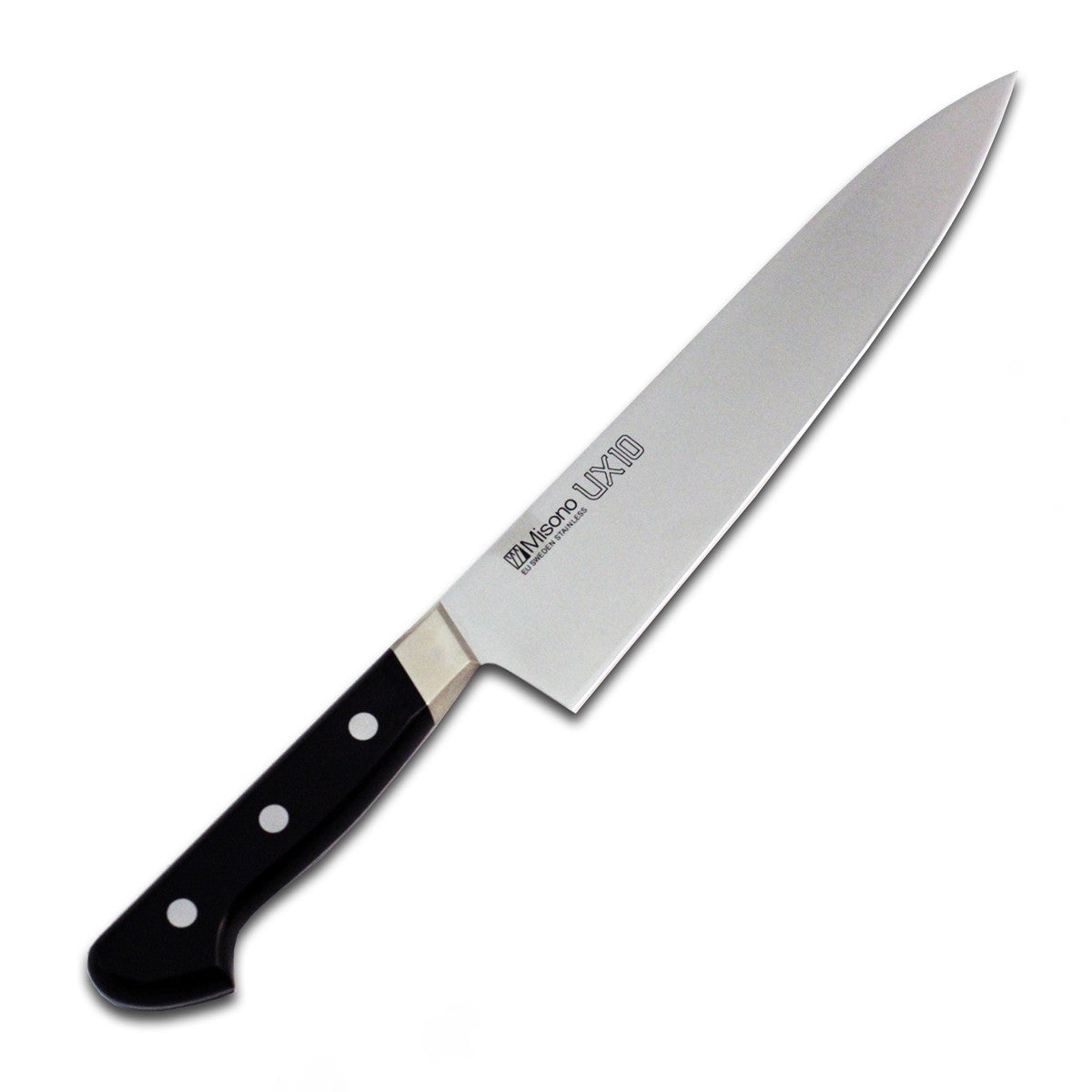
Misono UX10 Gyuto 210mm
Yu Kurosaki
Yu Kurosaki Senko SG2 Gyuto 210mm
Sukenari
Sukenari ZDP-189 Gyuto 210mm
Misono UX10 Gyuto 210mm uses Swedish stainless steel and is made in Seki. It’s the professional kitchen classic: tough, well balanced, and designed to survive busy service. The edge retention is moderate compared to SG2 or Aogami Super, but it’s nearly indestructible. If you need a gyuto that can handle careless cooks and commercial dishwashers, the UX10 is the answer. America’s Test Kitchen consistently ranks Misono among their top picks.
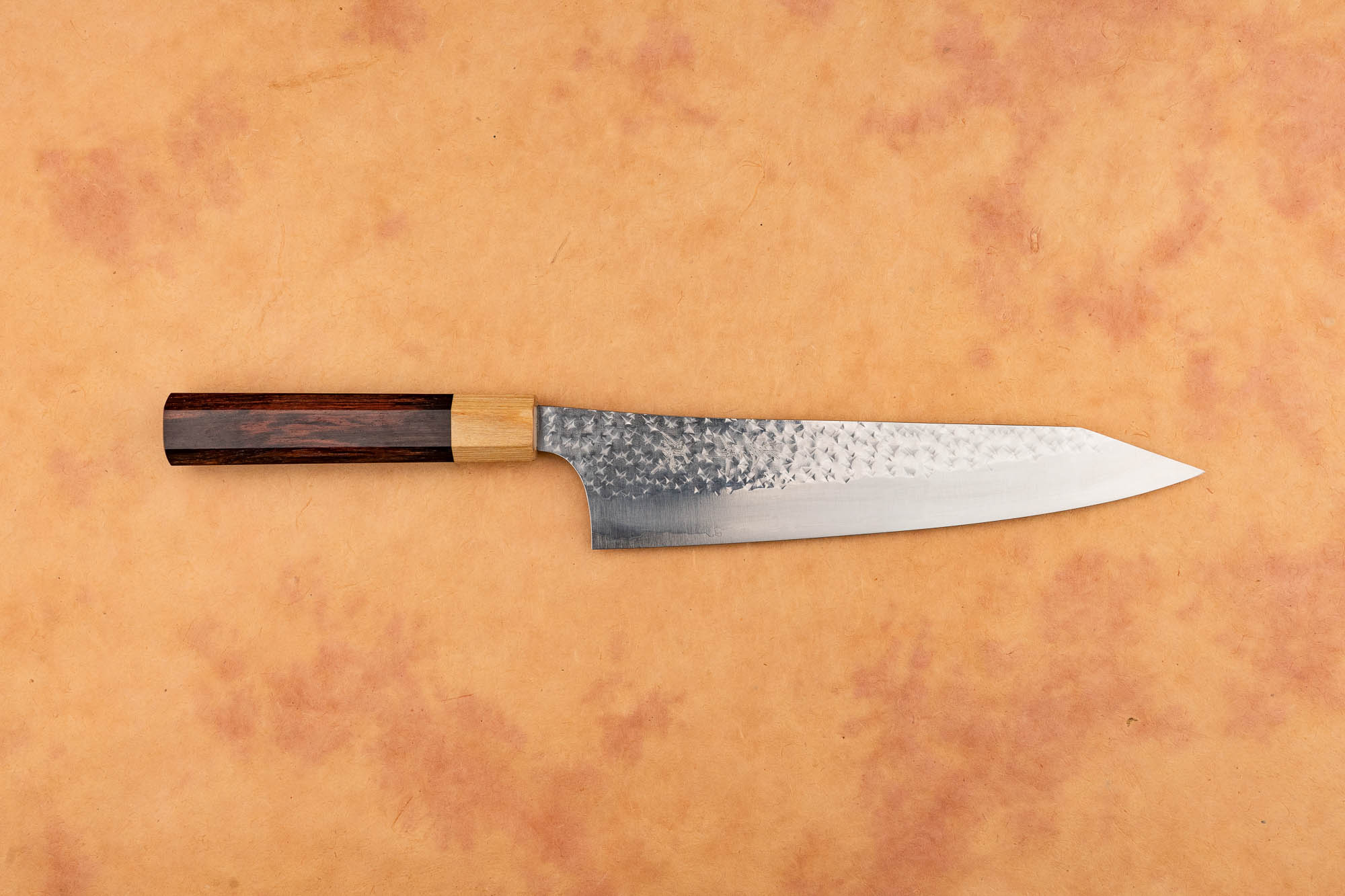
Yu Kurosaki Senko SG2 Gyuto 210mm is where artistry meets performance. Yu Kurosaki works in Takefu (within Echizen) and has become one of the most sought after young makers in Japan. The Senko line uses SG2 steel with a tsuchime (hammered) finish and an octagonal wa handle. It’s a gorgeous knife that also cuts beautifully. The premium over a Takamura R2 buys you aesthetics and hand finished details.
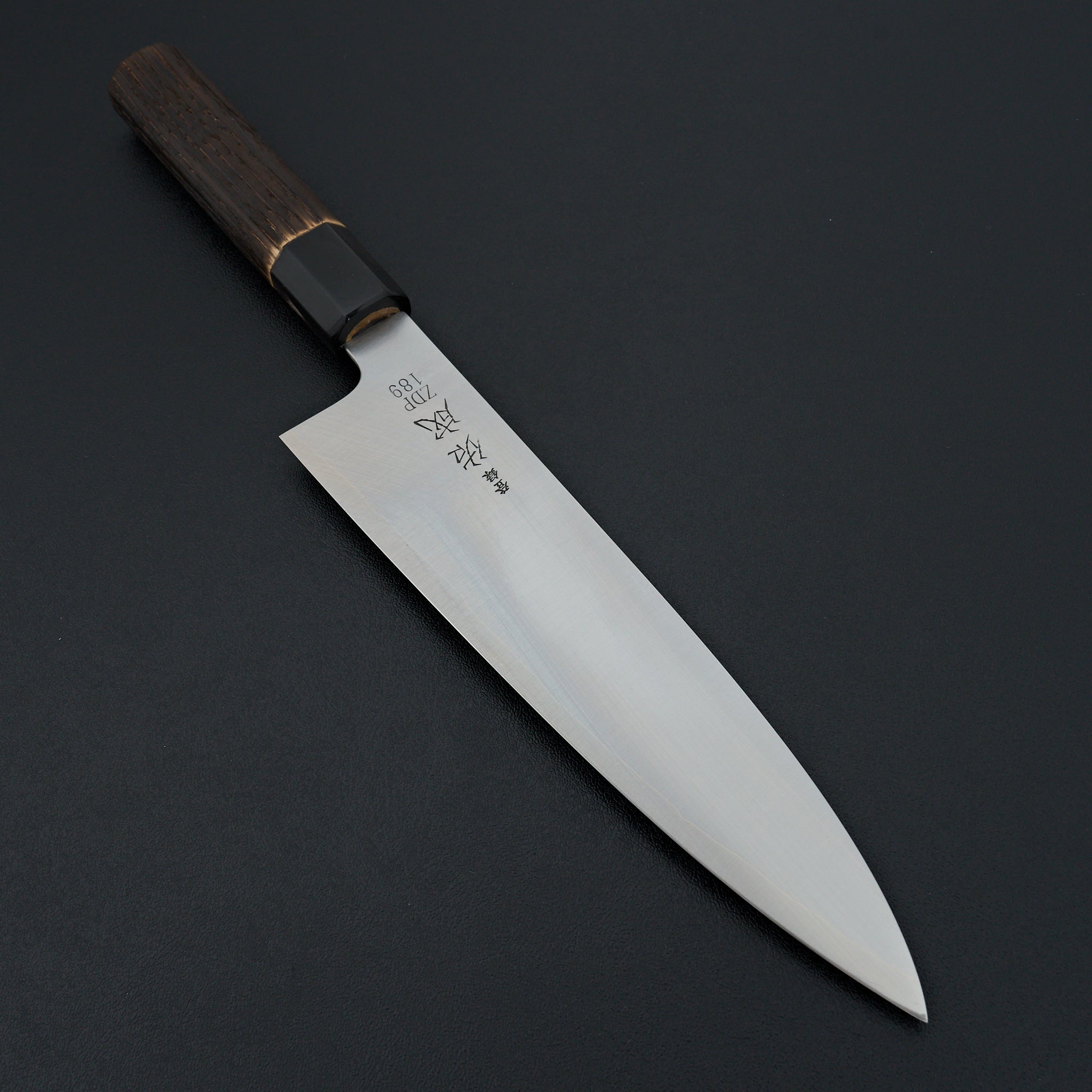
Sukenari ZDP-189 Gyuto 210mm pushes hardness to the extreme. ZDP-189 contains roughly 3% carbon and 20% chromium, reaching 64 to 67 HRC. Edge retention is extraordinary. But this hardness comes with brittleness: ZDP-189 chips more easily than any other steel on this list, and sharpening requires diamond stones or specialized abrasives. Only for experienced sharpeners who prioritize edge holding above all else.
Shibata Kotetsu R2 Gyuto 210mm is another renowned SG2 laser from Takefu, Echizen. The Kotetsu line has a devoted following for its extremely thin grind (thinner even than the Takamura) and unique blade geometry. Often sold out, it’s the kind of knife you buy when you find one available. If the Takamura R2 is a precision instrument, the Shibata Kotetsu is the version dialed to eleven.
More Worth Knowing
A few more gyutos that come up regularly in the knife community:
Masakage Yuki Gyuto 210mm is the Masakage line’s Shirogami #2 offering. Where the Koishi uses Aogami Super, the Yuki uses simpler white carbon steel with a nashiji finish. Easier to sharpen, slightly less edge retention, and a good step into carbon steel for Masakage fans who want the brand’s Echizen craftsmanship at a lower tier.
Munetoshi Kurouchi Gyuto 210mm is a Tosa region knife using Aogami Super with a rustic kurouchi finish. Tosa knives tend to be heavier and more robust than their Echizen or Sakai counterparts, making the Munetoshi a good option for cooks who want carbon steel toughness over laser precision.
Kyohei Shindo Aogami #2 Kurouchi Gyuto 210mm is another Tosa maker worth watching. Kyohei Shindo forges with Aogami #2, which offers better edge retention than Shirogami while remaining easier to sharpen than Aogami Super. The kurouchi finish and wa handle keep it traditional.
Yu Kurosaki Fujin SG2 Gyuto 210mm is Yu Kurosaki’s luxury damascus line. Where the Senko uses tsuchime, the Fujin features an intricate damascus pattern. Same SG2 core, same Echizen workshop, but elevated aesthetics for collectors.
What We Left Out (and Why)
Global G-2 Gyuto 200mm is a solid knife from Yoshikin in Tsubame-Sanjo, with their signature CROMOVA 18 one-piece stainless construction. It’s a good kitchen tool, but at its price point and with HRC around 56 to 58, you get significantly less performance than a Tojiro DP or MAC. It works best for people who prioritize dishwasher safe, seamless construction over cutting edge performance.
Shun Classic Gyuto 200mm uses VG-MAX steel (KAI Group’s proprietary variation on VG-10) in a damascus clad package. It’s widely available in retail stores, which is its main advantage. The cutting performance is decent but you’re paying a premium for the brand name and retail distribution. At this price point, the Yoshikane or Tanaka outperform it.
Miyabi Birchwood SG2 Gyuto 200mm is Zwilling’s Japanese line, made in Seki. Beautiful 101 layer damascus. But at current retail pricing, it’s well above premium tier and doesn’t cut better than a Takamura R2 at nearly half the price.
How to Choose
Start with two questions:
Are you comfortable with maintenance? If you want a knife you can rinse and toss in a drying rack, stay with stainless: Takamura R2, Ashi Ginga, Tojiro DP, or MAC. If you enjoy the ritual of wiping your blade, drying it, and watching a patina develop, carbon steel options like Mazaki or Masakage Koishi Gyuto 210mm reward that care with sharper edges and easier sharpening.
What’s your experience level? First Japanese knife buyers should start at the budget tier (Tojiro DP, Fujiwara FKM, or MAC) or jump to a forgiving mid range option like the Yoshikane SKD. Our beginner’s buying guide walks through this decision in more detail. The Takamura R2 and Ashi Ginga are extraordinary knives, but their thin grinds require push cutting technique and careful handling. Moving to them from a thick Western knife takes adjustment.
For a deeper comparison of the gyuto format against Western chef’s knives, see our gyuto vs chef’s knife guide. If you’re deciding between a gyuto and a santoku, our santoku vs gyuto comparison breaks that down. And when your new gyuto needs sharpening, our whetstone sharpening guide walks you through the process step by step.
The Bottom Line
If you want one recommendation: the Takamura R2 Gyuto 210mm. SG2 steel, a grind that makes everything feel effortless, stainless convenience, and a price that (while premium) is justified by the performance. It’s the gyuto that knife obsessives settle on after trying many others.
If you’re just starting out: the Tojiro DP Gyuto 210mm. It won’t change your life, but it will change how you think about cutting. And when you’re ready to upgrade, everything on this page is waiting.